White Hydrogen Regulation Paves Way for Natural Hydrogen Production in Colombia
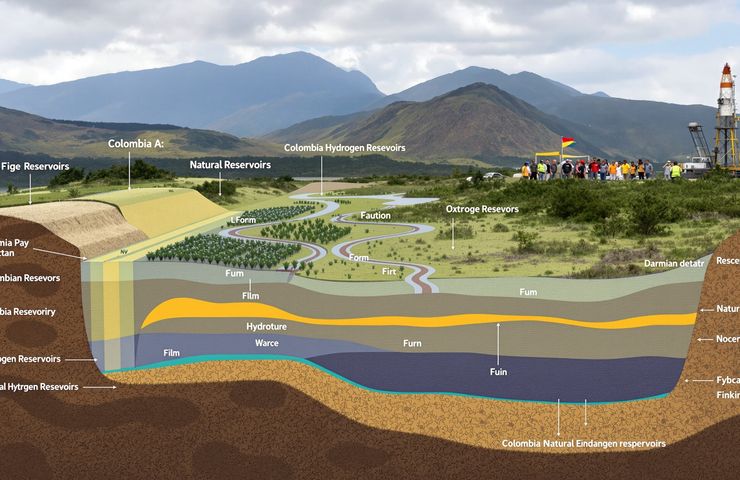
The Ministry of Mines and Energy of Colombia has unveiled a project resolution that establishes the country’s first tailored framework for evaluating, exploring and exploiting white hydrogen, also known as natural or geological hydrogen. Announced this month under the leadership of Minister Edwin Palma, the proposal aims to integrate white hydrogen into Colombia’s matrix of non-conventional renewable energy sources while providing clear rules on area assignments, technical standards and environmental safeguards. By recognizing white hydrogen as a renewable resource, the government seeks to diversify its energy mix and strengthen the legal certainty for investors in emerging hydrogen production.
- Entity: Ministerio de Minas y Energía, led by Edwin Palma.
- Scope: National framework for white hydrogen evaluation, exploration and exploitation.
- Permits: Authorizations up to 30 years, renewable under defined conditions.
- Requirements: At least one exploratory well per area, technical standards, environmental controls and social participation.
- Administrative: Ministry response time of 90 working days for area applications.
- Context: Part of the Just Energy Transition strategy in the National Development Plan.
Key Provisions of the Draft Resolution
The draft resolution sets out a procedure to allocate exploration areas for white hydrogen and associated gases on a first-come, first-served basis, subject to technical and financial qualifications. Companies must demonstrate operational experience in subsurface projects—such as hydrocarbons or geothermal fields—and meet financial capacity criteria. Each assigned block requires the drilling of at least one exploratory well, with mandatory core sampling and gas flow testing to confirm hydrogen presence, concentration and sustainable flow rates.
Once an area moves to exploitation, permits may extend up to 30 years, including renewal options that cannot exceed the original term. Operators will deliver annual progress reports on exploratory activities and semestrial production data after any commercial discovery. Two years before permit expiry, firms must submit decommissioning and closure plans, detailing site rehabilitation, waste management and community engagement strategies.
The resolution further sets a 90-business-day deadline for administrative review of area assignment requests, aiming to reduce bureaucratic delays and enhance predictability for investors.
Technical and Environmental Standards
Exploratory operations are governed by strict procedures: borehole drilling must follow industry-standard safety protocols, water management plans must minimize usage and prevent contamination, and core samples must meet minimum extraction rates for geological analysis. Environmentally, the resolution mandates baseline studies on biodiversity, water sources and local land use before any drilling. Throughout the project lifecycle, operators are required to implement mitigation measures, monitor potential impacts and report findings to the Ministry within specified deadlines.
Social considerations are woven into the framework via public consultations and participation requirements. Companies need to present stakeholder engagement strategies for communities potentially affected by drilling or access road construction, allowing local input on project design and environmental safeguards. This participatory approach reflects Colombia’s emphasis on balancing resource development with social and ecological integrity.
Strategic Implications for Colombia’s Energy Transition
By formally classifying white hydrogen as a non-conventional renewable energy source, Colombia positions itself to leverage its diverse geology and existing subsurface expertise. Historically reliant on oil, gas and coal, the country has promoted green hydrogen through earlier legislation—such as Law 1715 of 2014 and Law 2099 of 2021—but had not addressed natural hydrogen until now. This regulatory milestone could attract exploration investment, foster geoscientific advances and nurture a new hydrogen sector alongside green hydrogen production via electrolysis.
The appeal of white hydrogen lies in its low direct emissions during extraction, given that hydrogen is generated naturally through geological processes like serpentinization and radiolysis. However, its viability depends on the presence of sufficient subsurface accumulations and competitive costs relative to blue or green hydrogen. For investors, the 30-year permit horizon offers predictability, yet the economic case will hinge on actual flow rates, infrastructure availability and integration with existing hydrogen transport or consumption hubs.
International and Comparative Perspective
Globally, white hydrogen remains largely experimental, with a handful of exploratory projects and only one continuous commercial operation—at Bourakébougou in Mali. France’s Lorraine region and pilot studies in the United States and Albania illustrate emerging interest but stop short of full-scale production. In this context, Colombia’s initiative is pioneering: it provides a live regulatory laboratory for best practices in balancing exploration with environmental and social safeguards. Regulators elsewhere are monitoring Colombia’s model as they consider their own frameworks.
Next Steps and Outlook
The project resolution is open for public comment, and the Ministry of Mines and Energy has invited industry, academia and civil society to weigh in before final adoption. Over the coming months, revisions may refine technical thresholds, environmental obligations and community participation rules. Stakeholders will be watching closely—successful implementation could unlock new investment flows and geographic diversification of Colombia’s hydrogen landscape.
For now, the draft regulation represents a decisive shift from conceptual debate to actionable policy in white hydrogen production. It signals Colombia’s ambition to lead in hydrogen innovation and to expand its energy portfolio beyond conventional hydrocarbons and green hydrogen projects. The real test will come when exploratory rigs hit the ground, and data-driven assessments reveal whether geological hydrogen can grow into a viable pillar of the country’s sustainable energy future.