Green Hydrogen News: Uruguay Weighs Relocation of HIF Paysandú Plant Amid Argentina Concerns
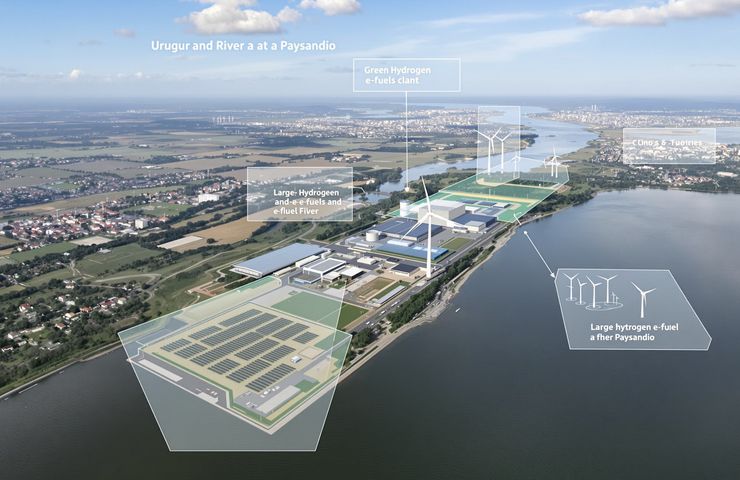
The Government of Uruguay has informed Argentina that it’s studying alternatives for the location of the megaproject by HIF Global in the Department of Paysandú, originally planned near Constancia along the Uruguay River. The decision follows sustained objections from the province of Entre Ríos and the municipality of Colón over potential visual, environmental and socioeconomic impacts. It marks a pivotal moment for green hydrogen ambitions in South America, illustrating how a global push for renewable hydrogen production meets local concerns and transboundary water governance.
Uruguay’s move comes as the largest industrial investment in its history, valued at an estimated 5.3–6 billion dollars, faces scrutiny under the Statute of the River Uruguay. Buenos Aires-based officials had called for the inclusion of Colón in the environmental impact study and proposed exploring sites further from the riverbank. In response, Montevideo has signaled that the project, anchored by a 1 GW electrolyzer and associated wind and solar parks, may be relocated within Paysandú’s industrial zones.
Project Overview
- Developer: HIF Global (via HIF Uruguay S.A.) in partnership with state entities ANCAP and ALUR
- Location: Initially near Constancia/Nuevo Paysandú, facing Colón, Argentina
- Facilities: ~1 GW electrolytic plant, CO2 biogenic capture from ALUR ethanol plant, e-fuels synthesis modules
- Annual Output: Up to 150–180 kt of e-fuels for export
- Investment Scale: Over 5 billion USD
Stakeholder Perspectives
From Montevideo’s side, the ministries of Industry, Energy and Mining (MIEM), Environment and Foreign Affairs have championed the project as a cornerstone of Uruguay’s strategy to lead in green hydrogen production and to decarbonize hard-to-abate sectors with synthetic fuels. ANCAP’s refinery footprint and ALUR’s CO2 biogenic stream are seen as strategic assets for a new clean value chain.
On the Argentine side, the Government of Entre Ríos, led by Governor Rogelio Frigerio, and the Municipalidad de Colón, under Mayor José Luis Walser, have pressed for formal consultation under the bilateral Statute of the River Uruguay. Their concerns range from landscape alteration and tourism impacts to water quality and community health. Argentina’s Foreign Minister Pablo Quirno welcomed Uruguay’s openness to site alternatives, noting it could defuse tensions and establish a replicable model for cross-border project review.
Locally, the Departmental Government of Paysandú sees the potential for hundreds of direct and indirect jobs, infrastructure upgrades and enhanced export capacity. Intendente Nicolás Olivera highlights the need for rigorous environmental due diligence and logistics assessments, including rail and highway access to any chosen site.
Technical Snapshot
The core technology revolves around large-scale electrolysis of water powered by dedicated wind and solar farms. In an alkaline electrolyzer of around 1 GW capacity, water molecules split into hydrogen and oxygen. The hydrogen is compressed and delivered to synthesis reactors, where it combines with biogenic CO2 captured from the ALUR ethanol plant to produce methanol. A downstream Methanol-to-Gasoline process converts methanol into liquid fuels, commonly referred to as e-gasoline or e-fuels, which can be stored, shipped and used in existing combustion engines.
This integrated approach aims to leverage Uruguay’s nearly 100 percent renewable power grid, positioning it as a regional hub for clean hydrogen and e-fuel output. However, the scale of water consumption, the management of industrial safety around hydrogen and oxygen, and cross-border environmental monitoring remain critical technical and regulatory challenges.
Diplomatic and Regulatory Context
The project revisits memories of the mid-2000s dispute over the pulp mill in Fray Bentos, when Argentina and Uruguay clashed over impacts on the same river. That episode led to a judgment from the International Court of Justice, which reinforced notification and consultation obligations under the Statute of the River Uruguay. Today, the bilateral Commission Administradora del Río Uruguay (CARU) provides the framework for technical and environmental dialogue.
Uruguay’s Foreign Minister Mario Lubetkin has emphasized the desire to avoid a "pulp mill style" conflict and to channel discussion into CARU’s mechanisms. Argentina’s Minister Pablo Quirno has stressed that including Colón in the impact assessment and studying alternative locations can satisfy procedural requirements and social license standards. Their public statements signal constructive co-operation, though details on timelines and final site choices remain open.
Economic and Environmental Trade-offs
From an economic standpoint, the facility promises thousands of construction jobs, ongoing operational roles and knock-on benefits for cement, steel and services sectors. Exporting e-fuels could generate significant foreign exchange revenues for Uruguay, diversifying its energy export portfolio beyond electricity. Yet the environmental trade-offs include large-scale water intake from the river, potential stress on habitats near the Islas del Queguay reserve and the visual footprint of industrial infrastructure visible from the Argentine shore.
Local organizations in both countries have mobilized petitions and community forums. In Uruguay, some citizens are gathering signatures to request a public referendum on any relocation, a process that could trigger binding consultations if enough support is secured. In Argentina, civil society groups aim to ensure the revised impact study meets stringent standards, fearing that a narrower environmental review could gloss over cumulative effects of the broader renewable energy build-out.
Why This Matters for Hydrogen Infrastructure
This case illustrates the interplay between visionary hydrogen infrastructure planning and the imperative of local acceptance. As global investors chase sustainable energy opportunities, they face the reality that projects of several gigawatts may challenge scenic, cultural and ecological values. Winning a social license is as essential as securing financing and technology licenses.
For the green hydrogen sector, the Paysandú experience could set a precedent for how host communities and neighboring states engage on cross-border plants. Early dialogue on visual impacts, water rights and biodiversity can prevent protracted delays. Moreover, a flexible approach to site selection—balancing access to renewable power, CO2 streams and logistics—may become best practice in future large-scale deployments.
Next Steps and Industry Implications
In the coming months, Uruguay is expected to issue terms of reference for a revised environmental and social impact assessment that explicitly covers alternative sites. HIF Global and its local partners will update their feasibility studies, factoring in rail connectivity, distance from sensitive riverbanks and community feedback. Argentina will monitor proceedings through CARU and bilateral technical committees.
Globally, developers and policymakers will watch how Uruguay balances its ambition to export e-fuels with the need to respect transboundary governance. A successful outcome could bolster investor confidence in green hydrogen hubs, while sustained friction might deter future megaprojects near international waterways. As the clean hydrogen industry scales up, the Paysandú case offers a cautionary tale: innovative technology must align with diplomatic, environmental and social frameworks or risk stalling before operations even begin.