Natural Hydrogen Exploration: Soil Gas Surveys Begin at Newfoundland’s Smoking Gun and Parson’s Pond
Benton Resources and Metals Creek have kicked off soil gas surveys at Newfoundland’s Smoking Gun and Parson’s Pond to detect natural hydrogen and helium anomalies before potential drilling.
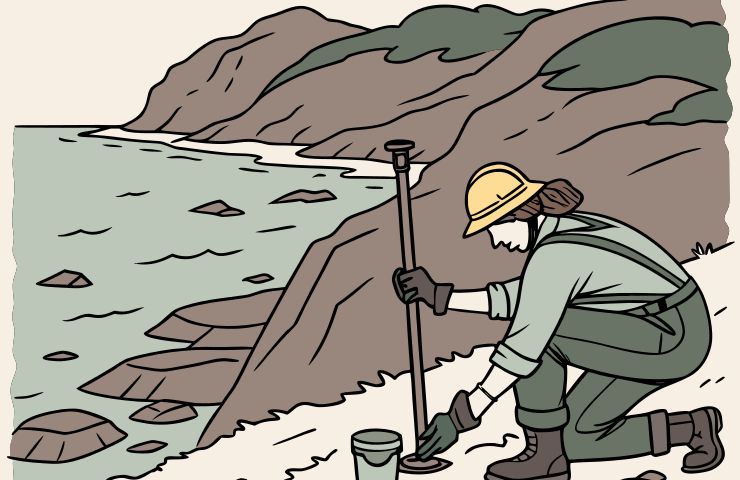
Benton Resources Inc. and Metals Creek Resources Corp. has teamed up to kick off two large soil gas surveys aimed at finding natural hydrogen, sometimes referred to as “white” hydrogen, and helium. They’ve got their sights set on their prospects known as Smoking Gun and Parson’s Pond right on the west coast of Newfoundland. They’ve enlisted the expertise of soil gas whiz Rudy Willick and Rudiger Re-Chem to help them gather about 650 to 750 soil gas samples over two to three weeks. These samples will be analyzed for hydrogen, helium, neon, carbon dioxide, and light hydrocarbons. This marks a noticeable shift in interest for junior explorers diving into natural hydrogen exploration up in Atlantic Canada.
Project Scope and Partnerships
The scope of this survey is massive, covering around 323 square kilometers split between Smoking Gun in the Deer Lake Basin and Parson’s Pond within the Humber Arm Supergroup thrust belt. Historical data has shown helium anomalies hitting up to 8,900 parts per billion in water samples from an old drill hole at Smoking Gun. Meanwhile, Parson’s Pond logs indicate methane levels as high as 72%. These clues have led Benton and Metals Creek to expand their holdings in hopes of uncovering deeper gas systems.
Earlier this year, they originally staked six natural hydrogen projects totaling 763 claim units along the stunning west coast of Newfoundland. By June, they boosted their positions to about 654 units at Smoking Gun and 641 units at Parson’s Pond, showing real confidence in the potential for both hydrogen and helium in the area.
As equal partners in this venture, Metals Creek and Benton decided to bring in Rudiger Re-Chem, a 100% Indigenous-owned geochemical survey specialist, to manage field sampling and laboratory analysis. With Rudy Willick at the helm, the team plans to use advanced gas chromatographic and isotopic techniques to create detailed concentration maps that will inform future drilling efforts.
Soil Gas Survey Methodology
Soil gas surveys are a pretty cool, low-impact method used to infer the presence of deeper gas reservoirs. The main steps include:
Once collected, these samples are sent straight to Rudiger’s lab in Saskatoon. There, they’re analyzed with gas chromatographs equipped with thermal conductivity, mass spectrometric, and electrochemical detectors to break down the components like H₂, He, Ne, CO₂, and C₁–C₄ hydrocarbons. The lab has some proprietary probe designs and strict protocols to ensure the integrity of the data, avoiding any misleading hydrogen signals caused by drilling.
Laboratory Analysis and Data Workflow
In the lab, gas chromatography is used to separate mixed soil gases as they interact with a special column. Each gas comes out at a unique retention time, allowing for precise concentration measurements. When combined with isotopic assays, this method helps distinguish between deep geological sources and any surface contamination.
The resulting data is compiled into spatial concentration maps. Analysts can overlay these maps on geological interpretations, including fault traces and the contacts of sedimentary units, to pinpoint anomalies that likely point to subsurface hydrogen or helium reserves.
Context in Hydrogen Production Strategy
Natural hydrogen exploration is gaining traction and sits proudly at the crossroads of hydrogen energy news and clean hydrogen news. Canada’s federal Hydrogen Strategy aims for hydrogen to supply up to 30% of end-use energy by 2050, which could create over 350,000 jobs and bring in more than $50 billion in annual revenues. While green hydrogen production (from electrolyzers) and blue hydrogen (derived from natural gas with carbon capture) take the spotlight, exploring geologic, or “white,” hydrogen may broaden supply avenues and tap into Canada’s extensive sedimentary basins.
Even though the spotlight is mainly on produced hydrogen, interest in natural hydrogen is definitely on the rise. Early-stage surveys are laying the groundwork for targeting wells that could show if white hydrogen can meet the necessary purity and volume for commercial viability.
Historical Petroleum Context
Parson’s Pond has quite a colorful history with oil seeps, dating back to the early 19th century when surface oil was used for medicinal purposes. By 1867, exploratory wells were already going down over 200 meters, and mid-20th-century drilling pumped at least 6,000 barrels from Cow Head Group formations. Modern seismic campaigns, along with additional wells by provincial energy authorities, have confirmed active gas shows in the region’s thrust-faulted rocks.
Meanwhile, the Smoking Gun prospect within the Deer Lake Basin has documented helium-rich fluids and long-duration gas flows from historic drill sites. These once shallow petroleum targets are now morphing into new opportunities for hydrogen and helium exploration, linking past hydrocarbon projects with future clean energy initiatives.
Business and Market Implications
For Benton and Metals Creek, these soil gas surveys reduce the risk as they move forward. If they spot a coherent hydrogen or helium anomaly that matches up with structural features, it could pave the way for more detailed geophysical studies, deeper sampling, or drill tests. Early geochemical findings could also kickstart discussions for hydrogen infrastructure or potential partnerships with industrial gas suppliers and energy companies.
With helium demand rising globally—thanks to applications in medical imaging, fiber optics, and low-temperature research—finding new sources outside the conventional basins is becoming increasingly important to ease supply shortages. On the flip side, discoveries of white hydrogen might inspire exploration efforts in other provinces, building on recent programs in Saskatchewan and studies in Alberta's basement areas.
Environmental and Regulatory Considerations
Shallow soil gas sampling leaves a limited footprint—just 1-meter holes that are filled back in. But if they move on to deeper drilling, there are environmental factors to consider, like water management, land disturbance, and gas leakage risks. Any future work will need thorough environmental impact assessments, proper provincial permits, and engagement with local communities, all following Newfoundland and Labrador’s resource regulations.
Current federal incentives like the Clean Fuels Fund and investment tax credits are geared towards promoting green and blue hydrogen production. If natural hydrogen projects show they can hold their own commercially, regulators will need to figure out how they fit into the existing frameworks or whether they deserve some new policy support.
Next Steps and Implications
Data from those 650 to 750 soil gas samples will be arriving shortly, and this could give us the first comprehensive dataset on hydrogen and helium for these Newfoundland properties. The focus of the geochemical and spatial analysis will be on how consistent the anomalies are, the purity of the gas composition, and their structural relationships. If the findings look good, Benton and Metals Creek may move ahead with targeted geophysical surveys or drilling programs to get a handle on subsurface volumes and flow rates.
And, any identified hydrogen volumes will play a crucial role in assessing hydrogen storage options and developing the necessary infrastructure on Newfoundland’s west coast.