Hydrogen Infrastructure: Cavendish Hydrogen and BHDT Forge NOK 52 Million Equity Deal
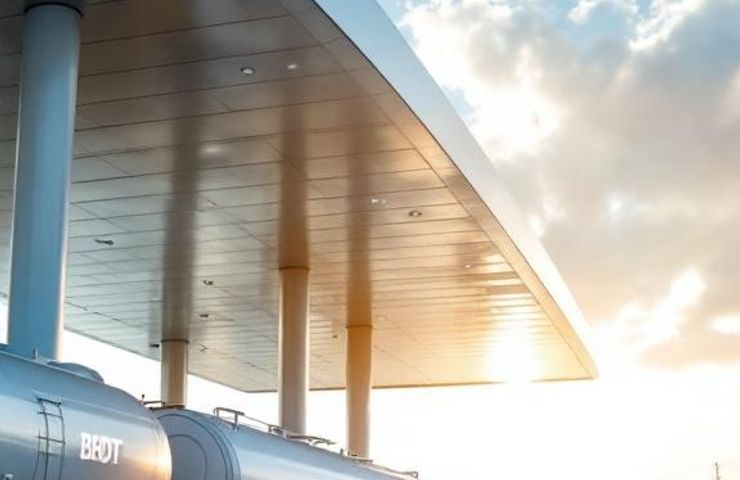
In early May, Cavendish Hydrogen ASA announced a strategic equity investment from BHDT GmbH, reinforcing its position in the emerging hydrogen infrastructure sector. The deal sees Cavendish issue roughly 5.94 million new shares at NOK 8.73 each, raising NOK 52 million (approximately USD 5.6 million) and granting BHDT a 15 percent stake post-money.
Equity Injection and Financing Impact
This fresh capital injection is earmarked for accelerating project deliveries, expanding research and development efforts, and scaling operations across Europe and North America. According to company guidelines, proceeds will help fund contracts in Italy slated for delivery in the second quarter and an engineering, procurement and construction (EPC) contract in Germany valued between EUR 4 and 5 million. The strengthened balance sheet enhances Cavendish’s ability to secure additional hydrogen project financing and to bid competitively for upcoming infrastructure tenders.
The company outlines key funding allocations:
- Advancing R&D for next-generation 700 bar compressors and dispensers
- Scaling production at its Oslo headquarters to support volume growth
- Securing supply agreements for high-pressure hydrogen storage vessels
- Boosting working capital to complete a backlog of contracts nearing €5 million
Strategic Synergy and Industrial Partnership
The partnership merges Cavendish’s expertise in designing and deploying hydrogen refueling stations with BHDT’s high-pressure engineering capabilities. BHDT, a veteran manufacturer of pumps exceeding 10,000 bar and specialized valves for chemical plants, gains an entry point into mobility markets by providing high-pressure tanks, valves and piping optimized for gaseous hydrogen storage and transfer. Cavendish secures an anchor industrial shareholder, boosting credibility on large-scale projects across the UK, Germany and Italy.
Core technical synergies include:
- Turnkey integration of H2Station™ modules with on-site electrolysis
- High-pressure pumps up to 10,000 bar enabling dense hydrogen storage
- Modular, skid-mounted design for faster deployment and maintenance
- Joint development of fatigue-proof valves to minimise leakage rates
Technical Synergies and System Integration
Cavendish’s flagship H2Station™ platform offers turnkey integration of electrolysers, compressors and dispensers, delivering up to 260 kg per hour of fuel at pressures of 350-700 bar. BHDT’s fatigue-resistant materials and designs aim to increase storage density without sacrificing safety or lifespan under cyclic loading. In practice, hydrogen arrives via tube trailers or on-site electrolysis, enters high-pressure vessels (for example, 80 kg capacity), then is compressed to 700 bar while a chiller maintains dispenser temperatures as low as –40 °C. Together, these elements enable fast, safe refuelling of hydrogen cars, vans, buses and heavy-duty vehicles, addressing a key challenge in hydrogen storage methods and distribution.
Market Dynamics and Policy Alignment
Europe’s push for decarbonised transport through REPowerEU targets 2,000 public stations by 2025, but only around 200 are operational today. Heavy-duty fleets, where batteries struggle with range and weight constraints, represent a prime growth segment for hydrogen fuel cell technology. Norway’s national strategy emphasises green hydrogen for maritime and road transport, while Austria’s roadmap aims for climate neutrality by 2040. The hydrogen vs battery debate underscores the need for robust dispensing infrastructure where range and refuel times matter most.
- REPowerEU rollout delays highlight need for private capital
- Truck fleets in Germany and Italy targeting 100+ hydrogen vehicles by 2028
- UK’s H2 mobility roadmap includes zero-emission buses and taxis
Pipeline of Projects and Global Reach
Cavendish, headquartered in Oslo with offices in Europe, North America and Asia, has delivered over 140 stations since incorporation. Its operational assets include a Transport for London station commissioning 1,200 kg per day of capacity. Upcoming projects span Italy and Germany, complemented by ongoing bids in Scandinavia and North America.
Under the Italian award, Cavendish will install a 500 kg/day capacity station primarily serving municipal transport fleets with integrated PEM electrolyser technology. The German contract covers civil works, system integration and commissioning of a 700 bar refuelling hub for logistics operators in the Rhine corridor. BHDT, based in Kapfenberg, Austria, leverages this network to introduce high-pressure systems into mobility applications, setting the stage for rapid deployments across key transport corridors.
Risks and Considerations
Despite the upside, several factors could temper growth. High upfront capital expenditures—often €1–2 million per station—can strain cash flow until utilisation rates improve. Demand forecasts remain uncertain in some regions, raising the spectre of under-used assets in low-traffic corridors. Furthermore, hydrogen supply must scale in parallel, with renewable green hydrogen production pathways avoiding grid strain and carbon lock-in. Supply chain disruptions in high-grade steel for pressure vessels can delay deliveries by months. Incentive schemes such as Germany’s IPCEI and Norway’s NOx fund reduce operating costs but require matching equity. Regulatory and permitting complexity can introduce delays, especially for cross-border refuelling networks.
Historical Perspective
The first public hydrogen refuelling station opened in Germany in 2004, but growth stalled due to high capex and limited vehicle availability. By 2021, alliances like H2 Mobility in Germany operated about 100 stations. Today Europe counts roughly 200 public stations and plans nearly tenfold growth to meet mobility targets. Partnerships between equipment makers and systems integrators are seen as critical to scaling hydrogen infrastructure.
Outlook and Next Steps
Cavendish expects to nominate a BHDT representative for its board at the upcoming Annual General Meeting, signalling long-term governance alignment. Looking ahead, the duo may pursue EU funding under Horizon Europe and other grant programs to de-risk future builds. The alliance comes at a time when investor confidence in clean hydrogen news is crucial; sending a strong signal to stakeholders that integrated, industrial partnerships are central to scaling the hydrogen economy.
By combining Cavendish’s deployment track-record with BHDT’s pressure-handling expertise, this partnership exemplifies how engineering convergence can address critical bottlenecks in hydrogen infrastructure. With capital in hand and complementary technology portfolios, the two companies are poised to accelerate roll-out of heavy-duty refuelling networks, making zero-emission fleets increasingly viable on Europe’s roads.