Green Hydrogen Production Projects Shortlisted in Australia’s Hydrogen Headstart Round 2
Australia’s ambition to transform its vast renewable resources into an export-scale green hydrogen industry gained fresh momentum in mid-2026 when the Australian Renewable Energy Agency (ARENA) revealed the shortlist for Round 2 of its Hydrogen Headstart Program. Seven large-scale proposals, collectively targeting about 2.18 GW of electrolyser capacity, are now moving into a detailed due diligence phase as they vie for long-term production credits. Yet this technical milestone sits against a backdrop of fiscal restraint: the federal government has trimmed the available budget from an initial AUD 2 billion to roughly AUD 1 billion, intensifying competition and raising the bar for cost-efficient hydrogen production.
Policy Evolution and Fiscal Trade-Offs
Launched in the 2023–24 budget, the Hydrogen Headstart Program was designed to bridge the cost gap between renewable hydrogen and conventional fuels by offering ten-year production credits. Originally, up to AUD 2 billion was set aside for Round 2, but the 2026–27 federal budget halved that allocation as part of a broader AUD 1.3 billion re-profiling across hydrogen, solar and battery initiatives. This recalibration reflects the government’s effort to balance fiscal discipline with decarbonisation ambitions, forcing developers to refine project scopes and secure more competitive finance structures.
Technology Spotlight: Power-to-X for E-Fuels
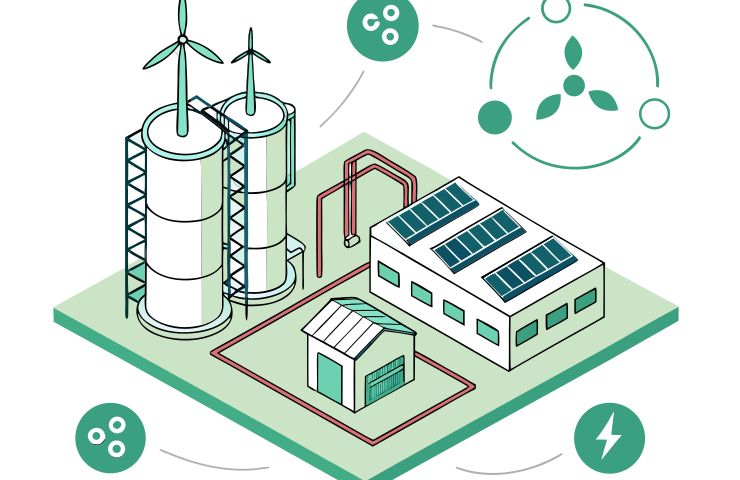
Power-to-X systems feature prominently in four shortlisted proposals, aiming to convert green hydrogen into e-methanol and sustainable aviation fuel (SAF). Electrolysers draw clean electricity from wind and solar arrays to split water into hydrogen and oxygen. The hydrogen is then reacted with captured CO₂ in catalytic reactors to produce methanol, which can either be used as a marine fuel or upgraded into jet fuel via Fischer–Tropsch or methanol-to-jet processes. By creating drop-in fuels, these plants tackle sectors where direct electrification remains challenging.
Industrial Decarbonization: Ammonia and Urea
In Western Australia, the 500 MW Murchison Green Hydrogen Project and the 750 MW Perdaman Helios scheme in Karratha illustrate hydrogen’s role in chemical production. The Murchison project is set to produce green ammonia for export, while Helios intends to feed renewable hydrogen into urea manufacture. Substituting fossil hydrogen in the Haber–Bosch process can dramatically cut embedded emissions in fertiliser, a critical commodity for global agriculture.
Hydrogen in Heavy Industry
Beyond chemicals, green hydrogen can decarbonise high-temperature processes. Summit Hydro’s 120 MW Gladstone project proposes blending hydrogen into alumina refining, replacing natural gas and coal. Modifying burners to handle hydrogen’s unique combustion properties—such as flame speed and reduced calorific density—demands rigorous safety protocols, but early demonstrations could pave the way for broader fuel switching in steel, cement and other energy-intensive industries.
Regional Hubs and Community Stakes
Tasmania’s shortlisted projects—Bell Bay Powerfuels and HIF Tasmania—leverage strong hydro and wind resources alongside deepwater ports. In Queensland, European Energy Australia and Summit Hydro tap into Gladstone’s industrial cluster, benefiting from existing pipeline and rail links. Victoria’s HAMR Energy project in Portland combines renewable generation with fuel synthesis near a major port, while Western Australia’s Murchison and Karratha sites position the state as a potential green ammonia and low-carbon urea exporter. Local stakeholders welcome construction jobs but remain vigilant about land use, water allocations and environmental management.
Market Risks and Offtake Paths
Securing long-term offtake agreements is crucial for project bankability. Developers target shipping lines for methanol, airlines for SAF and chemical groups for ammonia and urea. However, final investment decisions hinge on demand signals from importing markets, where subsidy regimes—such as the US IRA hydrogen tax credits and EU auction mechanisms—shape price expectations. Alignment between domestic incentives and international policy frameworks will be critical to attract firm contracts.
Lessons from Round 1
ARENA’s first round shortlisted six bids, ultimately awarding about AUD 1.2 billion to two anchor projects. Those pioneers revealed key success factors: modular electrolyser staging to match renewable capacity roll-out; early coordination with grid, port and water authorities to streamline permitting; and securing firm offtake terms to underpin financing. Round 2 applicants have integrated these lessons, refining designs to enhance flexibility and de-risk key interfaces.
Financing Models and Stakeholder Roles
Large-scale hydrogen plants typically rely on a mix of equity, senior debt and concessional finance. Production credits act as revenue guarantees that help satisfy debt coverage requirements, while long-term supply contracts provide additional certainty. Joint ventures between industrial consumers and developers can share both investment and offtake risk. Ancillary revenue streams—such as oxygen sales, grid services fees and capacity payments—can further strengthen financial models.
Environmental and Social Considerations
Water use, land impacts and community engagement are critical in siting electrolyser facilities. In regions like Tasmania and Western Australia, project proponents must secure reliable water allocations and conduct thorough environmental assessments. Early consultation with Traditional Owners and local councils helps address cultural heritage concerns. Workforce development programs—in partnership with vocational and technical institutions—ensure that host communities benefit from new skilled jobs in plant operation, maintenance and safety management.
International Context
Global competition for green hydrogen is intensifying. In the US, per-kilogram tax credits under the Inflation Reduction Act and Europe’s Hydrogen Bank auctions are attracting investment in electrolyser and Power-to-X plants. Importing nations such as Japan and South Korea are signing long-term supply agreements. Australia’s production credit mechanism must remain predictable and competitive to secure a share of these emerging markets, especially as private capital flows respond to policy clarity and price signals abroad.
Looking Ahead: Scaling Up or Stranded Assets?
Shortlisted applicants will submit full bids by early September 2026, entering a rigorous review by ARENA, potential lenders and equity partners. Only those with rigorous risk mitigation and clear offtake frameworks are likely to secure production credits. Successful projects could deliver meaningful cost reductions in electrolyser, synthesis and logistics, reinforcing Australia’s position as a leading green hydrogen exporter. Conversely, weaker proposals risk delays or cancellations, underscoring the importance of aligning technical maturity, finance and market demand.
Round 2 of the Hydrogen Headstart Program encapsulates both promise and complexity. With four states represented and seven diverse pathways—from clean hydrogen and green ammonia to e-fuels—this selection will shape Australia’s industrial decarbonisation efforts and its competitiveness in global hydrogen markets for years to come.