UK’s Green Hydrogen Rollout Targets Industrial Decarbonization Across Historic Regions
The UK kicks off its first Hydrogen Allocation Round (HAR1) with ten green hydrogen projects slated for 2025. Backed by £2 billion, the projects aim to decarbonise industry and revive post-industrial regions like Teesside and Newark.
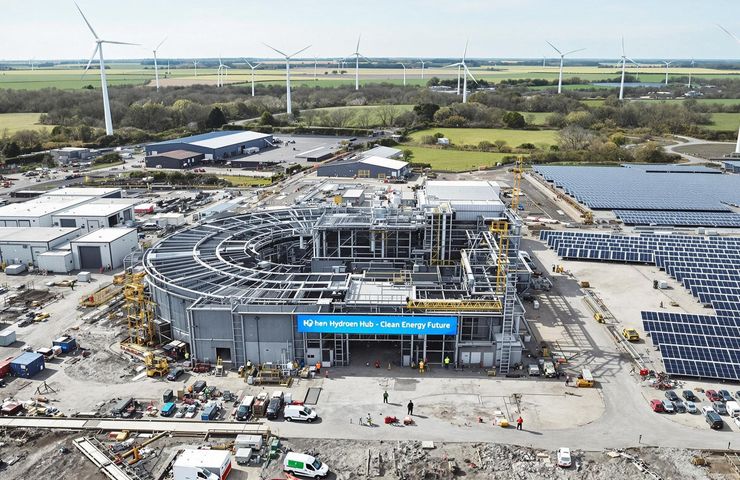
The UK Government is making a serious move toward a cleaner, greener future with plans to build ten commercial-scale green hydrogen plants. The aim? Cut down emissions, breathe new life into former fossil fuel regions, and put Britain back on the industrial map—but this time powered by clean energy.
Hydrogen Allocation Round 1 Takes Off
Set to go live by July 2025, these projects make up the first wave of the UK's Hydrogen Allocation Round 1 (HAR1)—a big-ticket part of the country’s broader Net Zero game plan. With over £2 billion in guaranteed 15-year revenue contracts and another £90 million in funding from the Net Zero Hydrogen Fund, the initiative is ditching the drawing board and getting serious about bringing green hydrogen into real-world industries.
The projects are spread out across familiar names like South Wales, Bradford, Teesside, North Scotland, Newark (Nottinghamshire), and Cromarty. Many of these areas were once the backbone of Britain’s coal, steel, or manufacturing scene—and now they’re stepping into the spotlight again, this time as clean energy hubs.
Breathing New Life Into Old Industry
A lot of these towns and regions have taken some hard knocks in recent decades—coal plant shutdowns, offshoring, and industrial decline left deep scars. But now, they’re leading the charge in the UK’s shift to a hydrogen-powered economy. Take Newark, where a former coal-fired power station is getting a total makeover as a hydrogen production hub. Or Cromarty, where the local whisky industry will soon be fueled by renewable hydrogen, cutting emissions while keeping a vital local trade alive.
“It’s about more than just energy,” one industry insider put it. “This is about reindustrialisation through innovation—bringing back meaningful jobs and slashing carbon at the same time.”
Green Hydrogen Powered by Electrolysis
At the heart of every one of these projects is electrolysis—a clean-tech process that uses renewable electricity (mostly from offshore wind) to split water into hydrogen and oxygen. That hydrogen will then be put to work decarbonising heavy industry, generating clean power, and fueling zero-emission transport.
These are the tough nuts to crack—sectors like oil refining, chemical production, freight, and distilling don’t electrify easily. But hydrogen offers them a way to clean up without completely tearing down and rebuilding their existing infrastructure. A smart pivot instead of a total overhaul.
Job Creation and Private Investment
The economic benefits are hard to ignore. These projects are expected to create over 700 skilled jobs during the build and operation phases and bring in more than £400 million in private investment between 2024 and 2026. According to the Hydrogen Energy Association, it’s a clear green light to investors that Britain means business when it comes to hydrogen infrastructure.
What’s more, clever schemes like the government’s Hydrogen Production Business Model—designed to give developers stronger financial footing—are finally starting to pay off. With stable revenue sources, more industrial players and global investors are coming to the table, making the whole system stronger and more resilient.
Hurdles on the Road Ahead
No doubt, this is an ambitious play—and it comes with real challenges. Deadlines are tight, and global demand is creating bottlenecks in supply chains for critical components like electrolysers. Add to that a lack of large-scale hydrogen storage and transport infrastructure, and there's a risk some of these projects could hit speed bumps once production gets going at full tilt.
Still, the UK is holding firm to its target of having 2 GW of low-carbon hydrogen capacity either built or under construction by 2025. HAR1 is the boldest and clearest move yet to making that vision a reality.
Britain Betting Big on Hydrogen
This isn’t a toe-in-the-water moment; it’s a full dive. The UK is putting itself on the map as a serious contender in the global hydrogen economy. It’s not just about cutting emissions or making headlines—it’s about strategic positioning. In a world racing toward decentralised, low-carbon energy systems, being a frontrunner in hydrogen production matters... a lot.
HAR1 is giving the UK its first big real-world test of green hydrogen at scale—and if it goes well, you can bet there’ll be more rounds to come. As these sites break ground and the hydrogen starts flowing, this mix of engineering savvy and long-term thinking could just mark the start of a truly clean energy comeback.