Solid Oxide Fuel Cell Technology Gains Maritime Traction with MOL and SHI's New LNG Carrier Project
MOL and Samsung Heavy Industries receive Approval in Principle for a 174,000 cbm LNG carrier powered by a 300kW Bloom Energy solid oxide fuel cell, pushing the maritime industry closer to net-zero emission goals.
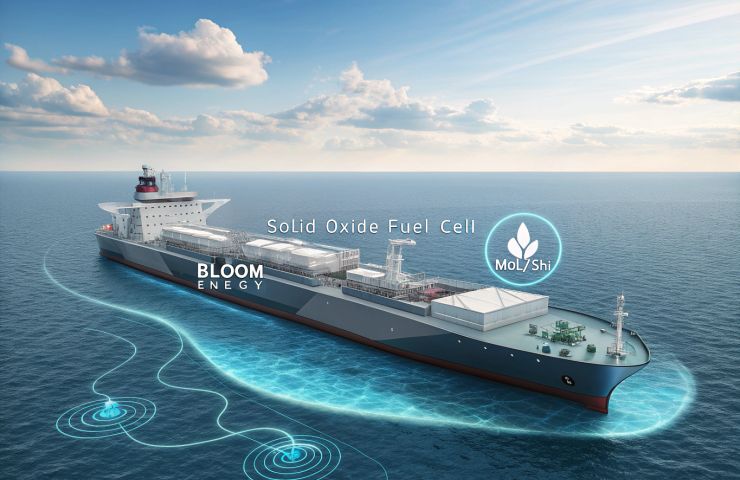
Maritime decarbonization just got a serious shot in the arm. In a big win for cleaner shipping, Mitsui O.S.K. Lines (MOL), Samsung Heavy Industries (SHI), and Bloom Energy have landed an Approval in Principle (AiP) from Lloyd’s Register, clearing the way for a game-changing LNG carrier featuring solid oxide fuel cell (SOFC) technology. The announcement came at the Norshipping 2025 expo in Lillestrøm, Norway — and it marks a major step toward slashing greenhouse gas emissions in the shipping world.
SOFC-Powered LNG Carrier: Breaking Down the Basics
Set to hit the water in 2027, the ship will come equipped with a 300kW SOFC module from California-based Bloom Energy, acting as an onboard auxiliary power generator. Unlike traditional systems that burn fuel, this one uses a high-efficiency electrochemical process to generate electricity. That means drastically lower emissions of NOx, SOx, and methane slip — all problematic byproducts of standard LNG operations.
This isn’t some overnight project either. MOL and SHI have been quietly developing the design since mid-2022 as a pilot run to see just how viable fuel cell technology would be on the open seas. Before securing AiP, the team dove deep into the safety protocols — running HAZID and HAZOP assessments with all key players at the table. If all goes to plan, joint equipment testing starts in early 2027, just in time for the vessel’s debut.
How Solid Oxide Fuel Cells Are Reshaping Marine Power
So, what makes solid oxide fuel cells such a big deal? Simply put, they’re clean, efficient, and don’t need to set fire to anything to make power. By converting natural gas or hydrogen directly into electricity, SOFCs skip combustion entirely — resulting in a much cleaner process and better fuel economy. In the context of shipping, where diesel generators still rule the roost for auxiliary power, it’s a big leap forward.
The payoff is real: greater efficiency, fewer emissions, and easier compliance with the increasingly strict emissions rules set by global bodies. But let’s be honest — this tech isn’t exactly mainstream yet, especially not on vessels this size. That’s what makes this project such an important proof-of-concept for anyone watching the future of hydrogen fuel cells in maritime operations.
Why It Matters: Beyond the Hardware
While this might look like just another high-tech LNG ship, there’s more going on under the surface. For MOL, which runs a fleet of over 100 LNG carriers, it’s a bold statement about their commitment to reaching net-zero greenhouse gas emissions by 2050. And for SHI, it’s another notch in their belt as they double down on innovation to stay ahead in the hyper-competitive world of shipbuilding.
The timing makes sense too. With the International Maritime Organization (IMO) calling for at least 5% of maritime energy needs to come from zero-emission fuels or technologies by 2030, projects like this could be just what the industry needs to get over the line. Especially for larger ships where full electrification still isn’t quite feasible.
And we’re not just talking LNG ships. Proving this works on a large-scale carrier opens the door to rollout across tankers, ferries, container vessels — you name it. It also creates momentum for things like crew training, fuel cell integration protocols, and broader investment into this kind of clean marine tech.
Big Impact Through Global Teamwork
What really makes this project stand out is the level of international collaboration. Bloom Energy, a heavy hitter in stationary fuel cell systems, now has a solid foot in the maritime sector — notoriously cautious and complex. Meanwhile, the partnership between MOL and Samsung Heavy Industries shows what long-term R&D commitment looks like, going all the way back to the earliest design talks in 2022.
The AiP isn’t just a technical checkbox — it’s a green light for future adopters, investors, and regulators to start taking solid oxide fuel cell systems seriously as part of the maritime energy mix.
What’s Next: Scaling Up and Setting New Standards
Sure, this 300kW SOFC is only handling auxiliary power for now. But if the results come through as expected, it could pave the way for larger modules — maybe even taking over main propulsion down the line. There are still challenges, no doubt: fuel infrastructure, the high operating temps of SOFCs, and upfront costs all need strategic handling.
That said, this ship might be laying the foundation for a whole new era — including future LNG, clean ammonia, or hydrogen-fueled boats. It could also accelerate the trend toward hybrid systems, blending fuel cell technology with batteries or low-emission internal combustion engines for even better performance.
At the end of the day, the maritime industry isn’t looking to slow down — it's trying to go green without sacrificing range or reliability. And tech like solid oxide fuel cells just might be the most promising route toward that cleaner, post-fossil future we’ve all been talking about.