News
Plug Power’s Q1 Results Reveal Growing Revenue But Mounting Pressure in Hydrogen Fuel Cell Markets
Plug Power grew revenue 11% in Q1 2025 but remains unprofitable, with scaling costs in hydrogen fuel cells and infrastructure weighing on margins. Guidance for Q2 remains optimistic amid strong demand from logistics partners like Walmart.
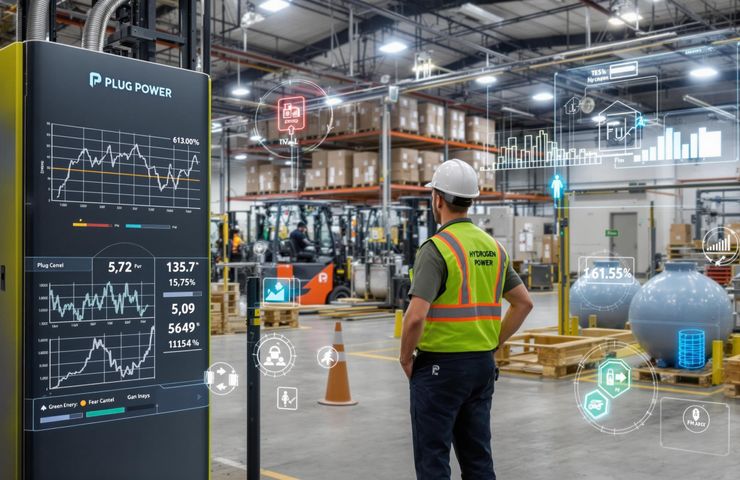
Growing the hydrogen economy is anything but linear
Plug Power’s latest earnings report is out, and in many ways, it feels like déjà vu. Yes, revenue’s up — rising 11.2% year-over-year to $133.7 million — but the company is still bleeding cash, with a steeper-than-expected EPS loss of -$0.21. And the operating margin? A rough-looking -134%. Not exactly the kind of numbers that inspire investor confidence. Still, there’s a pulse of optimism. Plug is forecasting Q2 revenue of $160 million at the midpoint, beating Wall Street’s expectations. That’s at least one sign that demand — especially in logistics and material handling — is gaining momentum.Behind the numbers: Why Plug’s path is so bumpy
So, what’s tripping them up? In short: growing a nationwide hydrogen infrastructure network isn’t cheap or easy. Plug's been putting real boots on the ground — building green hydrogen production sites and rolling out fuel cell-powered equipment like forklifts and delivery vans. But that kind of expansion doesn't come without a major financial hangover. To understand how they got here, it helps to rewind. Plug Power has been at it since 1997. In the early 2000s, they bet big on hydrogen fuel cells, going against the lithium-ion trend. They scored major contracts with Walmart and Amazon in 2014, electrifying massive fleets of forklifts. More recently, they’ve teamed up with Hyundai and Renault to move into mobility. But turning all this activity into actual profits? That’s another story. Plug is building an entire energy ecosystem almost from scratch — developing demand through vehicles and applications, while simultaneously creating supply with electrolyzers, refueling stations, and delivery infrastructure. It’s a bit like trying to lay down railroad tracks while the train is already moving.Hydrogen fuel cells in the logistics trenches
The real magic behind Plug’s tech lies in its fuel cell technology — specifically, proton exchange membrane (PEM) cells. These take hydrogen and air and turn them into electricity, with water and heat as the only byproducts. It’s a perfect match for logistics operations like warehouses where time is money. Fast fueling beats long battery charging delays every time. That’s why companies like Walmart are doubling down. Plug’s systems are being adopted at scale, and 2025 could be a breakout year if more businesses jump in to cut emissions and meet climate goals. But here's the catch: they’re up against battery-electric alternatives that, for certain use cases, are already cheaper and more established. Hydrogen shines in heavier-duty, high-use scenarios — think 24/7 operations or cold climates — but batteries are catching up quickly.Why analysts (kind of) still believe in Plug
Even with all the turbulence — including a stock price that recently dipped below $1 — Plug hasn’t lost all of Wall Street’s faith. Out of 20 major analysts, 5 rate the stock a “Buy,” 10 are at “Hold,” and 5 lean “Sell.” There’s still an underlying belief it could bounce back, with some predicting an upside of 125% on the back of accelerating hydrogen production and market demand. They’re expecting revenue to climb another 22.8% in 2025 as hydrogen fuel cells find their way into more logistics and industrial use cases. But analysts have made one thing clear: growth alone isn’t enough. They want proof — and soon — that Plug can deliver better margins and actually execute.Plug’s balancing act — and hydrogen’s bigger challenge
Plug’s story is basically the story of the hydrogen economy itself — full of ambition, but facing big hurdles. Cost is still high, infrastructure is lagging, and government incentives like those in the U.S. Inflation Reduction Act are still taking shape and slow to hit the ground. Yet interest is growing. More companies are signing on, eager to reach zero-emission targets, and Plug is one of the few out there actually building the tools to make this possible. They’re not just selling promises — they’re in the weeds, trying to make industrial decarbonization a reality, one forklift or fueling station at a time. It’s a tough race — one where potential is always just a step ahead of profitability.Where do we go from here?
The next few months could be make-or-break for Plug Power. Their Q2 forecast suggests stronger demand and possible progress on getting their operations under control. But investors’ patience won’t last forever — they want a real bottom-line breakthrough. A bigger expansion with Walmart could be the lift the company needs. And if the U.S. can speed up the rollout of hydrogen infrastructure — stations, storage, and production — that could take some pressure off as well. Advances in electrolysis and storage tech might ease costs and help the bottom line, but it’s not a tomorrow fix. What’s clear, though, is this: Plug Power and others in the space aren’t being judged on vision anymore. It’s all about results.About the Company:
Plug Power (NASDAQ: PLUG) is a U.S.-based leader in hydrogen fuel cell systems, focused on clean mobility and stationary power solutions. Its customers include heavy hitters like Walmart, Amazon, and Hyundai. Plug is also making moves in green hydrogen production and developing infrastructure for refueling and delivery.Forward Look:
Building out the hydrogen economy was never going to be fast — or cheap. But progress, as slow as it might be, is underway. If Plug can show real operational improvement in Q2 while demand keeps ticking up, it could be the start of a turnaround. For now, Plug remains front and center in the long game toward industrial decarbonization.How was this article?
Thanks for the feedback!