Nordic-Baltic Hydrogen Corridor Secures EU Support for 2,500 km Clean Energy Pipeline
Europe funds a 2,500 km hydrogen pipeline linking Finland to Germany. The Nordic-Baltic Hydrogen Corridor aims to boost green hydrogen trade, connect six countries, and power the EU’s clean energy transition.
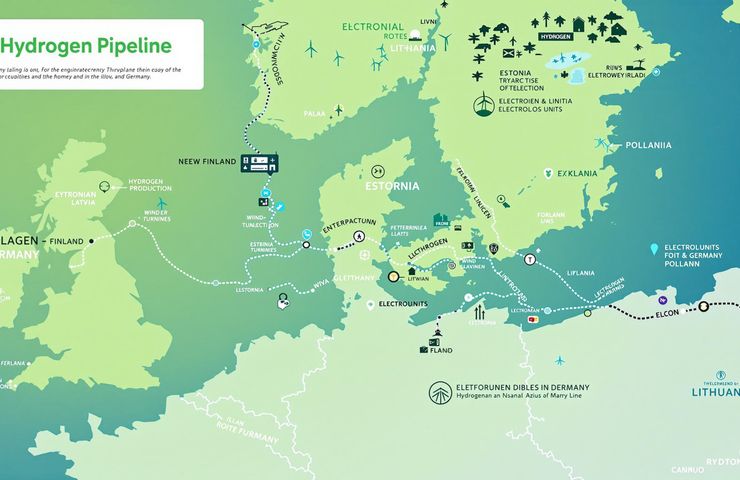
A bold new vision for green hydrogen is gaining momentum across Northern Europe. The Nordic-Baltic Hydrogen Corridor (NBHC)—a massive cross-border project backed by top gas transmission operators in Eastern and Northern Europe—is charging ahead with support from a €6.8 million grant through the European Commission’s Connecting Europe Facility. The plan? A sweeping 2,500 km hydrogen pipeline stretching from Finland through the Baltics and Poland, all the way to Germany.
From Finland to Germany: Building Hydrogen’s Highway
This isn’t just another infrastructure project. The NBHC is a coordinated effort between some of Europe’s heaviest hitters in the energy world: Gasgrid Finland, Elering (Estonia), Conexus Baltic Grid (Latvia), Amber Grid (Lithuania), Gaz System (Poland), and ONTRAS (Germany). Their shared goal? To lay down the backbone of a pan-European hydrogen infrastructure that can move green hydrogen produced in the north to energy-hungry industries in central Europe.
Right now, the initiative is in its early phase—known as the feasibility stage—which will run from 2024 through 2027. If all goes according to plan, this pipeline could be up and running by the early 2030s, feeding directly into European goals tied to the EU Green Deal, REPowerEU, and the broader European Hydrogen Backbone initiative.
More Than Just Pipes: A Vision with Purpose
Sure, it’s about steel in the ground—but the vision runs way deeper. The NBHC aims to:
- Accelerate industrial decarbonization by supplying renewable hydrogen to energy-intensive industries and transport sectors.
- Boost energy security by helping Europe reduce its reliance on imported fossil gas—especially after recent energy shocks.
- Improve market integration by stitching the Nordic and Baltic regions more tightly into the EU’s emerging hydrogen economy.
It’s not just hype either. If the pipeline hits its stride, it could help cut up to 37 million tons of CO2 per year by 2050. That’s huge. And it’s not just climate progress on the table: think stronger energy networks, new jobs in clean tech, and regional manufacturing booms in the green hydrogen sector.
Technology in Motion: Electrolysis + Pipelines
The whole corridor will ride on a combination of cutting-edge tech and smart design. The pipeline itself will be purpose-built for hydrogen, which brings its own set of challenges—like being incredibly light, quick to leak, and picky about materials. But the payoff? A safe and efficient route for transporting green hydrogen at scale.
How does the hydrogen get in there? Through electrolysis, where renewable electricity—most of it from wind and solar—is used to split water into hydrogen and oxygen. The resulting hydrogen will be compressed, stored, and sent down the pipeline to power everything from heavy industry to hydrogen-fueled transport hubs dotted along the route.
Six Nations, One Hydrogen Dream
While the pipeline crosses borders, each participating country has a unique role to play:
- Gasgrid Finland is taking the reins on strategy and communications, with a strong focus on Nordic hydrogen production.
- Elering covers Estonia’s grid connections and ensures smooth integration.
- Conexus Baltic Grid is handling underground hydrogen storage options in Latvia—a key piece of the long-term supply puzzle.
- Amber Grid is steering transmission planning and infrastructure development in Lithuania.
- Gaz System is coordinating engineering roadmaps and hydrogen market frameworks in Poland.
- ONTRAS is syncing the German portion of the pipeline with national hydrogen strategies and policies.
It’s a snapshot of how the EU is shifting from solo national energy plans to a joint approach that prioritizes resilience and collaboration across borders.
Policy Momentum and Funding Muscle
The NBHC just earned the coveted Project of Common Interest (PCI) label—which is a pretty big deal within the EU. That means the project gets streamlined permitting, fewer regulatory hiccups, and better access to European funding tools like the Connecting Europe Facility (CEF).
In fact, that’s exactly where the current funding came from. It’ll pay for a deep dive into the corridor’s feasibility—from environmental assessments and commercial case studies to land use planning and regional impact reviews—all expected to run through 2027.
What to Watch Going Forward
For now, it’s still early days. The big decisions—about exact routing, investment logistics, and how to handle community input—are just getting started. And they’re important. Community feedback, especially around land rights and pipeline safety, could make or break local support.
If the timeline holds, the early 2030s could see one of Europe’s most ambitious green hydrogen undertakings become reality. This isn’t just a pipeline. It’s a leap toward a more connected, decarbonized, and secure energy future for the whole region.
We’ll be keeping a close eye on what happens next. If the pieces fall into place, the Baltic Sea corridor could very well become the main artery in Europe’s green hydrogen future.