New Tandem Catalyst Breakthrough from China Promises Leap in Clean Ammonia and Fuel Cell Efficiency
Chinese researchers unveil a dual-interface tandem catalyst that boosts both ammonia synthesis and fuel cell performance, offering big gains in decarbonized energy systems.
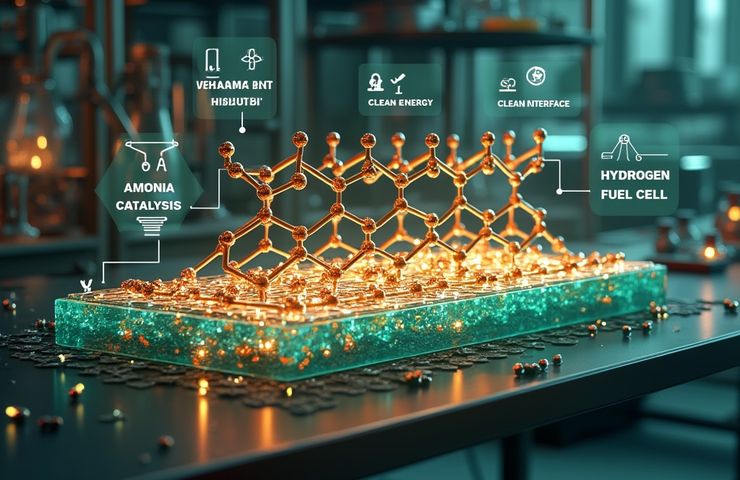
Hydrogen fuel cells and clean ammonia production just got a serious boost, thanks to a team of researchers from the University of Science and Technology of China (USTC) and the Dalian Institute of Chemical Physics (DICP), both under the Chinese Academy of Sciences (CAS). They’ve developed a new tandem catalyst system that could shake up everything from how we store hydrogen to the way we produce fertilizers and power fuel cells.
One Catalyst, Two Big Problems Solved
What makes this development so exciting is the versatility of the catalyst. It’s designed with two different reactive surfaces that work together to ramp up the efficiency of both ammonia production and fuel cell technology. These are two major puzzle pieces in the transition to low-carbon energy, and until now, both have been pretty tough nuts to crack.
Announced in 2024, this new approach offers a smarter, cleaner alternative to the energy-hungry Haber-Bosch process, which is still the go-to way to make ammonia—but also one of the planet’s bigger carbon culprits. At the same time, the catalyst enhances the way hydrogen fuel cells operate, tackling both performance and efficiency issues.
What’s Going On Inside This Catalyst?
Here’s the cool part: the system works through what's called tandem catalysis. Think of it like a well-rehearsed relay team. The first interface kicks things off by activating the ingredients—nitrogen for ammonia or hydrogen/oxygen for fuel cells. Then, the second interface steps in to finish the job and produce the final substance, like ammonia or water. Because the two surfaces sit close together and are finely tuned to work in sync, the reactions move faster and use less energy overall. It’s chemistry with teamwork at its best.
Why This Matters Now
Let’s put this in context. The old-school Haber-Bosch process is still soaking up about 2% of the world’s entire energy supply and contributes a solid 1% of all greenhouse gas emissions. That’s a big footprint. Meanwhile, fuel cell adoption has been held back by high material costs, slow reactions, and reliability challenges.
This tandem catalyst aims to take on both issues in one go, offering a path to cleaner, more efficient systems that could seriously change how we handle global ammonia production and hydrogen fuel cells.
Heavy-Hitters Behind the Breakthrough
This isn’t some one-off lab trick. The people behind it know their stuff. USTC has built a strong reputation in fields like quantum science and sustainable materials. On the other hand, DICP has been a key player in catalysis and chemical engineering since the 1940s. Together, they’ve got the scientific firepower—and the track record—to make this innovation one to watch.
Real-World Impact: What Happens if This Scales?
If this catalyst makes it past the lab and into the real world, the ripple effects could be massive. For starters, it could significantly cut costs across ammonia supply chains, a huge deal for the $70 billion global fertilizer market. At the same time, it could push hydrogen-electric vehicles and industrial-scale fuel cell technology closer to being viable at commercial levels.
On top of that, governments trying to hit their net-zero goals could find this technology particularly useful. By making green ammonia and clean hydrogen more cost-friendly, it helps smooth the transition away from fossil fuels in transportation, energy, and logistics.
That said, it’s not a done deal yet. Scaling up from lab conditions to full-blown industrial use is never easy. There’s still a long road ahead in terms of testing durability, working out the economics, and competing with long-established systems that have decades of refinement behind them.
Tandem Catalysis is Having a Moment
This isn’t an isolated story. Around the world, more teams are experimenting with tandem catalysis to produce zero-emission fuels. Still, this new system is unique in how it tackles two major technologies—ammonia synthesis and fuel cells—at once. That dual capability could turn out to be a major advantage, especially in industries looking to streamline and decarbonize at the same time.
In a space where progress often comes in small, careful steps, this catalyst could mark a real leap forward. And let’s not forget: China is one of the biggest players when it comes to both hydrogen systems and ammonia production. Their investment in cutting-edge catalysts like this one is a clear signal that the race for industrial decarbonization is heating up.
What’s Next?
If this technology can prove itself outside the lab, we could see major reductions in the environmental impact of how we grow food and power our cities. By bridging the gap between fuel technology and fertilizer systems, this innovation opens up new doors for sustainable chemical platforms.
The big question now? Who’s going to jump on it first—forward-thinking policymakers aiming to green up their infrastructure, or agile companies looking for a competitive edge in energy efficiency? Either way, it’s a development worth watching.