
Natural Hydrogen Exploration in Lorraine: FDE’s Deep PTH-2 Drill Unveils High-Concentration Reservoir
FDE’s PTH-2 well in Lorraine confirmed high natural hydrogen concentrations under a new Three-Évêchés exploration permit, moving the project closer to resource certification and potential low-carbon production.
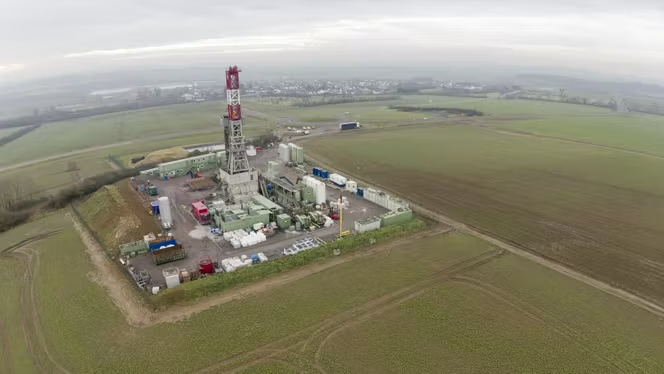
So, here’s the scoop: a drilling rig in Pontpierre recently went down to the impressive depth of 3,655 meters, but instead of hunting for the usual oil or gas, it was after something much more surprising—natural hydrogen! This rig, run by La Française de l’Énergie, is part of the REGALOR II research program, and guess what? It’s confirmed some pretty high concentrations of hydrogen lurking beneath the ground in the Moselle region. This discovery is stirring up excitement that Lorraine's old mining basin might actually have a decent low-carbon energy resource just waiting to be tapped.
Earlier this year, the French government handed over the exclusive Three-Évêchés exploration permit, which gives the go-ahead to explore an area of over 2,250 km² spanning Moselle and Meurthe-et-Moselle. This landmark allows La Française de l’Énergie to dig deeper in areas that scientists at the CNRS and the University of Lorraine’s GeoRessources lab have long believed were prime for hydrogen exploration, although it doesn’t give them permission to start mining just yet.
Understanding Natural Hydrogen
Now, let’s unpack what natural hydrogen really is. Unlike the green hydrogen produced through electrolysis, natural hydrogen is formed underground through geochemical reactions, often involving iron-rich rocks and water. This gas migrates through fault systems and gathers in permeable rock layers. To get a solid grasp on what’s happening down there, La Française de l’Énergie turned to Swiss whizzes at Solexperts for their precision drilling and borehole measurement expertise. With their high-tech probes, dubbed SysMoG and SYSPROG, they’re measuring hydrogen flows and analyzing the fluid composition right where it counts. The rig also installed multiple layers of casings to keep things stable and protect the reservoir. They’ve sampled hydrogen at 58 depth intervals along the journey, creating a detailed map of where to find the highest concentrations of hydrogen. Plus, they’re not just looking for hydrogen; they're also examining any co-produced methane and trace gases to get a fuller picture of what's going on underground.
Modelling vs. Certification
With all that juicy data, researchers led by Jacques Pironon from the CNRS got to work applying geological and geochemical models to estimate how much hydrogen might be hiding in the Lorraine structure. Early reports suggest there could be resource potential in the tens of millions of tonnes, but hold your horses—those numbers are still just educated guesses. Pironon warns that it’s tricky to extrapolate data from just one borehole; factors like porosity, permeability, and how well the fault lines connect can greatly vary in such a large area. Plus, independent auditors still need to confirm how much of that hydrogen could actually be recovered, so claims about having the “world’s largest deposit” are pretty speculative for now.
Strategic Implications for Energy Security
France, like many places in Europe, is keen to nail down some low-carbon energy sources close to where the industrial action is. A local supply of natural hydrogen could help lessen the country’s dependence on imported fuels and sidestep the high electricity costs often associated with producing electrolytic hydrogen. And guess what? The existing gas pipelines could potentially be tweaked to transport natural hydrogen straight to nearby industrial hubs. For this initiative to transform from lab results to actual production, companies in steel, fertilizer, and transportation will need to jump in with long-term purchase agreements, paving the way for future drilling and production efforts.
La Française de l’Énergie has set ambitious goals, aiming for resource certification by 2027 and looking to kick off production by late 2028 or early 2029. If they pull it off, they could snag a first-mover advantage in this budding industry, opening doors to new drilling jobs, specialized measurement techniques, and economic growth in a once coal-heavy area. They’re also branching out, as their portfolio already includes biogas and methane projects, experience they plan to leverage for hydrogen commercialization.
However, turning theoretical science into a commercial success isn’t without its challenges. Just because they have an exploration permit doesn't mean they can start mining right away—there are still many more wells needed to fully map out the resource. They’ll face hurdles related to water management, methane co-production, and the overall environmental impact of deep drilling, which all need thorough studies and public feedback as required by mining regulations. Ensuring the high-pressure sampling doesn’t mess with freshwater aquifers and that the operations align with national ecological standards is crucial.
From Coal to Clean Molecules
The Moselle region has deep roots in coal and steel, and now, those very sedimentary formations that once powered the mines are being revisited for their natural gas and hydrogen potential. Local stakeholders—from labor unions to environmental groups and municipal councils—are keeping a close watch on how La Française de l’Énergie and its scientific partners tackle the technical and regulatory challenges ahead. A successful project here could usher in a brand-new chapter for the area: a clean energy district fueled by existing infrastructure and in-depth geological know-how.
Next Steps and Uncertainties
In the coming months, experts will dive into follow-up drill cores, pressure tests, and modeling results to fine-tune resource estimates. Before any pilot production plans can be rolled out, there’s an environmental impact report in the works. Data from seismic surveys, borehole imaging, and pressure tests will all help shape how wells should be spaced and how to factor in recovery rates. And the mystery of how far this hydrogen resource stretches—potentially sneaking under borders into Luxembourg, Belgium, and Germany—is still being investigated. Local businesses, drilling companies, and instrumentation firms may find new opportunities for growth, bringing some economic diversity to a region that’s shifting away from coal mining. Environmental groups will remain vigilant, following developments closely through public hearings and regulatory checkpoints.
Will Lorraine's deep wells actually provide a reliable stream of low-carbon hydrogen? That's the million-dollar question. But the results from the PTH-2 well mark a significant milestone: they’re taking geological theories and turning them into something measurable, kicking natural hydrogen out of the lab and closer to market readiness. As this underground narrative continues to unfold, energy planners and investors will definitely be looking for whether this hydrogen deposit can live up to its hype.


