News
Hyundai Showcases Next-Gen Hydrogen Fuel Cells at World Hydrogen Summit 2025
Hyundai showcases next-gen HTWO hydrogen fuel cells at World Hydrogen Summit 2025, with new transport and power applications and plans for EU–Korea tech collaboration.
Hyundai Scales Up Hydrogen Push at Rotterdam Summit
At the World Hydrogen Summit 2025 in Rotterdam, Hyundai Motor Group came out swinging—pushing the pedal on its bold plans for a cleaner, zero-emission future. Over the course of the three-day event from May 20–22, the South Korean auto giant unveiled a powerful lineup showcasing just how far it’s come with its HTWO hydrogen fuel cell platform. From trucks and trams to energy storage, Hyundai’s message was clear: hydrogen isn’t a concept anymore—it’s ready for prime time.HTWO: The Engine Behind Hyundai's Hydrogen Strategy
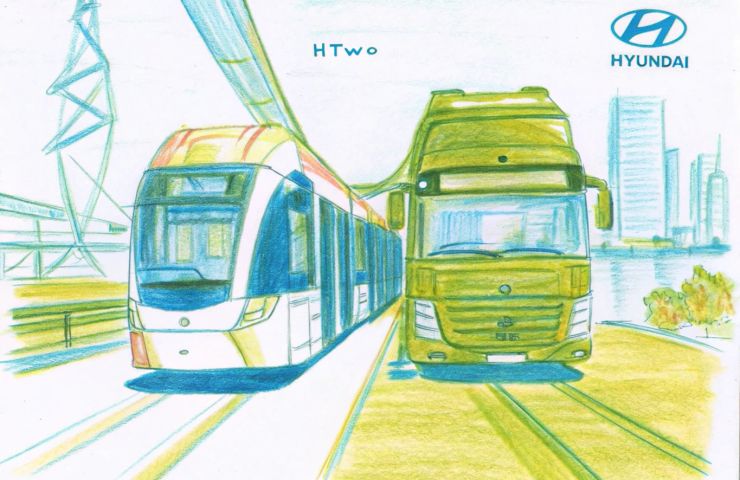
Front and center was Hyundai’s latest tech marvel—the third-gen HTWO fuel cell system. With 200 kW of power and an impressive 60% efficiency, it’s no prototype. This technology is already powering a fleet of hydrogen-fueled vehicles, including trucks, buses, forklifts, and even a tram. That tram, by the way, stole the show. Hyundai’s first-ever HTWO-powered hydrogen tram blends heavy-duty capability with smooth, green performance—featuring an 80-kilometer range, enough space for 300 passengers, and a lithium-ion battery to manage power highs and lows. It’s more than a cool showcase; it’s a concrete step toward commercial hydrogen transport that goes beyond personal cars. Remember the Tucson FCEV in 2013? Or the NEXO in 2018? Hyundai’s been building to this moment for years.Strategic Convergence: From Korea to Europe
This wasn’t just about lighting up the expo floor—Hyundai was playing chess, not checkers. Rotterdam is rapidly becoming the heart of Europe’s hydrogen infrastructure, backed by a €2 billion plan to scale it by 2030. Hyundai’s presence signaled that it's ready to plug into both European and Korean ambitions. South Korea is targeting 6.2 million FCEVs on the road by 2040, while the EU aims to produce 20 million tonnes of clean hydrogen annually by 2030 as part of its REPowerPlan. By teaming up with groups like H2KOREA and KOTRA, Hyundai sent a loud signal: South Korea is open for clean hydrogen business. It also signed on to the EU-Korea Clean Hydrogen Partnership, which is about setting international standards, smoothing trade, and syncing policy goals—a big-picture move for global fuel cell technology adoption.Business Implications and Regional Impact
Hyundai’s display wasn’t just for clout—it’s got real implications for Europe. Rotterdam handles about 13% of all the energy imports into the EU. If the port wants to cut down on carbon, Hyundai’s tech offers a real-world toolkit: cleaner long-haul trucks, low-emission transit buses, and hydrogen-powered logistics fleets that could seriously move the needle on industrial decarbonization. Adding to that momentum, Hyundai also revealed it’s opening a brand-new R&D facility in Delft, Netherlands. The lab will focus on adapting hydrogen fuel cells for marine use, positioning Hyundai to help clean up shipping lanes too. It’s a smart pivot into maritime decarbonization—a huge, often overlooked piece of the climate puzzle. All this plays right into funding mechanisms like the EU’s Hydrogen Bank, which backs projects that prove hydrogen can scale. Hyundai’s actions are turning theories into investment-ready realities.The Evolution Behind the Vision
Hyundai’s not new to this—it’s true to this. The company’s been plugged into hydrogen fuel cells for more than a decade. First with the Tucson, then raising the stakes with the premium NEXO SUV. In 2020, they went all-in, launching HTWO to drive fuel cell commercialization across cars, public transport, and energy systems alike. By 2023, Hyundai’s hydrogen trucks were already hitting Swiss roads. It’s not going it alone, either. Hyundai is a Steering Member of the Hydrogen Council and a key collaborator with H2KOREA, showing it’s committed to lifting hydrogen via alliances, not just solo innovation. The company is planting its flag in the future of zero-emission technology and bringing partners along for the ride.Looking Ahead: Real Deployment or Just Stagecraft?
So where does all this go from here? The big questions are looming: Can Hyundai bring down hydrogen fuel cell costs enough to stand toe-to-toe with diesel by 2030? Can hydrogen stations, supply chains, and safety nets scale fast enough to keep up? While some automakers are pumping the brakes on hydrogen, Hyundai’s keeping its foot on the gas. The company isn’t just tinkering with fuel cells—it’s laying the groundwork, building out the infrastructure, and showing up where it counts. As hydrogen starts to take root in policies across Asia and Europe, Hyundai’s moves in Rotterdam feel less like a spectacle and more like a statement: hydrogen isn't hype—it’s happening.How was this article?
Thanks for the feedback!