Hydrogen Refueling Stations: Bosch’s CryoPump Accelerates Heavy-Duty Truck Fueling
Bosch’s CryoPump-based turnkey station concept aims up to eight heavy-duty hydrogen refuels per hour and sub-10-minute fills, aligning with EU corridor targets.
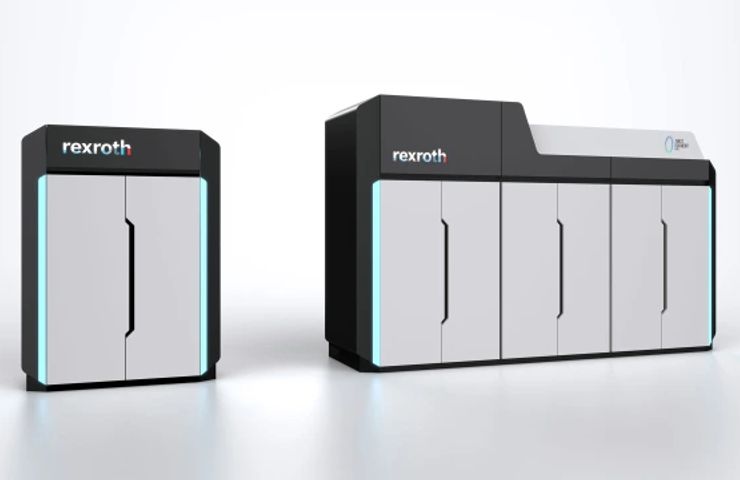
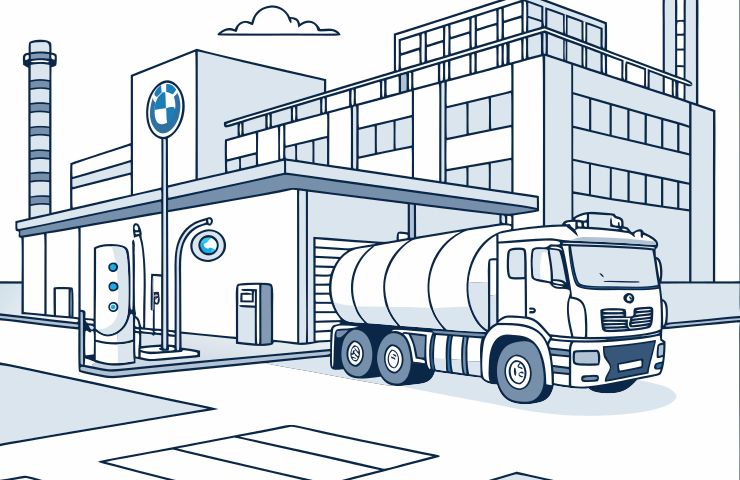
Bosch Rexroth and Bosch Manufacturing Solutions unveiled a turnkey hydrogen refueling station concept for heavy-duty trucks at a major industry expo in Hamburg. The companies presented a single-site architecture that integrates liquid- and gaseous-hydrogen equipment with a CryoPump module. According to Bosch Rexroth, the ambition is to enable rapid fleet refueling under one roof.
Bosch indicates that an equipped station could refuel up to eight heavy-duty vehicles per hour, supplying about 100 kilograms of hydrogen per truck—enough for an average range of roughly 1,000 kilometers. Those throughput and range figures are company-attributed targets rather than independently audited performance metrics. Independent validation has not been provided in the material released alongside the demonstration.
At the center of the concept sits Bosch Rexroth’s CryoPump liquid-hydrogen refueling technology. Bosch states the CryoPump can compress liquid hydrogen directly to approximately 875 bar, aiming to deliver 100 kilograms into a truck in under 10 minutes. By moving hydrogen at –253 °C through an electrohydraulic drive and a single compression cylinder, the system removes the need for multiple buffer-storage and compressor stages.
Technical Insight
The CryoPump combines an electric motor and a hydraulic circuit that drives a high-pressure piston. Bosch Rexroth reports a pumping capability of up to 600 kilograms of liquid hydrogen per hour. For gaseous refills, stations handle hydrogen at 700 bar and employ pre-cooling and metering protocols based on industry standards to manage the temperature rise that occurs during fast fills.
Complementing the CryoPump, Bosch’s electrohydraulic compressor drives cover a power range from 10 kW to 280 kW. These compact drives, Bosch says, regulate displacement, pressure and cycle control while replacing mechanical linkages with hydraulic actuation to reduce maintenance. Partnerships with Maximator Hydrogen add scalable compressor systems that feature automatic seal replacement and modularity for higher capacities.
Station Architecture and Cost
By consolidating pumping, compression and metering into a single electrohydraulic module, Bosch indicates stations could occupy a smaller footprint and minimize mechanical complexity. The company argues this architecture will lower maintenance cycles and spare-parts inventories. Independent cost studies have not verified Bosch’s operating-expense claims, however, and the vendor framing remains an internal projection until third-party audits appear.
Economic Considerations
Capital intensity is well documented in public reviews. According to a Union of Concerned Scientists review, capital costs for hydrogen truck stations in California range from $8.6 million to $12.6 million, excluding fuel production. U.S. Department of Energy analyses emphasize that station costs vary by capacity, delivery method and site layout. Bosch’s assertion that CryoPump consolidation will reduce expenses therefore awaits third-party financial validation. In practice, hydrogen pricing, grid tariffs and supply contracts will determine fleet economics.
Strategic and Policy Context
Speed and throughput remain two of the clearest technical hurdles to broader hydrogen fuel-cell truck adoption. A station able to transfer 100 kg in under 10 minutes brings hydrogen closer to diesel-like operations, Bosch says. That capability matters at ports, logistics hubs and highway corridors where dozens of trucks may arrive within tight windows and dwell time is costly.
FirstElement Fuel provides a real-world reference point for the concept. California Air Resources Board documents describe FirstElement’s Port of Oakland station supporting 30 Class 8 fuel-cell trucks at 700 bar under the NorCAL Zero project. Bosch and FirstElement have used Oakland as a development testbed, though the exact CryoPump rollout there has not been independently verified.
Policy drives are also in play. In Europe, the EU’s Alternative Fuels Infrastructure Regulation mandates hydrogen stations at intervals no greater than 200 km along the core network by 2030, with at least one tonne per day capacity and a 700 bar dispenser. Germany’s National Hydrogen Strategy highlights heavy road freight as a priority application. Those measures could create demand for standardized, high-throughput refueling stations if funding and permitting align.
Historical Evolution
Hydrogen refueling has moved through distinct phases since early demonstration programs in the 2000s. Initial efforts concentrated on 700 bar dispensing and liquid delivery, then shifted to corridor-level ambitions as fleets and technology matured. U.S. DOE reports documented the transition to higher pressures and the growth of initial station fleets. European initiatives—H2-Share, H2Haul and HyTrucks—expanded trials to buses, trucks and regional freight. Compressor makers began repositioning in 2017, and Bosch Rexroth joined forces with Maximator that year to pioneer direct storage-to-vehicle filling. In that lineage, CryoPump represents the next throughput milestone.
Comparative Analysis
Battery-electric trucks dominate urban and short-haul duty cycles. They deliver high grid efficiency and benefit from an expanding charging network, a point emphasized in lifecycle studies. ICCT lifecycle analyses highlight BEVs’ avoidance of hydrogen production and compression losses, which yields superior round-trip efficiency in many use cases. Yet hydrogen may be more suitable for long-distance, high-utilization missions where payload and rapid turnaround matter. Emissions outcomes depend heavily on how hydrogen is produced: renewable electrolysis yields low carbon footprints, while fossil-derived hydrogen can erode climate benefits. Nature studies also warn of indirect warming effects from hydrogen leakage.
Risks and Outlook
The concept faces a familiar set of challenges. Key issues include capital intensity, technical complexity, supply-chain scaling, workforce readiness, regulatory compliance, fuel pricing and competition from battery-electric alternatives. Each of those factors will influence whether a multi-million-dollar station investment can achieve payback under realistic truck demand curves.
- Capital intensity: Multi-million-dollar station investments require sustained truck demand to achieve payback.
- Technical complexity: Cryogenic storage, high-pressure pumps, thermal management and leak-detection systems demand robust safety protocols and skilled operators.
- Supply chain: Reliable, high-purity hydrogen delivery and electrolyzer capacity must scale in parallel.
- Workforce readiness: Operators need specialized training in cryogenics, hydraulics and high-pressure refueling procedures.
- Regulatory compliance: ISO standards and local codes for cryogenic and high-pressure hydrogen pose site-specific hurdles.
- Fuel pricing: Delivered hydrogen costs vary widely, impacting total cost of ownership for fleet operators.
- Competition: Battery-electric options continue to gain market share in many duty cycles.
Bosch’s CryoPump station concept marks a technical step toward commercial-scale hydrogen corridors. The real test will be validating throughput, cost metrics and safety under day-to-day operations. As hydrogen supply chains mature and policies tighten corridor requirements, the next wave of station rollouts will show whether CryoPump can bring refueling speed—and economics—closer to diesel standards.