Hydrogen Fuel Cell News: Toyota and Isuzu Unveil Next-Generation Sora Bus with 300 km Range
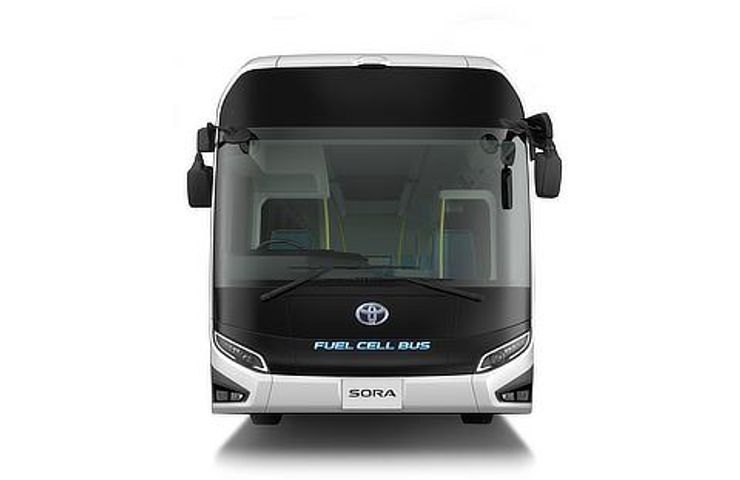
Toyota and Isuzu launched the next-generation Sora hydrogen fuel-cell route bus in Japan, combining Isuzu’s flat-floor electric chassis with Toyota’s PEM fuel-cell system, offering over 300 km range and ten-minute refueling, with production set at J-Bus’s Utsunomiya Plant.
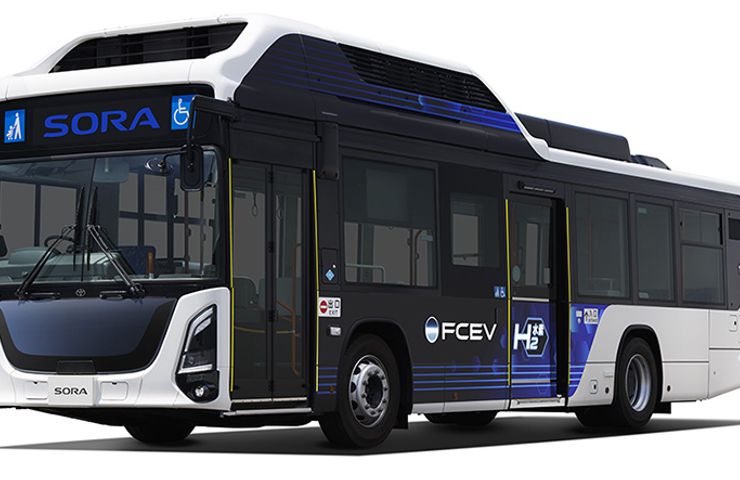
Toyota Motor Corporation and Isuzu Motors Limited launched the next-generation Sora hydrogen fuel-cell route bus in Japan on 5 October 2026, according to Toyota's official release. The vehicle combines Isuzu's battery-electric full-flat route-bus platform with Toyota's polymer-electrolyte-membrane hydrogen fuel-cell system and will enter production at J-Bus Ltd.’s Utsunomiya Plant in Tochigi Prefecture during fiscal 2026, according to J-Bus. The announcement follows a multi-year effort to marry a low-floor commercial chassis with onboard fuel-cell power. It signals a clear push to scale hydrogen buses in urban service, according to Toyota's launch materials.
Partnership and Production
The new Sora stems from a joint-development agreement announced by Toyota and Isuzu in September 2025, under which both firms committed to standardize components between battery-electric and fuel-cell buses to drive cost reduction, according to Toyota. Isuzu Motors Limited supplied the flat-floor electric chassis first introduced as the ERGA EV in fiscal 2024, while Toyota Motor Corporation engineered a 113 kW PEM fuel-cell stack for continuous onboard power, according to Toyota's launch release. Manufacturing is slated at J-Bus Ltd.’s Utsunomiya Plant, which produces about 1,700 route buses annually, according to Tochigi Prefecture data. The plant sits in Utsunomiya City, the prefectural capital with a population of around 509,000, according to Tochigi Prefecture. Together, the partners say the arrangement will streamline assembly and cut parts variation—steps they argue are necessary to bring costs down, according to Toyota.
Key Technical Specifications
- The fuel-cell stack delivers up to 113 kW, according to Toyota.
- Two electric motors produce a combined 220 kW of output, according to Toyota.
- Hydrogen storage comprises three 70 MPa tanks with a total volume of 471 litres, according to Toyota.
- Cruising range exceeds 300 km—about 100 km more than the first generation—according to Toyota.
- Full refuelling takes approximately ten minutes, according to Toyota.
- Urban configuration accommodates 70 people: 19 seated, 50 standing plus one crew member, according to Toyota.
- A lithium-ion propulsion battery handles transient loads and regenerative braking, according to Toyota.
Those figures frame the Sora as a vehicle built for continuous daily duty. The 113 kW stack and 220 kW of motor output work together to supply drive power and passenger amenities while the lithium-ion battery smooths peaks and captures braking energy, according to Toyota. Rapid refuelling and three 70 MPa tanks are intended to keep buses running long shifts on busy urban routes, according to Toyota.
Historical Evolution
The original Sora entered service in 2018 as Japan’s first certified fuel-cell bus, according to Toyota. It featured heavily in Tokyo’s preparations for the 2020 Olympic and Paralympic Games, with more than 100 units deployed by early 2021, according to Toyota and the Tokyo Metropolitan Government. By April 2024 the Tokyo Bureau of Transportation operated 75 fuel-cell buses, while the total metropolitan fleet numbered 135 by the end of fiscal 2024, according to the Tokyo Metropolitan Government. The first generation carried up to 79 passengers and had larger tank capacity but shorter range, according to Toyota. The 2025 partnership announcement marked a shift to a unified chassis and fuel-cell architecture, a deliberate move to reduce duplicate parts and simplify maintenance, according to Toyota.
Strategic Context
The Sora is aimed at high-utilization urban routes where fast refuelling, extended range and accessibility are critical. Toyota and Isuzu argue that fuel-cell buses can refuel in around ten minutes—compared with hours for battery charging—and maintain consistent range under full load, according to Toyota. The flat-floor design improves boarding for wheelchair users and passengers with strollers, according to Isuzu Motors Limited. In practice, the manufacturers paint a picture of shorter layovers at depots and fewer range-related schedule disruptions, according to Toyota.
Policy and Market Environment
Japan’s Basic Hydrogen Strategy and the Ministry of Economy, Trade and Industry’s priority-region framework provide subsidies for fuel-cell commercial vehicles, hydrogen stations and operating costs, according to METI. Despite support, hydrogen remains costlier than diesel, according to METI. The Tokyo Metropolitan Government reported 135 fuel-cell buses in operation by fiscal 2024 and targets approximately 300 by fiscal 2030, with local subsidies covering fuel and station fees, according to the Tokyo authorities. Early markets like Tokyo offer real-world data on station utilization and operational best practices.
Industrial Impact
The Sora programme illustrates an industrial partnership: Isuzu offers commercial-vehicle expertise and a proven chassis, while Toyota provides fuel-cell integration know-how. The 2025 agreement aims to standardize components—such as power electronics, motors and body parts—across battery-electric and fuel-cell variants to lower production and servicing costs, according to Toyota. J-Bus Ltd., a joint venture of Isuzu and Hino Motors, leverages its Utsunomiya Plant to scale domestic bus output and streamline assembly, according to Isuzu. Standardization, the companies say, should reduce spare-parts inventories and simplify technician training, according to Toyota.
Environmental Considerations
The Sora emits only water vapour and warm air at the tailpipe, yielding zero local carbon, nitrogen oxide and particulate emissions, according to Toyota. Lifecycle emissions, however, depend on how hydrogen is produced. They vary based on hydrogen production pathways—renewable electrolysis versus fossil-based reforming—and compression and distribution impacts, according to the U.S. Department of Energy and METI. That distinction is important when assessing total climate impact beyond the bus tailpipe, according to Toyota.
What to Watch Next
Operators will evaluate total cost of ownership—including lease or purchase price, hydrogen price and maintenance—and station availability, according to industry observers. Continued policy support from METI and the Tokyo Metropolitan Government will be crucial in the near term. As fleets enter service, real-world data on fuel consumption, reliability and station utilization will determine whether fuel-cell buses can achieve cost parity with diesel or battery-electric alternatives. Fleet managers and local authorities will be watching those metrics closely, according to industry observers.
As the second-generation Sora enters production, its operational results will inform hydrogen infrastructure investments, fleet procurement strategies and regulatory frameworks in Japan and beyond.