Ballard Unveils Fleet360 Lifecycle Services for FCmove-HD+ Modules in Chicago
Ballard Power Systems has launched Fleet360, a comprehensive lifecycle-services package for new FCmove-HD+ fuel-cell modules in North America, combining digital monitoring, parts support, performance guarantees and technician training to reduce downtime risk and budget uncertainty.
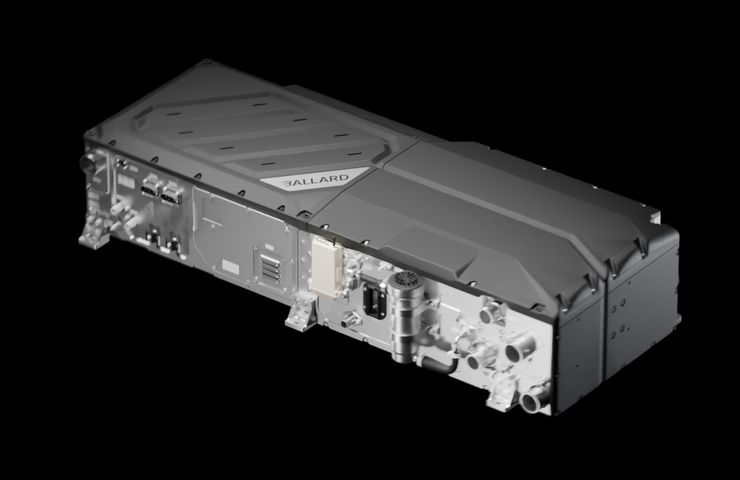
At the APTA TRANSform & EXPO 2026 in Chicago, Ballard Power Systems introduced Fleet360, a fuel-cell lifecycle-services programme designed to accompany new FCmove-HD+ module sales in North America, Ballard says. The package groups digital monitoring, technical support, spare-part assurance, service-response commitments, technician training and stack refurbishment planning into a single offering. An optional FCcare+ tier adds a company-backed guarantee on module power output for up to 250,000 miles of operation, the company indicates.
Integrated Service and Monitoring
According to Ballard, Fleet360 is intended to cover the full operational life of a fuel-cell bus fleet rather than concentrating on an initial hardware sale. It comprises several named elements:
- FCpulse digital platform for real-time fuel-cell health, performance and service-part trend monitoring
- FCcare parts coverage with defined response-time and resolution commitments
- FCcare+ performance guarantee on module power output over a 250,000-mile interval
- Ballard Academy technician training and Core+ refurbishment planning
The programme is available exclusively with new FCmove-HD+ module orders in North America. Ballard says it is intended to help transit operators plan maintenance budgets and minimise unexpected downtime as stacks age.
Technical Foundation of FCmove-HD+
The FCmove-HD+, Ballard says, is a 120 kW liquid-cooled proton-exchange-membrane (PEM) fuel-cell module engineered for medium- and heavy-duty zero-emission vehicles. Compressed gaseous hydrogen enters the stack, where an electrochemical reaction generates electricity for the drivetrain and yields water and heat as by-products. Balance-of-plant components handle cooling, air management and controls. Ballard’s product literature targets availability above 98%, although no independent validation for Fleet360 deployments has yet been published.
Building on Operational Experience
Ballard reports that its fuel-cell engines have logged over 300 million kilometres of service. Nearly 330 fuel-cell buses are deployed in North America, the company adds, with more than 225 in California and over 30 in Nevada. The firm points to a January 2024 long-term supply agreement with NFI Group as a commercial foundation for the service programme; under that deal at least 100 FCmove-HD+ modules were ordered for New Flyer Xcelsior CHARGE FC buses.
Predictive Maintenance with FCpulse
At the core of Fleet360 is FCpulse, a cloud-based dashboard that aggregates module operating data into state-of-health indicators, trend charts and quarterly performance reports, Ballard explains. Maintenance teams can use these tools to identify early signs of degradation, stage spare parts and plan stack refurbishment before failures occur. Ballard says a Remote Operations Centre in Vancouver and a U.S. parts inventory in Bend, Oregon, underpin rapid diagnostics and field support.
Strategic Shift to Service Revenue
Industry observers note that hydrogen fuel-cell buses require more than a power module and a chassis. Successful deployment also hinges on hydrogen supply, specialised workshops and trained technicians. By bundling diagnostics, parts and performance guarantees, Ballard is shifting from one-off hardware sales toward a recurring service relationship. That approach could make total cost of ownership planning more predictable for transit agencies. However, Ballard has not disclosed Fleet360 pricing, guarantee thresholds or exclusions in its public announcement.
Market and Policy Context
The International Energy Agency reports in its Global Hydrogen Review 2025 that fuel-cell heavy vehicles continue to bear higher total cost of ownership than battery-electric or diesel alternatives. Meanwhile, the National Renewable Energy Laboratory has been independently evaluating fuel-cell electric buses since 2000, analysing performance, reliability, maintenance needs and costs under real-world conditions. In the U.S., hydrogen fuel-cell buses qualify for support through the Federal Transit Administration’s Low or No Emission Grant Program, the U.S. Department of Transportation states.
Environmental and Economic Considerations
Hydrogen fuel-cell propulsion emits only water and heat at the tailpipe, according to the U.S. Department of Energy. Lifecycle emissions, though, depend on how hydrogen is produced, compressed and delivered. Gray hydrogen from fossil fuels carries higher upstream emissions, while green hydrogen via electrolysis can reduce carbon intensity. Reduced downtime risk and clearer maintenance budgets could help justify hydrogen infrastructure investments, but broader challenges remain: fuel pricing, station capital costs and regulatory compliance still influence total cost of ownership decisions.
Legacy and Industry Lessons
Ballard’s fuel-cell pedigree dates back to its 1979 founding as Ballard Research Inc. and an early bus demonstration in Vancouver in 1993, the company notes. Decades of transit field trials taught a simple lesson: availability, parts logistics and maintenance expertise can influence total cost of ownership as much as stack efficiency. Fleet360’s integrated service model is a direct response to those operational lessons.
Platform Details and Data Insights
Ballard acknowledges that the effectiveness of predictive maintenance hinges on data quality, cybersecurity and analytics accuracy. While FCpulse provides dashboards and visualisations, the company has not disclosed the platform’s sensor architecture, algorithmic approaches or third-party validation results. Ballard says quarterly performance reports will inform refurbishment planning, but the impact on actual maintenance intervals remains to be demonstrated.
Financial and Competitive Positioning
In its latest annual report, Ballard disclosed $99.4 million in 2025 Fuel Cell Products and Services revenue—a 43% increase over 2024—but did not break out service-programme contributions. As global fuel-cell commercial-vehicle stock remains concentrated in China, according to the International Energy Agency, North American suppliers face pressure to combine hardware sales with value-added services. Fleet360 may help Ballard differentiate itself from hardware-only competitors.
Policy Drivers and Funding Mechanisms
U.S. transit agencies can tap the Federal Transit Administration’s Low or No Emission Grant Program for hydrogen fuel-cell buses and related infrastructure, the U.S. Department of Transportation states. Energy-industry analysts observe that defined service commitments and performance guarantees could improve grant-funded project economics, although station capital costs and hydrogen off-take agreements still factor heavily into agency decisions.
Looking Ahead
Ultimately, Fleet360’s value proposition will be tested through operator experiences, guarantee claims and comparative lifecycle cost analyses. As Ballard rolls out its service offering with early customers, the market will watch whether combining digital diagnostics, technician training and power-output guarantees can deliver the uptime and budget certainty that transit agencies require to expand hydrogen vehicle deployments.