Hydrogen Production at Sea: HydraNord Power Wins Enova Grant for Onboard Ammonia-to-Hydrogen Fuel Cell System
H2SITE secures Enova grant for HydraNord Power to validate a 700 kW onboard ammonia-to-hydrogen fuel cell system at Energy House, advancing maritime hydrogen production and storage solutions.
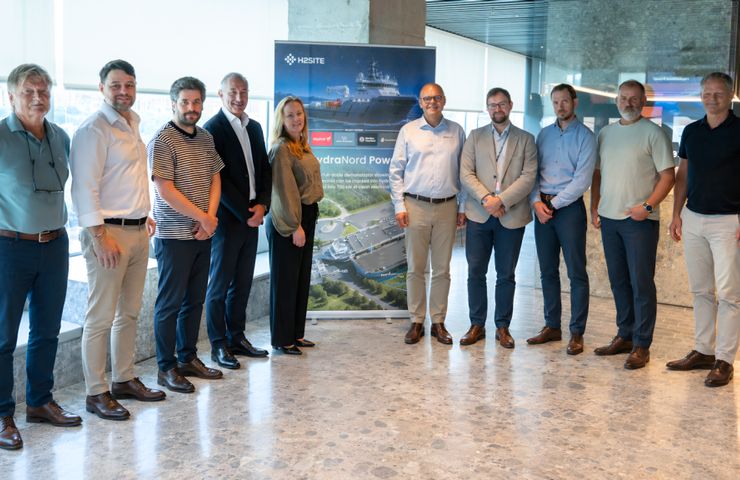
H2SITE has landed a substantial NOK 39.1 million investment from Norway's Enova SF to support its innovative project, HydraNord Power. This initiative aims to push the boundaries of hydrogen production at sea by employing an onboard ammonia-to-hydrogen membrane reactor along with a fuel cell system in Stord, Norway.
This funding is set to fuel the development and validation of a commercial-scale system designed to convert ammonia into high-purity hydrogen. Not only does this approach allow for smaller storage volumes compared to conventional methods, but it can also deliver up to 700 kW of net electrical power to maritime fuel cells. According to H2SITE, their design could potentially produce around one tonne of hydrogen per day. Module integration and testing are set to kick off next year at Energy House, with deployment slated for early 2028.
Onboard Hydrogen Production via Ammonia Cracking
The heart of this innovation tackles a significant challenge in marine hydrogen storage: low volumetric energy density. Instead of relying on compressed or liquefied hydrogen, this system cleverly uses ammonia as a hydrogen carrier. Inside H2SITE's integrated palladium-alloy membrane reactor, a heated, catalytic reaction breaks down ammonia (NH3) into hydrogen and nitrogen. The hydrogen-selective membranes then purify the gas stream, generating fuel-cell-grade hydrogen while filtering out contaminants and any leftover ammonia.
This streamlined single-unit approach merges the cracking and separation processes, cutting down on both footprint and complexity when compared to traditional methods that use separate reactors and purification trains. In practice, ammonia is pumped from onboard tanks to the reactor, where heat management loops keep things at the ideal temperature, allowing for up to 99.97 percent purity and 98 percent recovery, according to company statements. The purified hydrogen is then routed to a maritime fuel cell, while the nitrogen and leftover gases are either vented or recycled.
H2SITE’s Technology Roots and Previous Demonstrations
Originally spun out from membrane-reactor research at TECNALIA and the Eindhoven University of Technology, H2SITE was officially incorporated in 2019. Since then, it’s made impressive strides in scaling up its palladium-alloy modules, moving through lab tests and smaller demonstrations. These earlier projects included pairing cracking units with proton-exchange-membrane (PEM) fuel cells for auxiliary power in limited trials. Now, HydraNord Power represents a bold leap forward, focusing on maintaining a continuous 700 kW output that's more in line with what commercial vessels demand.
Strategic Backing and Consortium
The grant from Enova SF, which is about EUR 3.4 million, significantly lowers technical and financial risks involved in the project. As Norway’s state climate and energy-transition fund, Enova SF has been at the forefront of supporting various hydrogen production and ammonia initiatives in the maritime sector, aiming to establish a local value chain. The consortium behind HydraNord Power includes key players like Equinor, Höegh Autoliners, Breeze Ship Design, Sustainable Energy Catapult Centre, Alltec, and Maritime CleanTech. Each partner brings valuable expertise in areas such as offshore operations, ship design, testing, systems integration, and networking within the industry, although the specific details of their contributions haven’t been made public.
Economic and Policy Context
This project aligns perfectly with the International Maritime Organization’s revised strategy for achieving net-zero shipping by mid-century, which aims for zero- and near-zero-carbon fuels to make up at least 5–10 percent of the energy used in bunkers by 2030. Possible policy frameworks, like carbon pricing or fuel mandates, could tilt the financial balance in favor of green hydrogen production and clean ammonia generated from renewable electricity sources. Initial demonstrations in Norway, backed by public funding, are crucial for mitigating risks associated with the technology before wider deployment, offering valuable insights into capital costs, balance-of-plant integration, and operational reliability in marine environments.
Why This Matters for Maritime Decarbonisation
Deep-sea and offshore vessels have had a tough time adopting batteries or direct hydrogen due to weight, space, and refueling challenges. Ammonia, with its well-established bunkering infrastructure and higher volumetric density, presents a more feasible means of hydrogen storage. Through onboard cracking, HydraNord Power could eliminate the need for bulky high-pressure or cryogenic hydrogen tanks, simplify hydrogen storage, and enhance energy density.
Producing 700 kW of fuel cell power could efficiently meet the energy demands for hotel loads, auxiliary systems, or hybrid propulsion needs of large ships, tugs, and drilling platforms. Its modular design supports parallel installations for greater capacity and can be retrofitted onto existing vessels. If successful, this approach could foster new market opportunities for hydrogen fuel cells and bolster the development of hydrogen infrastructure in ports and offshore hubs.
Challenges and Future Outlook
Despite its promising outlook, the journey ahead isn't without obstacles. Ammonia's toxic and corrosive nature necessitates robust systems for containment, leak detection, proper ventilation, and emergency shutdowns. The energy needed to crack ammonia, along with the efficiency of the ammonia-to-electricity process, will heavily influence operational costs and overall lifecycle emissions. Additionally, upstream ammonia production needs to come from renewable sources for genuine green hydrogen production; otherwise, there’s a limit to the carbon benefits we can achieve.
Furthermore, maritime classification societies and regulators are still working on safety guidelines for using ammonia onboard and with hydrogen fuel cells. Development is also needed for crew training, bunkering protocols, and port-side infrastructure. The insights HydraNord Power gathers on membrane durability, system integration, and thermal management will be key to gaining regulatory approval and reducing insurance costs for alternative-fuel vessels.
Next Steps and Testing at Energy House
The complete system is set to be installed at Energy House in Stord, where they'll simulate commercial maritime operations without the need to set it up on an active vessel. H2SITE plans to work on development and integration over the next year, with hopes to commission in early 2028. Test results will guide design adjustments, safety protocols, and performance benchmarks leading up to potential sea trials.
Broader Market Implications
If HydraNord Power meets its goals, it could unlock new retrofit possibilities as shipyards look to upgrade vessels for low-carbon operations. Standardized ammonia-to-hydrogen modules might carve out a unique yet valuable niche in hydrogen infrastructure, feeding a demand for fuel-cell packages, maintenance services, and crew training programs. However, achieving cost competitiveness will rely on scaling up the production of clean ammonia, advancing fuel-cell stack manufacturing, and supportive policies like carbon pricing.
At the same time, competing technologies—like direct hydrogen cryogenic tanks, ammonia-combustion engines, or biofuels—will also be vying for a piece of the pie, each with its own set of advantages and disadvantages. The route to zero-emission technology in the maritime sector will likely involve a blend of solutions tailored to the vessel type, duty cycle, and journey length. Success with HydraNord Power could shift momentum towards ammonia carriers and fuel cells, especially for long-range, energy-intensive applications.
Conclusion
By testing an integrated ammonia cracking and hydrogen fuel cell system at a relevant scale, H2SITE is set to address some of the critical gaps in hydrogen storage and fuel cell deployment for deep-sea shipping. With solid backing from Enova SF and a diverse consortium, HydraNord Power stands as a beacon for the future of hydrogen infrastructures at sea—potentially transforming how the maritime industry meets its zero-emission ambitions.