Hydrogen Fuel Cells Power World's First Solar-Hydrogen-Battery Tribrid Drone from H3 Dynamics and XSun
H3 Dynamics and XSun are launching the world’s first hydrogen-solar-battery tribrid drone, a major push for zero-emission aviation with test flights set for 2025 in Toulouse.
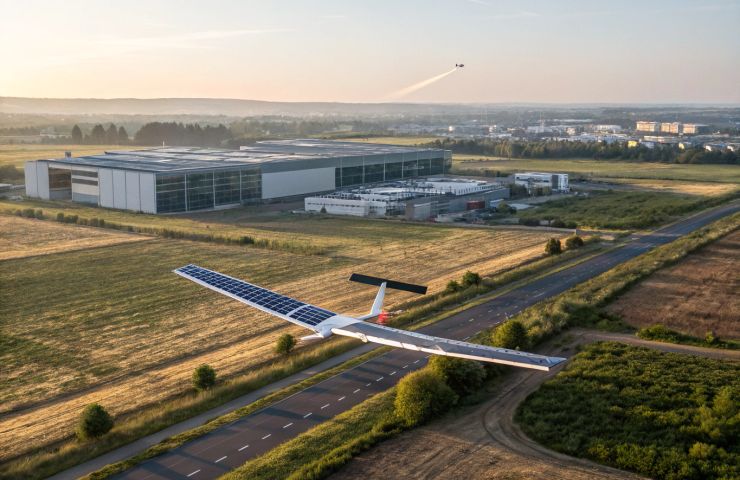
Hydrogen fuel cells are getting their wings thanks to an ambitious new partnership between H3 Dynamics and XSun. The two innovators are working together to launch the world’s first tribrid propulsion drone—powered by a mix of solar energy, hydrogen, and battery tech, all wrapped into one high-flying system.
Next-Gen Drone to Take Off from Toulouse
On one side, you’ve got Singapore-based H3 Dynamics, a front-runner in hydrogen-electric propulsion. On the other, there’s France’s own XSun, the brains behind sleek, solar-powered drones. Together, they’re aiming to flip the script on flight tech. Their mission? Retrofit XSun’s SolarXone UAV with H3’s lightweight 1-kW Aerocell hydrogen fuel cell, solar-panel-covered wings, and beefy batteries—all neatly integrated into one cutting-edge airframe.
Mark your calendars—first flight tests are scheduled for October 2025 in Toulouse, France. It’s not just any city either. Toulouse is a European aerospace hub—home to Airbus and a hotbed for next-gen aviation. That’s also where H3 Dynamics is setting up a certified hydrogen-electric production site. Smart move.
Breaking Down the Tribrid Power System
- Batteries give the drone that extra kick during takeoff, when power demands are highest.
- Hydrogen fuel cells handle the cruising phase, thanks to their efficiency and ultra-light design.
- Solar panels built right into the wings chip in with up to 400 watts, helping extend flight time and keep everything running smoothly.
Everything works together to make the drone faster, lighter, and able to go longer distances—breaking out of the limits set by batteries alone and opening a new chapter for electric aviation.
Why It Matters: More Than Just a Cool Drone
Sure, this might start with UAVs, but the ripple effects could reach far and wide. If this tribrid tech scales up successfully, it could:
- Kick-start development of zero-emission regional aircraft.
- Open the door for long-range missions—think aerial surveillance, mapping, and even lightweight cargo delivery.
- Create new demand for green hydrogen infrastructure at airports.
- Drive the formation of a European hydrogen aviation supply chain, adding an extra layer of energy security to the region.
"This isn’t just a test bed anymore—it’s a serious step into certified production of hydrogen-electric systems in Europe."
In short, it’s part of a bigger push toward zero-emission technology in aviation. With climate goals looming and regulators raising the bar, this kind of integrated clean flight system shows that it’s possible to go further—without burning fossil fuels.
Toulouse: Where Innovation Gets Airborne
For decades, Toulouse has been a driving force in aerospace, and it's not slowing down anytime soon. Now, as the industry chases sustainable energy solutions, the city is once again at the center of big moves. With H3 Dynamics planting roots there, complete with a new hydrogen production and system assembly facility, it’s shaping up to become Europe’s hydrogen-powered flight capital.
And we’re not stuck at prototypes anymore. The Aerocell platform can be scaled up to a whopping 400 kW—that’s enough to support regional passenger aircraft. So, yeah, this collaboration could be the beginning of something much, much bigger.
What’s Next? Full Throttle Toward Certification
With test flights on the horizon and the new plant gearing up to launch by the end of 2025, it’s clear that hydrogen and hybrid-electric flight is transitioning from whiteboard ideas to real-deal aircraft. This UAV is more than a demo—it’s proof of concept for how multiple energy systems can work together in unison to power a cleaner sky.
Assuming certification goes smoothly, this could do more than revolutionize drones—it might help shape the entire future of sustainable aviation. And you can bet that aviation giants like Airbus are watching closely. This kind of innovation could very well set the tone for a whole new generation of aircraft.
Bottom line? The H3 Dynamics and XSun tribrid drone is more than just a high-tech experiment. It’s what happens when three powerful forces—solar, hydrogen, and battery technology—come together to push the boundaries of what’s possible in flight. And that’s a future worth flying toward.