News
Hydrogen Fuel Cells Challenged by MIT’s High-Density Sodium-Air Battery Breakthrough
MIT's sodium-air fuel cell surpasses aviation energy density requirements, offering sustainable carbon capture and challenging hydrogen technology.
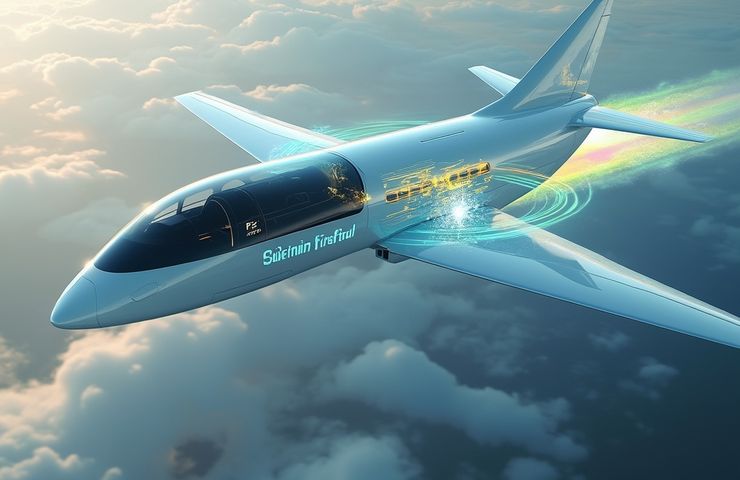
MIT researchers have just dropped a major new innovation — a sodium-air fuel cell that packs a seriously impressive punch: it delivers up to 1,700 Wh/kg of energy density. That’s well above the 1,000 Wh/kg benchmark needed to make electric planes a practical reality. Even cooler? This system doesn’t just store energy efficiently — it actually pulls CO₂ out of the air and turns it into plain-old baking soda (sodium bicarbonate) as part of its process. Pretty wild, right?
This cutting-edge work comes straight out of MIT’s Cambridge campus, where Professor Yet-Ming Chiang and his team — who’ve been pushing boundaries in materials science for years — built off previous technologies like molten-air batteries (remember those from 2015?) and some 2020 DARPA-funded fuel cell innovations for naval projects. Now, they’re aiming at much bigger targets: think heavy-duty transport, starting with aviation drones and eventually scaling up from there.
How MIT’s Sodium-Air Battery Does Its Thing
At the heart of this tech is a high-temperature system where liquid sodium reacts with moist air. This reaction, managed by a special ceramic electrolyte, generates electricity and produces sodium oxide along the way. But here’s the twist: it also grabs carbon dioxide from the air and turns it into sodium bicarbonate — and does it all naturally. So how does this stack up against more familiar lithium-ion batteries? In a few important ways, sodium stands out. It’s more abundant, it’s generally safer, and it doesn’t carry the same risk of thermal runaway (read: scary fires). That makes it a serious contender in the race for zero-emission technology.Why This Matters for Industrial Decarbonization
This breakthrough could be a total game-changer across several tough-to-electrify industries. Let’s break it down:- Aviation and Shipping: High energy density makes it a great fit for sustainable energy solutions in the aviation, maritime, and heavy ground transport sectors, which have been notoriously hard to clean up.
- Carbon Capture (Without the Hassle): The fact that it naturally turns CO₂ into baking soda means it could play a big role in industrial decarbonization — even contributing to mitigating ocean acidification if applied at scale.
- Supply Chain Disruption: Sodium is way more plentiful than lithium, and as demand for electric solutions heats up, that could shake the $27 billion lithium battery market. We’re talking totally new supply chains and infrastructure.
Sodium-Air vs. Hydrogen Fuel Cells
Now, how does this new battery stack up against hydrogen fuel cells? Well, while hydrogen tech is further along — and already being rolled out in industrial and transport applications — MIT’s sodium-air system doesn’t require the same complex high-pressure or cryogenic storage. That could make it easier and cheaper to integrate in the long run. Still, hydrogen's got the early start, especially when it comes to big industrial deployments. But don’t count sodium out — it’s coming in hot with real-world promise, especially if infrastructure for liquid sodium proves simpler to manage.What’s Next for MIT’s Sodium-Air Fuel Cell?
Right now, the technology sits at an early stage — about a Technology Readiness Level of 3 or 4 — meaning it’s still in lab testing, but showing solid potential. The next big step? Real-world trials. The team is getting ready to test this tech out on large drones, which should give them critical data on how it holds up in the field, how scalable it is, and whether it can be produced cost-effectively at industrial scale. "We see sodium-air technology as a transformative bridge, harnessing abundant materials to create high-density, safe energy storage whilst contributing directly to active decarbonization goals," said Prof. Chiang, highlighting just how disruptive this could be for clean energy worldwide. Of course, there are still questions to answer — like whether we can get enough sodium at a viable cost, and how to handle the manufacturing demands of those ceramic electrolytes. But if history is anything to go by, MIT knows how to move promising ideas from the lab into the real world. Make no mistake: this isn’t just a better battery. It’s a shot across the bow for traditional hydrogen and ammonia-powered systems. As heavy-demand sectors look for smarter, cleaner, and more scalable zero-emission technology, MIT's sodium-air fuel cell could become a central force in redefining the landscape for sustainable energy.How was this article?
Thanks for the feedback!