Hydrogen Fuel Cell Leader Ballard Power Names New CEO to Drive Operational Efficiency
Ballard Power Systems will welcome Verdagy’s Marty Neese as CEO in July 2025, aiming to boost operational efficiency and commercialize hydrogen fuel cell technologies.
Ballard Power Systems Inc. is gearing up for a new chapter. The company, known globally for its hydrogen fuel cell technology, just announced that Marty Neese will become its new president and CEO, starting July 7, 2025. This leadership shake-up comes as Ballard doubles down on its effort to streamline operations and turn a profit in the high-stakes world of sustainable energy.
Why the Change — and Why Now?
After leading Ballard for over a decade, Randy MacEwen is stepping aside at a time when the company is in the middle of a major overhaul. Under his watch, Ballard made significant technological progress and expanded its global reach—but commercial traction has been slow, largely due to steep production costs and limited adoption of fuel cell technology.
With the market maturing and competition intensifying, the board made a strategic call: bring in someone with hands-on manufacturing know-how to help the company scale—and fast.
Marty Neese fits that bill. He previously served as CEO of Verdagy Inc., where he led the charge on commercializing green hydrogen using advanced alkaline electrolysis. He's no stranger to Ballard either—he's been on its board for the last ten years and understands the company’s inner workings. Add to that his background in high-volume manufacturing at SunPower and Flex, and it's clear he’s stepping in with eyes wide open.
Fuel Cells Are Hitting a Turning Point
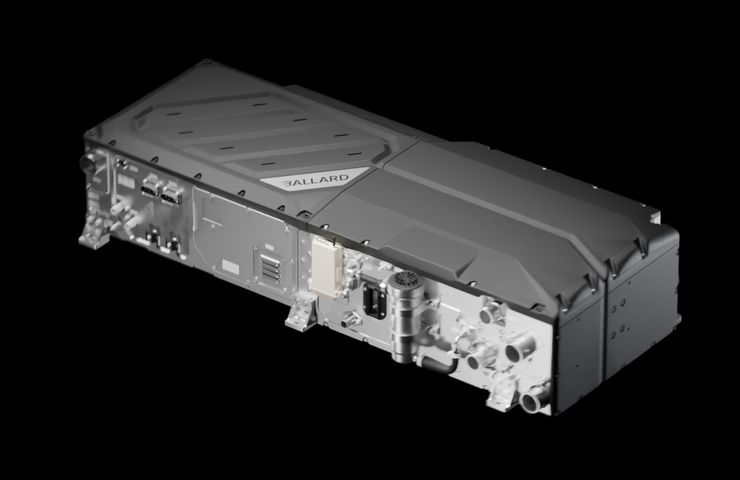
Ballard, headquartered in Burnaby, British Columbia, has been in the hydrogen fuel cell game since the late ’70s—long before most people had even heard of the tech. They've been building PEM fuel cells for everything from vehicles and trains to backup power systems. The tech is solid. The challenge? Getting it to scale in a market that’s still finding its feet.
Now, with global governments throwing their weight behind net-zero emissions and pouring billions into hydrogen infrastructure, there’s real momentum forming. The window of opportunity is open, but that also means companies like Ballard need to move fast, cut back bloat, and focus on getting their products into the field—profitably.
Neese’s Game Plan: Scale, Standardize, Simplify
Neese isn’t just here to steer the ship—he’s here to rebuild it. At Verdagy, he focused on cutting costs, rolling out standardized systems, and getting technology out of the lab and into the real world. That’s exactly what Ballard needs right now.
Verdagy recently opened a U.S.-based plant with nearly $40 million in funding from the U.S. Department of Energy to ramp up green hydrogen production. That experience in industrial scaling—not to mention navigating public-private partnerships—aligns closely with what Ballard’s trying to tackle, even though the tech is a bit different.
Ballard has already started tightening up its operations. Cost cuts are underway, and they’re doubling down on core markets. Neese is expected to level-up those efforts—making the leap from “breakthrough tech” to consistently sellable products. That likely means leaning into supply chain optimization, more efficient manufacturing processes, and a sharper focus on applications where hydrogen fuel cells make the most sense—like heavy-duty transport and stationary power backups.
Bigger Ripples Across the Hydrogen Industry
Moves like this don’t just change a company internally—they send signals across the entire sector. As other fuel cell and hydrogen production companies face similar growing pains and investor pressure, Ballard’s strategy under Neese could serve as a blueprint—or a cautionary tale.
If he can drive costs down and show that there’s real money to be made in industrial decarbonization, it could help unlock wider support and funding across the industry. Particularly in segments like fuel cell buses or maritime applications, where the tech has potential but hasn’t quite hit its stride. That said, it’s a tightrope walk—Chinese and European companies are aggressively scaling, and margins are razor-thin.
What’s Ahead
Between now and Neese’s official start in July 2025, expect a transition period. Outgoing CEO Randy MacEwen will stay involved through September 30, 2025 to help ensure a smooth handoff. That phased approach says a lot—it’s about continuity while aggressively retooling. Behind the scenes, more shifts are likely: additional restructuring, possible layoffs, maybe even broader leadership changes as the company reorients.
This is more than just a new name on the CEO placard—it’s a high-stakes reset at a pivotal moment for fuel cell technology. And in an industry that's been “five years away” from the mainstream for the last two decades, Ballard’s latest move might just be their best shot yet at leading the charge.
About the Company
Ballard Power Systems Inc., based in Burnaby, Canada, develops cutting-edge proton exchange membrane (PEM) hydrogen fuel cells for use in transportation and stationary applications. Since 1979, Ballard has been at the forefront of fuel cell technology, pushing the boundaries of clean energy—even as it wrestles with the realities of commercial rollout, competitive pricing, and global market forces.