Hydrogen Energy News: South Korea Turns to Hydrogen for Long-Term Energy Security
South Korea’s 93.7% energy-import dependence in 2024 has spurred interest in hydrogen for long-term resilience, as the IEA warns of supply-chain risks and industry calls for policy support.
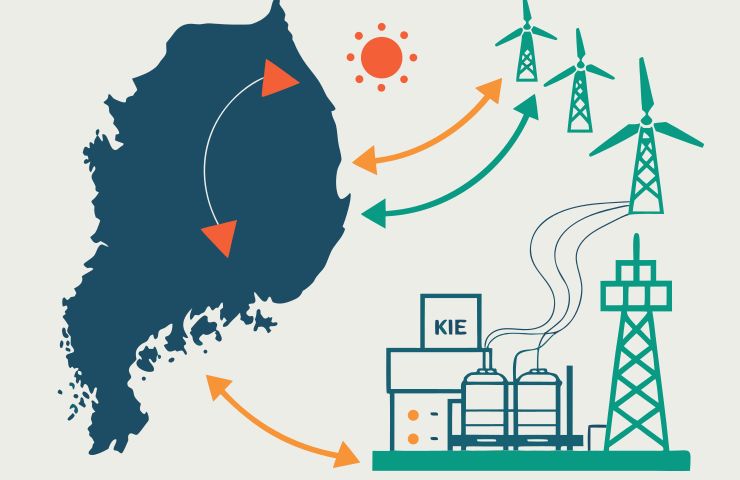
South Korea’s reliance on imported energy reached 93.7% in 2024, according to the Korea Energy Economics Institute, driving fresh interest in hydrogen energy news as a way to diversify supply chains and strengthen resilience.
The East Asian nation industrialized rapidly without significant domestic fossil-fuel resources, leaving it exposed to global oil, gas and coal markets. Interruptions in shipping lanes or price spikes can quickly ripple through electricity costs and manufacturing competitiveness, underscoring the need for new diversification strategies.
A separate statistical review from the Korea Energy Economics Institute cited a 93.4% foreign-energy-dependence rate for 2024 in its Energy Statistics Yearbook, reflecting slightly different definitions. The institute’s indicator includes nuclear power alongside fossil fuels, highlighting the importance of understanding methodology and publication timing when interpreting these high shares.
Supply-Chain Vulnerabilities Exposed
The International Energy Agency’s Global Hydrogen Review 2026 detailed how a Middle East conflict disrupted trade in hydrogen-based derivatives such as ammonia, urea, methanol and fertilisers. According to the IEA report, South Korea, Germany and Japan each source more than 70% of their energy overseas, concentrating risk in a narrow set of suppliers and leading to short-term shortages and price volatility.
IEA’s Strategic Outlook on Hydrogen
The IEA argues that hydrogen could serve both decarbonization and energy-security objectives. Renewable hydrogen produced by electrolysis and hydrogen from fossil fuels paired with carbon capture offer diversification pathways. However, the agency stresses that realizing these benefits depends on coordinated policy frameworks, infrastructure build-out and robust market development.
Historical Role of Hydrogen
For decades, hydrogen has been produced from natural gas and coal for industrial uses in oil refining, ammonia and methanol manufacturing. The IEA reports that global hydrogen demand reached almost 100 million tonnes in 2024 and exceeded that level in 2025, yet over 99% of production in 2024 remained unabated fossil-fuel hydrogen.
Renewable and Low-Emissions Pathways
Renewable hydrogen, generated by splitting water with electricity from wind or solar, can avoid direct carbon emissions if powered by clean energy, the IEA notes. Low-emissions hydrogen also includes fossil-fuel reforming with carbon capture. Certification schemes are required to verify lifecycle emissions, encompassing electricity sources, feedstocks, process emissions and carbon-capture performance.
Hydrogen Derivatives and Carriers
Ammonia, produced by combining hydrogen with nitrogen, is already shipped globally for fertiliser production and can be reconverted to hydrogen or used directly as fuel. Methanol and synthetic fuels, made by blending hydrogen with captured carbon, extend trading flexibility but introduce conversion losses, higher energy use and regulatory complexity.
Building Out Infrastructure
Scaling low-emissions hydrogen requires electrolyzers, compression and liquefaction equipment, pipelines, storage tanks, port terminals and specialized ships. Electrolyzers split water into hydrogen and oxygen, pipelines move the gas, and ports handle liquefied or chemically bound carriers. Certification and tracking systems are also essential to ensure transparency in emissions intensity and origin.
Scale, Cost and Timing Considerations
Despite rapid percentage growth in clean hydrogen, the IEA reports nearly 1 million tonnes of low-emissions production in 2025 versus over 100 million tonnes of total demand. Costs for zero-carbon hydrogen remain higher than for conventional supplies, and projects face long lead times, regulatory hurdles and financing risks, making immediate crisis relief unlikely.
Industry Push for Policy Support
The Hydrogen Council’s Hydrogen for a Resilient World initiative, presented at a ministerial-CEO roundtable in Rotterdam, unites around 140 companies. Co-chaired by Air Liquide’s François Jackow, the alliance urges governments to recognize hydrogen in crisis-response strategies and integrate it into national energy-security planning.
Demand Creation and Guarantees
The Council recommends contracts for difference and offtake guarantees to reduce market risk and bridge the cost premium of green hydrogen. By guaranteeing minimum prices, these tools aim to encourage early investment in electrolyzers, storage, pipelines and conversion plants, while supporting both domestic industrial use and export-oriented facilities.
Implications for South Korea
Domestic green hydrogen could leverage South Korea’s growing renewable electricity capacity, reduce exposure to volatile import markets and spur new industries in electrolyzer manufacturing, port terminal services and certification. However, the IEA warns that meaningful contributions will require years of coordinated policy, investment and regulation.
Long-Term Resilience over Immediate Fix
Both the IEA and industry players frame hydrogen as a strategic resilience instrument rather than a quick substitute for oil or gas. Developing domestic production and diversified import routes via ammonia or methanol can help buffer against geopolitical shocks over the coming decade, provided cost, infrastructure and market conditions evolve in lockstep.
South Korea’s high energy-import dependence, confirmed at about 93.7% by the Korea Energy Economics Institute, has renewed focus on hydrogen energy news. The combined insights of the IEA’s Global Hydrogen Review 2026 and the Hydrogen Council’s call to action map a path toward supply-chain diversification, though realizing this vision will take sustained policy support and infrastructure development.