EU Sends Formal Notices to 26 States Over Directive Transposition
The European Commission has opened infringement proceedings against 26 Member States for missing the hydrogen and decarbonised-gas directive transposition deadline, signaling enforcement of EU energy rules and raising concerns over hydrogen infrastructure investment.
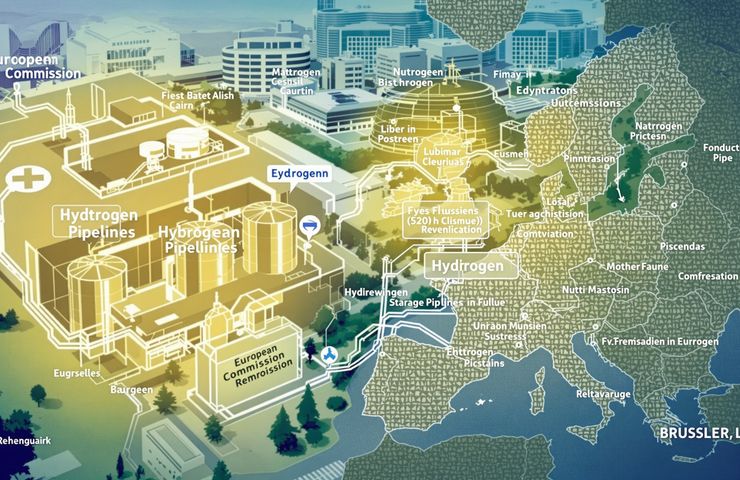
On 25 September 2026, the European Commission sent out formal notices to 26 EU Member States. They missed the deadline to fully implement the Directive (EU) 2024/1788, which sets up the framework for the hydrogen and decarbonised gas markets in the EU. This was supposed to be in place by August.
The Commission's action is aimed at a long list of countries, including Belgium, Bulgaria, Czechia, Denmark, Germany, Estonia, Ireland, Greece, Spain, France, Croatia, Cyprus, Latvia, Lithuania, Luxembourg, Hungary, Malta, the Netherlands, Austria, Poland, Portugal, Romania, Slovenia, Slovakia, Finland, and Sweden. Italy was the only country that got its act together and complied by the deadline.
This Directive (EU) 2024/1788, which was adopted in mid-2024 as part of the broader Hydrogen and Decarbonised Gas Market package, updates the internal gas market rules we had back in 2009. The new directive brings together renewable hydrogen, low-carbon hydrogen, and the necessary hydrogen infrastructure into one cohesive framework.
Regulatory Pushback
Receiving a letter of formal notice is just the beginning of the EU's infringement process. Under Article 94, Member States were expected to have their national measures ready and communicated by 5 August 2026. Now, each government has two months to respond with the necessary steps they’ve taken. If the responses fall short, the Commission could take further action, such as issuing a reasoned opinion or even sending non-compliant cases to the Court of Justice.
It’s important to note that this action doesn’t come with fines or judgments about whether national laws are entirely sufficient. Instead, it highlights a communication breakdown regarding the complete implementation of these measures. The Commission is clearly serious about sticking to deadlines, especially while the hydrogen infrastructure is still in its infancy.
Strategic Implications
For those working on developing hydrogen projects, whether it's electrolysis facilities, hydrogen pipelines, storage cavern systems, or refueling stations, having regulatory clarity is crucial. Any delays in national transposition could throw a wrench in financing, complicate contracts, and ramp up due diligence costs. Clear and uniform rules around network access, tariffs, and certification are vital for keeping investors on board.
Hydrogen projects are often cross-border ventures. Electrolysers in one country might use renewable energy to feed into pipelines that stretch across borders, connecting to storage sites or industry in another region. If national frameworks are inconsistent, it can disrupt the smooth integration needed for a seamless market, especially under initiatives like REPowerEU and the European Green Deal.
Historical Context
The EU’s efforts for gas market integration kicked off in the late '90s, culminating in the 2009 Directive 2009/73/EC. The 2020 European Hydrogen Strategy laid out the vision for hydrogen’s role in decarbonising heavy industry, shipping, and aviation. The urgency increased after Russia's invasion of Ukraine in 2022, pushing the EU toward energy independence, which culminated in the REPowerEU plan that targets 10 million tonnes each of renewable hydrogen produced domestically and imported by 2030.
The 2024 Hydrogen and Decarbonised Gas Market package is key to making those aspirations a reality. This makes timely national implementation crucial for EU energy security and achieving climate goals.
Investor Alert
Uncertainty in regulations is a major headache for lenders and equity partners. For them to move forward, they need clarity about unbundling rules, third-party access, and how low-carbon credentials are certified. Without this, loan approvals and premium pricing for hydrogen agreements could be jeopardized.
- Loan terms might get tighter as lenders increase risk premiums, partially due to the inconsistencies in national regulations.
- Contracts might end up including clauses that account for regulatory risks or could push milestone deadlines further out.
- Delays in certification processes may cause buyers to hesitate to pay green premiums, affecting overall market dynamics.
Directive in Focus
This directive requires countries to implement measures covering key areas:
- Access for third parties to transmission and distribution networks, whether regulated or negotiated, running through to 2032.
- Approval of infrastructure and network planning, notably the repurposing of existing natural gas pipelines.
- Low-carbon hydrogen certification that mandates a 70% reduction in lifecycle emissions, alongside mass-balance tracking and independent audits.
- Protections for consumers in terms of billing, switching, and additional safeguards for vulnerable customers.
- Independent regulatory oversight and ensuring network operators are unbundled.
- Rules for access, authorisation, and conversion regarding storage and import terminals.
Technical Snapshot
Renewable hydrogen is produced via electrolysis that utilizes wind or solar energy. It qualifies under non-biological renewable-fuel regulations and gets transported through dedicated pipelines to storage or to usage sites.
When it comes to low-carbon hydrogen, certification entails thorough lifecycle accounting of emissions, transport, and any associated carbon capture. This process is verified through mass-balance systems and independent audits.
Regarding infrastructure repurposing, assessments look at the compatibility of pipeline materials, pressure limits, and safety, offering potential cost savings by making better use of existing assets instead of building from scratch.
Key Takeaways
- Twenty-six Member States are facing possible legal escalation if they don’t notify full transposition within the next two months.
- Italy stands out as the only nation to meet the initial compliance deadline.
- Delays in national regulations could significantly hamper funding and progress on cross-border hydrogen initiatives.
- This infringement action also bolsters the Commission's credibility in enforcing EU energy laws.
- Next steps include a reasoned opinion and potential Court of Justice proceedings if compliance isn’t achieved.
To keep investor confidence high and attract capital for Europe’s transition to decarbonised energy, it's critical for Member States to get their national rules on hydrogen infrastructure, certification, and network access aligned swiftly.