Hong Kong launches first dedicated hydrogen fuel testing laboratory to strengthen hydrogen infrastructure
HKPC and APAS have inaugurated Hong Kong’s first hydrogen fuel testing laboratory at the HKPC Building, offering local gas chromatography and ISO 14687-based analysis to bolster hydrogen infrastructure, reduce reliance on mainland labs and ensure fuel quality for refuelling stations and vehicles.
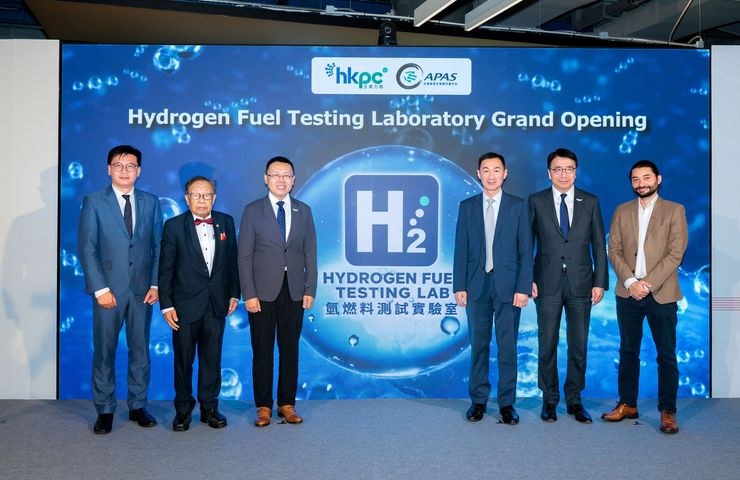
The Hong Kong Productivity Council (HKPC) and its Centre of Advanced Power and Autonomous Systems (APAS) have just launched the region’s first dedicated hydrogen fuel testing laboratory in Kowloon. This new facility aims to provide local sampling, testing, validation, and quality assurance services for hydrogen production facilities, refueling stations, and various other applications. By aligning with both national and international standards, it looks to lessen the dependency on mainland testing and build a stronger hydrogen infrastructure, ultimately supporting emerging projects as they transition from concept to commercial readiness.
Filling a critical gap
Hong Kong's hydrogen program has primarily focused on demonstration projects and policy frameworks, with trials involving buses, generators on construction sites, and refueling stations. Even though the government rolled out its Strategy of Hydrogen Development and passed the Gas Safety (Amendment) Ordinance, most testing was still done offsite. Now, with this new lab, local operators can measure hydrogen purity and detect contaminants right here at home, ensuring they comply with regulations from the inter-departmental working group on hydrogen fuel and guidelines set by the Electrical and Mechanical Services Department.
Technology and testing capabilities
The lab's main feature is its capability to analyze hydrogen quality against ISO 14687, which serves as the international benchmark. When samples are taken from cylinders, pipelines, or refueling nozzles, they undergo gas chromatography. This process carefully separates and identifies chemical components in the hydrogen. Plus, there's an online dynamic dilution system that brings measurement precision down to parts-per-billion—crucial for spotting any impurities that could mess with the performance of a proton-exchange-membrane fuel cell. Though details on throughput and accreditation haven't been disclosed yet, the facility is designed to streamline technical decisions and offer operators quick access to quality data.
Bridging demonstrations to commercialisation
By cutting down on turnaround times and eliminating the hassle of transporting samples, this lab tackles a major bottleneck in the supply chain. Refueling station operators, vehicle fleets, and equipment suppliers can now confirm fuel quality without the delays of cross-border logistics. In a busy urban area with limited land and renewable resources, local validation of hydrogen quality is a game-changer. It sets the stage for future green hydrogen production, better hydrogen storage systems, and more extensive refueling networks. It also promotes regional cooperation with Guangdong and fits into Hong Kong’s larger strategy to decarbonize its industries by creating professional services centered around analysis and certification.
Realistic expectations
While hydrogen fuel cells offer a zero-emission way to power vehicles, their environmental benefits really depend on the availability of low-emission hydrogen. According to the International Energy Agency, global hydrogen production hit nearly 100 million tonnes, but less than 1% came from renewable or low-emission sources. That said, high production costs and infrastructure challenges are still significant hurdles. This lab may not kickstart mass deployment overnight, but it's a crucial step toward safe, standards-driven growth. In the near term, it’s likely to support trials, ensure compliance, and nurture a professional ecosystem.
Policy backdrop and regulatory alignment
A government inter-departmental working group focused on hydrogen fuel has been in place for years to coordinate policies, safety standards, and infrastructure testing. Their work was foundational for the Strategy for Hydrogen Development, which highlights the importance of legislation, standards, market alignment, and sensible progress. The recently amended Gas Safety Ordinance expanded the regulatory framework to encompass hydrogen importation, storage, transport, and dispensing, paving the way for new rules about installations and certified practitioners.
While these legal foundations were being laid, trials surged ahead. Pilot refueling stations popped up in urban and suburban areas, double-decker hydrogen buses completed test runs, and fuel cell power packs were deployed at construction sites. All these projects demonstrated essential safety protocols and technical viability, but they were largely dependent on offsite labs for fuel-quality testing. By offering local validation services, the new lab helps ensure compliance with safety rules, so refueling stations can stick to the operational codes established by the Electrical and Mechanical Services Department.
Regional and professional services potential
This lab also opens the door for expanded professional services all across the Greater Bay Area. Companies focused on calibration, inspection, accreditation, and maintenance now have a domestic hub dedicated to hydrogen fuel quality assurance. This aligns perfectly with ambitions to make Hong Kong a service and finance center for innovative technologies. As new green hydrogen projects and refueling networks emerge, the demand for analytical services is expected to rise, especially through collaborations with mainland partners who operate under similar standards.
On-site training and certification programs will reduce the need for personnel to travel to the mainland for specialized courses. As the number of refueling stations increases, professionals skilled in sample collection, gas analysis, and risk assessment will be in greater demand. Developing a local hub of expertise builds on Hong Kong’s strengths in laboratory services and innovation support, while also contributing to national efforts aimed at scaling up hydrogen-powered vehicles and stationary power installations.
Technical deep dive on testing methods
At the heart of the lab’s operations are advanced instruments that break down gas mixtures. Using gas chromatography, the lab can separate molecules by how they interact with a column, measuring the time it takes for various gases like hydrogen, nitrogen, methane, and carbon monoxide to arrive. An online dynamic dilution system ensures accurate calibrations with sample flows, achieving parts-per-billion precision. This level of accuracy is vital since even minute amounts of sulfur or halogen contaminants can poison catalysts and harm proton-exchange-membrane fuel cells.
Results are then compared to ISO 14687 limits to determine suitability for hydrogen vehicles and stationary fuel cells. Operators leverage this data to tweak purification processes, guaranteeing that electrolyzer outputs and compressed cylinders meet necessary quality thresholds. As demand continues to grow, the lab might expand its capabilities to include moisture analysis, spectroscopy, or permanent gas detection, further enhancing its accreditation and testing services, which are vital for building a robust hydrogen infrastructure.
Market outlook and challenges
On a global scale, hydrogen production is still largely dominated by fossil-fuel methods, with renewable green hydrogen created through electrolysis making up only a tiny fraction. The cost differences remain a hurdle: without subsidies or carbon capture, hydrogen sourced from steam methane reforming is just cheaper. In Hong Kong, challenges like land scarcity and urban density make it tough to deploy large electrolyzers or storage facilities. Meanwhile, battery-electric vehicles are gaining traction, especially in passenger transport, which pushes hydrogen solutions toward heavy-duty applications, maritime transport, or backup options.
Still, this new testing facility has the potential to bolster investor confidence and facilitate clean hydrogen offtake agreements by providing locally recognized certification. In financing discussions for hydrogen projects, test reports can significantly minimize risk concerning supply, whether that’s from imported ammonia cracking or offshore wind electrolysis. As the conversation continues about hydrogen fuel cells versus battery electric options, having a solid quality-assurance platform is key to ensuring that future expansions of hydrogen refueling stations and logistics networks are built on a solid technical foundation.