Hydrogen-6 Breakthrough at MAMI Accelerator Rewrites Nuclear Research Boundaries
In a world-first, scientists at Mainz Microtron have created hydrogen-6 — rewriting the rules on nuclear stability and opening new frontiers in neutron-rich matter research.
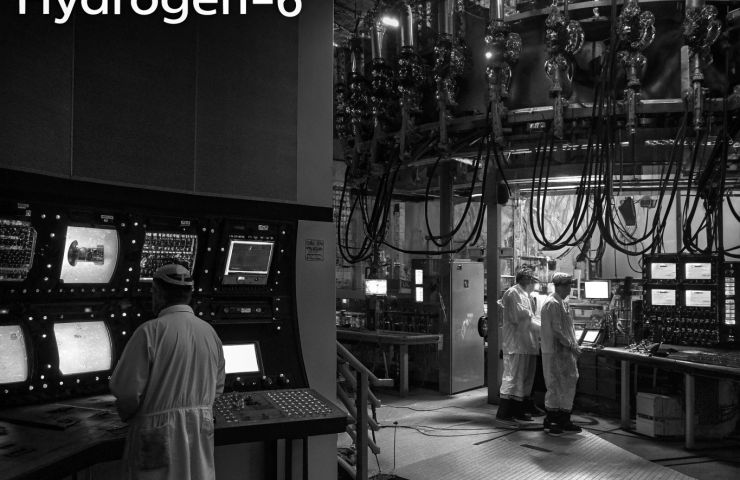
In a quiet lab tucked away in Mainz, Germany — a city more famous for Gutenberg’s printing press than groundbreaking physics — something remarkable just happened. Scientists pulled off a first in the world of nuclear physics, creating something that’s existed only in theory until now: hydrogen-6. It may not hit the headlines like breakthroughs in hydrogen production, but this tiny, wild isotope might hold big answers for the universe itself.
Making History: Hydrogen-6 Comes to Life at Mainz Microtron
At the Johannes Gutenberg University Mainz, working with the renowned Mainz Microtron (MAMI), researchers have officially produced and detected hydrogen-6 for the first time ever. Sounds small? It is — fantastically so. This version of hydrogen has just one proton and a whopping five neutrons, making it so unstable it disappears almost as soon as it forms — we’re talking 3×10⁻²² seconds here.
The experiment unfolded in early 2025, with the team publishing their findings in March 2025. They relied on an upgraded 1.6 GeV electron beam and insanely precise magnetic spectrometers to catch the briefest glimpse of this evasive particle — a view that’s eluded scientists for decades.
How They Pulled It Off — And Why It’s a Big Deal
So, how do you find a particle that barely exists? The team used electron beam scattering on a lithium-6 target, setting off a nuclear reaction delicate and complex enough to birth hydrogen-6. To produce just one atom, they needed more than 1015 collisions. Detection wasn’t any easier — it required a setup so precise that the spectrometers were aligned to within a fraction of one degree, less than 1 millisteradian.
Sure, this isn’t about fueling clean-energy tanks or powering up cities. But it’s about digging beneath the surface of what we think we know — reshaping the models that explain things like neutron stars or how nuclear forces behave under extreme conditions. One team member summed it up perfectly: “This pushes the limits of what we thought was possible.”
Completing the Hydrogen Family
This discovery actually completes a missing piece in the hydrogen isotope puzzle. Scientists have already spotted hydrogen-1 (the regular kind), -2 (deuterium), -3 (tritium), -4 and even had a brief glimpse of hydrogen-5. But hydrogen-6? Until now, it had only lived in the realm of math and models. Its detection redefines where the boundary lies between what kinds of matter can actually exist — even if it’s just for a moment — and what’s beyond reach.
Bigger Picture: Why This Resonates Beyond Just Physics
You’re not going to see hydrogen-6 used in hydrogen production anytime soon — it decays far too quickly. But what it does do is give us new insights into neutron-proton interactions, the very kind that shape neutron-rich isotopes found in the hearts of stars or on the collision path of atomic nuclei.
On the tech side, this was also a leap forward for particle detection. The tools developed to find this elusive atom are a huge step up — the kinds that might one day improve how we monitor fusion experiments or analyze hydrogen plasma environments. It’s foundational stuff, the kind you build future breakthroughs on.
Why Mainz? A Quiet Powerhouse for Physics
Although it might not be the first city you think of when it comes to cutting-edge scientific research, Mainz is punching well above its weight. Its esteemed Gutenberg University and the work coming out of MAMI are quietly helping shape the future of nuclear science in Europe and beyond. With roots going back to Roman times, and now home to global research collaborations, the city is evolving into a hub for serious physics innovation.
MAMI itself isn’t new — it’s been around since the ’70s, mostly for high-precision nuclear scattering. But its latest upgrade, boosting the energy level to 1.6 GeV, made this milestone possible. The success involved tight-knit collaboration, including support from Helmholtz Institute Mainz and GSI Darmstadt.
Looking Ahead: The Next Frontier
This may seem like a scientist’s version of a moonshot, but discoveries like this can eventually help shape how we produce neutron-rich isotopes for medical imaging or experimental fuels. And if we can detect hydrogen-6, maybe there’s hope for finding even heavier, stranger versions. Labs around the globe are likely already taking notes and plotting their next big chase.
“You don’t hit publish until you’re sure your detector didn’t just blink,” one researcher joked. All jokes aside — they were sure. And with that, the science books just got a thrilling new page added.
While you won’t see hydrogen-6 filling tanks or lighting up cities, the techniques it took to find it — from precise beam design to cutting-edge spectrometry — are laying the groundwork for future advances in clean-energy tech. Sometimes, the biggest leaps forward come from chasing the tiniest, most fleeting particles of all.