HIF Global Slashes Land Footprint of Uruguay Hydrogen Project to Align With Biodiversity and Community Goals
HIF Global has scaled down its $6B Paysandú hydrogen project, slashing land and forest use while boosting biodiversity protections. The redesign aligns high-scale e-Fuels production with sustainability goals, positioning Uruguay to lead in green export fuels.
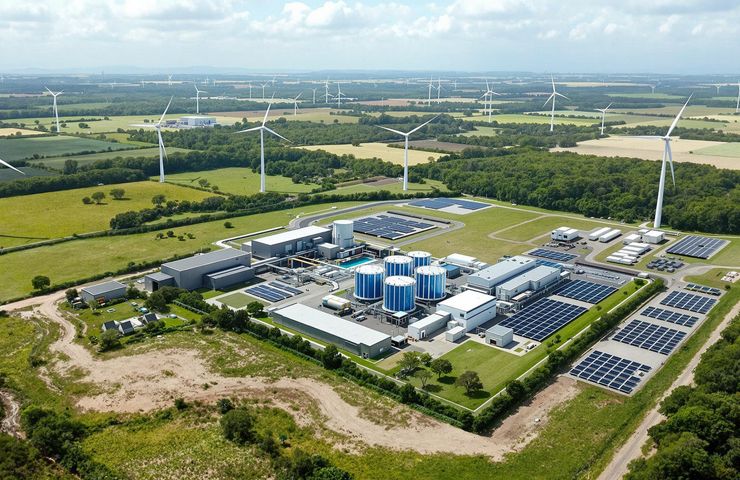
HIF Global is taking a big step forward in Uruguay with its massive $6 billion green hydrogen and synthetic fuels project — and not just in terms of technology. The company has completely overhauled the blueprint for its Paysandú facility, slashing the land it’ll use by 35% and cutting its impact on native forests by a whopping 70%. This redesign is a direct response to feedback from the local community and regulators, signaling a serious commitment to doing things more sustainably.
A Smarter, Greener Approach
The updated plan, made public on July 9, 2025, includes some major sustainability-driven changes:
- 35% smaller land footprint
- 70% less disruption to native forests
- A newly designated 163-hectare biodiversity reserve managed to national conservation standards
- Use of closed-loop vertical cooling systems to minimize water and land use
Even with this environmental course correction, the ambitions haven’t shrunk. The goal is still to pump out around 700,000 tons of e-Fuels a year, all aligned with the strictest EU and international decarbonization benchmarks. HIF’s game plan is to use green hydrogen — made with Uruguay’s nearly carbon-free electricity — and combine it with biogenic CO₂ sourced through partnerships with the state-owned Ancap and ALUR. The result? Synthetic gasoline and methanol ready for export using existing pipelines and infrastructure.
Why Uruguay? Why Now?
Uruguay isn’t just a beautiful country — it’s become a global leader in clean energy, with over 94% of its electricity coming from renewable sources like wind, solar, and hydro. That makes it a perfect springboard for the next generation of fuel technologies like green hydrogen and e-Fuels. And with new international rules — especially from the EU — putting pressure on imports to be climate-friendly, building these kinds of facilities in a place like Uruguay just makes sense.
Paysandú, traditionally known for agriculture and food production, is turning a new page. With about 116,000 people and a diverse ecosystem, it's now in the spotlight — and not just for economic reasons. The project’s new biodiversity reserve is a regional first, helping balance development with environmental care. It’s a bold attempt to show how industry can work hand-in-hand with nature instead of against it.
Boosting Jobs, Exports, and Clean Innovation
On the economic front, the project’s got plenty of upside. It’s expected to create up to 3,200 jobs during construction and provide 600 permanent positions once it’s up and running. It's also shaping up to be one of the biggest foreign direct investments in Uruguay’s history. Local partners like Ancap bring valuable know-how, robust infrastructure, and a steady supply of biogenic CO₂ — all crucial for making the synthetic fuels that this project is banking on.
But it's not just about the fuels. The redesign taps into newer, smarter ideas — like those closed-loop cooling systems — that help shrink the project’s environmental footprint even further. By reducing how much land and water the plant needs, HIF is setting a new standard for how hydrogen production and synthetic fuel plants can be designed to be more compact and eco-friendly.
From Early Experiments to Full-Scale Impact
HIF Global isn’t exactly new to this game. They're already producing synthetic fuels at their Haru Oni demo facility in Chile, and now they’re ready to take things up a notch in Uruguay. This new facility in Paysandú will build on experience gained in Chile while aligning with Uruguay’s stricter environmental policies, thanks to oversight by DINACEA, the Ministry of Environment’s directorate.
Construction is set to start in the second half of 2026, with commercial fuel production expected by 2029. If everything goes according to plan, Uruguay could soon take its place as a leader in sustainable energy exports, helping to power ships and planes around the world with cleaner fuels made from renewable energy.
The Bigger Picture
This isn’t just another green hydrogen project — it’s something more. It’s a blueprint for how big-time energy projects can also be good neighbors. By listening to people, respecting ecosystems, and thinking long-term, HIF is aiming to prove that industrial decarbonization can be thoughtful, responsible, and – maybe most importantly – doable.
As the world races toward cleaner fuels, Uruguay is showing how it’s possible to build the future of energy without sacrificing the present. If they pull it off, it’ll be a playbook others are sure to follow.