Italy revises funding to €50.35 million for De Nora electrolyzer gigafactory
Italy revises public support for De Nora’s electrolyzer gigafactory to €50.35 million, fully covering eligible costs under a remodulated plan
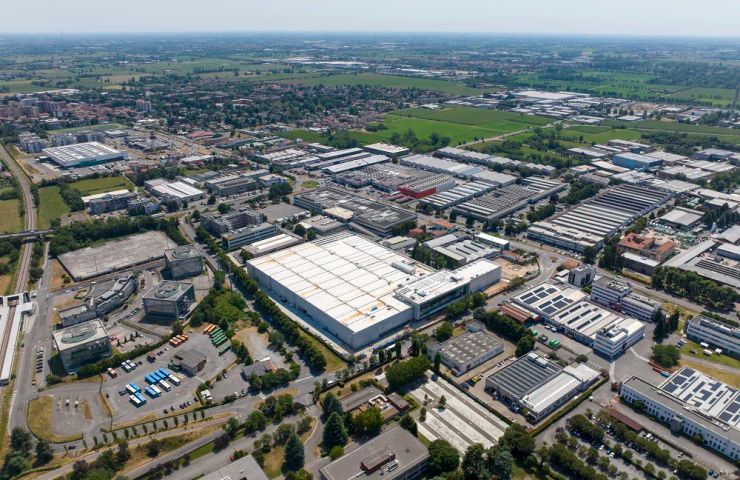
Industrie De Nora recently shared that Italy's Ministero delle Imprese e del Made in Italy has adjusted public funding for its electrolyzer manufacturing facility in Cernusco sul Naviglio to a total of €50,348,569. The revised grant is split into €32,250,000 from the National Recovery and Resilience Plan (PNRR) and €18,098,569 from the Important Projects of Common European Interest (IPCEI) fund. The support now covers 100% of the project’s eligible costs based on an updated industrial plan, rather than being provided as a blanket subsidy for all corporate operations.
Funding revision details
The new €50,348,569 contribution replaces an earlier plan that aimed for approximately €63 million. That reduction reflects a re-evaluation of the eligible-cost base, not a withdrawal of backing for the project. Initially, state aid was intended to cover around 70% of the defined expenses; under the new decree, which came out on September 10, 2026, the level and structure of support have been adjusted. De Nora Italy Hydrogen Technologies S.r.l., the project company, remains the beneficiary of the funds.
Project background and partners
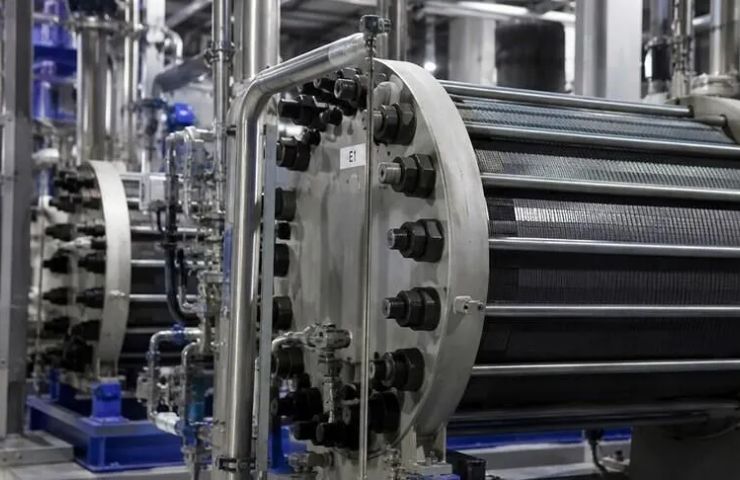
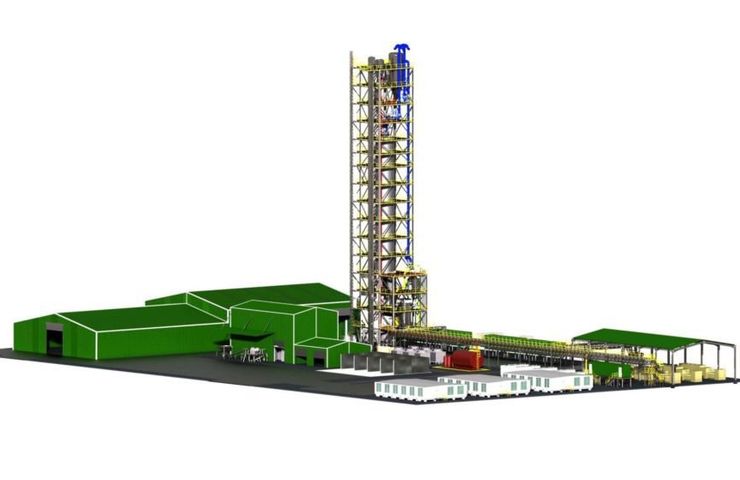
The proposed gigafactory will occupy about 25,000 m² in an industrial area southeast of Milan. It is designed to assemble large-scale electrolyzer stacks, alkaline water electrolysis modules, and related electrochemical components for fuel cells and water-treatment systems. By 2030, De Nora aims for an annual production capacity equivalent to up to 2 GW. The latest funding update does not change that production target. De Nora says it remains committed to hitting the 2 GW goal as soon as full production kicks in. The company is pursuing the project through a joint venture with Snam called De Nora Italy Hydrogen Technologies, combining its electrochemical experience with Italy's energy network.
Market context and strategic rationale
De Nora began a review of the project’s financial assumptions in early 2025. That review informed the new plan, which aims to align public support with likely production volumes and to preserve manufacturing capabilities in the face of evolving market conditions. Industry experts point out that one of the major hurdles for the sector remains balancing electrolyzer production with solid offtake contracts. The revised funding structure is intended to address that tension by tying grant coverage more closely to demonstrable project activity.
Policy framework
The adjustment forms part of Italy’s PNRR hydrogen pillar and sits within the European Commission’s IPCEI Hydrogen framework (Hy2Tech), which was approved in mid-2022. Under IPCEI rules, member states can coordinate state aid for technologies deemed strategic. In July 2023, MIMIT gave De Nora €32,250,000 via an IPCEI-related measure; a second decree in December 2024 supported the project and extended deadlines for completion. The latest decree keeps both PNRR and IPCEI resources in play while tightening the link between grant payments and milestone achievements.
Industrial significance
Domestic production of alkaline electrolyzers is presented as a necessary step for scaling renewable hydrogen production and meeting industrial decarbonization targets. By manufacturing electrochemical electrodes and stacks within Italy, De Nora is leveraging decades of experience supplying chlor-alkali and water-treatment systems. That local manufacturing capability is intended to reduce reliance on imports and reinforce Europe’s supply-chain independence in components critical to hydrogen production.
Risks and next steps
Public backing alone will not guarantee the gigafactory’s success. For the facility to reach commercial viability it must secure customer orders. De Nora plans to complete construction, install production lines, and begin test assemblies. The company is also pursuing offtake agreements and financing strategies for downstream hydrogen projects; those deals are described as key to unlocking orders and establishing reliable revenue streams. Meeting those milestones will determine the pace at which grant payments are released under the tightened decree conditions.
Economic and local impact
Under the original plan, about 200 direct jobs were expected, together with an estimated 2,000 positions in related supply chains and services—figures that may be revisited under the updated funding strategy. The gigafactory could be a source of employment in the Milan area, drawing on local manufacturing know-how. Local economic effects will depend on the timing of construction, the ramp-up of production, and the degree to which suppliers and service providers are engaged in the project.
Environmental considerations
The factory will not produce hydrogen itself, but its equipment is intended for green hydrogen production, a contribution that backers say could help various industries reduce their carbon footprints. Observers stress that green hydrogen initiatives must account for lifecycle impacts. De Nora will be required to meet local permitting rules covering land use, emissions, water management, and waste disposal as the project advances toward operation.
Outlook
Italy’s choice to recalibrate rather than cancel support reflects a deliberate approach to financing hydrogen infrastructure. By aligning grant coverage with realistic project activities and milestones, the government aims to sustain strategic manufacturing capacity while reducing the risk of overexposure. Ultimately, the project’s trajectory will test whether public funding can bridge the gap between domestic manufacturing capability and the growing demand for green hydrogen.