Fuel Cell Technology Gets a Boost from 2D Topology-Curvature Optimization
A new method for optimizing PEMFC flow channels — developed by Youliang Cheng’s team — improves fuel cell performance by up to 4.72%, offering efficiency gains critical for mainstream hydrogen adoption.
Hydrogen fuel cells just got a clever boost in performance — and it all comes down to rethinking the shapes inside them.
If you've ever asked why we’re not seeing hydrogen power everywhere — in buses, homes, backup systems — one big reason is efficiency. It's not cheap or simple to get the most out of fuel cell technology. That’s exactly what Youliang Cheng and his team set out to fix with their fresh take on proton exchange membrane fuel cell (PEMFC) design. And their work couldn't have come at a better moment. With the world sprinting toward net-zero targets, stronger, more efficient hydrogen cells could really help move us along.
So, what’s the breakthrough?
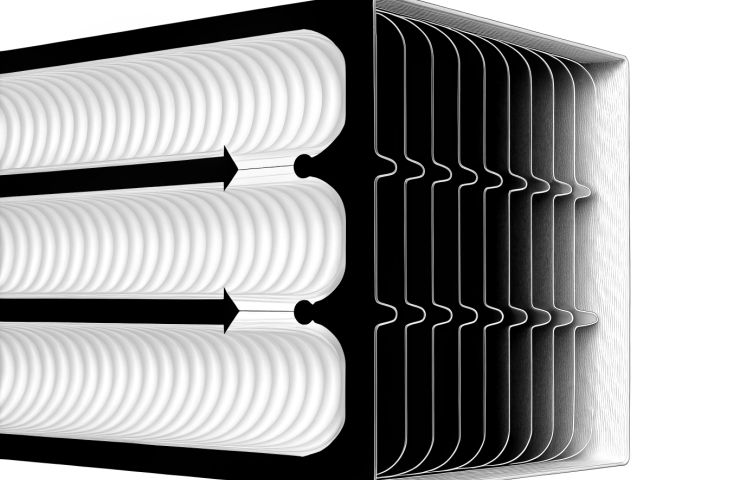
The team dropped their findings in July 2025, revealing something they call 2D Topology-Curvature Optimization. In simpler terms? They used computer simulations to rework the tiny internal “roads” that gases travel through inside a fuel cell. By fine-tuning the bends, turns, and intersections in those channels, they were able to squeeze out better performance from the same setup.
One of their best test designs showed a 4.72% increase in peak current density and a 3.12% bump in peak power output. Now, those numbers might not sound earth-shattering at first glance, but in the world of industrial PEMFC optimization, that’s a big deal — especially when you're trying to scale up for real-world use in transport or clean power systems.
Why now? Why this matters
We’ve seen a surge in support for hydrogen infrastructure lately — from government policies to big-budget investments and commercial deals. But one tough nut to crack has always been how to move hydrogen and oxygen in... and water and heat out. That’s the lifeblood of the fuel cell, and how you manage that flow can make or break performance. This is where Cheng’s design refresh really shines.
Until now, most advances in fuel cell technology have focused on better catalyst materials or more durable membranes. Flow channels — the literal gas highways inside the cell — haven’t gotten nearly the same attention. But with more computing power and better simulation tools, researchers are starting to treat these internal pathways like a new frontier. Cheng’s strategy blends topology optimization (mapping where flow paths should go) and curvature optimization (smoothing out their twists and turns). Think of it like designing a Formula 1 race track — but for hydrogen molecules.
Two big wins from one idea
First, when gases flow better, the whole system performs better. You get stronger, more reliable power output with less chance of something getting jammed up. Second, and just as important, the team didn’t only chase bigger numbers — they were smart about it. They used something called an efficiency evaluation criterion (EEC), which helped them measure how much energy they gained versus how much they lost in extra pressure or drag. That kind of balance is huge if you want this stuff to be not just impressive in a lab, but affordable and scalable in real life.
In practical terms, these design tweaks mean you can wring more power out of your fuel cell without supercharging the costs. It’s like putting performance tires on your EV — same car, better grip, smoother ride.
What could this change in the big picture?
Making PEMFCs more efficient doesn’t just make research grants look good — it pushes the economics of hydrogen fuel cells in a better direction for everyone. Whether it’s trucks on highways, stationary power systems for buildings, or backup energy for grids, small gains can make a huge impact when multiplied at scale.
This also taps into a larger trend: we’re using software and simulations to make the physical world work better. From smarter wind farm layouts to optimized solar panel trackers, we’re seeing how digital tools can lead to real-world performance gains. This new flow field design is another example of that — using code to crack physical challenges.
Of course, there’s a bit of a hurdle. These finely curved and optimized shapes? They're not exactly easy for traditional manufacturing methods to pull off at scale. That’s a challenge — or maybe an opportunity — for the 3D printing world. Additive manufacturing could be the key to turning these complex digital designs into real-world components without blowing up the budget.
A step toward making hydrogen practical
With faster prototyping and better performance packed into a tighter design, Cheng’s approach could help shave down the total cost of ownership — something that’s held back hydrogen fuel cells from wider adoption for years. It’s still early days, but if this method catches on and pairs with cheaper hydrogen production and streamlined supply chains, it could be a game-changer.
So yeah, this isn’t just about boosting a few watts. It’s about building confidence in hydrogen tech — showing that the pieces of a truly sustainable energy system are actually coming together. And sometimes, that belief in the tech's future is the most powerful thing of all.