China Overhauls Hydrogen Production Standards to Meet Global Carbon Benchmarks
China launches government-backed hydrogen regulations, aligning lifecycle assessments with EU standards and setting strict carbon intensity thresholds. A three-tier system aims to boost export viability and industrial decarbonization.
China’s 2025 Hydrogen Standards: A Redefinition of Clean
China is stepping things up in the hydrogen game. They've just rolled out a draft of the new 2025 Clean and Low-Carbon Hydrogen Evaluation Standard—but this isn’t just another industry suggestion. It's a serious play, backed by the government and legally enforceable. Led by Guoneng HydrogenTech and overseen by the China Electricity Council, the draft signals a big move away from voluntary guidelines toward real regulation. At its core? A push to reshape hydrogen production and cement China’s foothold in the global hydrogen economy.
With heavy hitters like the State Administration for Market Regulation (SAMR) and the National Energy Administration (NEA) in charge, the draft brings in a much tougher framework. We're talking detailed lifecycle assessments (LCAs), stricter emissions rules, and a clear three-level classification system for hydrogen: renewable hydrogen, clean hydrogen, and low-carbon hydrogen.
Lifecycle Accounting Gets Serious
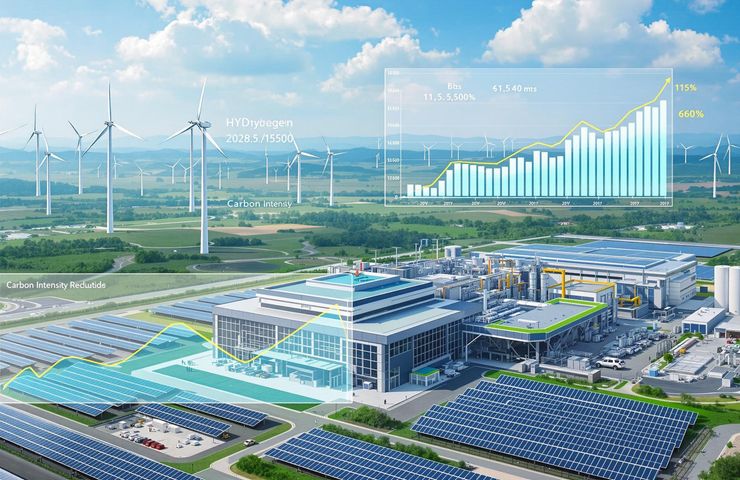
One of the biggest shifts? The focus on lifecycle accounting. Instead of just looking at tailpipe emissions or energy inputs, China now wants to measure the total carbon footprint—starting from raw materials all the way to hydrogen delivery. They're even deducting captured CO₂ from the final total. This is measured in kg of CO₂ equivalent per kg of hydrogen, and it’s now the basic requirement for meeting the new classifications.
If that sounds familiar, it should—China’s taking a page from the EU’s Renewable Fuels of Non-Biological Origin (RFNBO) guidelines, laying the groundwork for future exports into tight-regulation markets. And the bar is being raised significantly from the old 2020 baseline of around 17.7 kgCO₂e/kgH₂. In short, if you're still making hydrogen from coal without serious carbon capture, you're in trouble.
Breaking It Down: The Three Hydrogen Types
To make things clearer for developers, investors, and global partners, China’s moving forward with a three-tier system:
- Renewable hydrogen: The gold standard. Produced using 100% renewable electricity—typically water electrolysis powered by wind or solar. No fossil fuels allowed.
- Clean hydrogen: Lower carbon emissions than conventional methods. Often comes from natural gas reforming paired with carbon capture or recovered from low-emissions industrial by-products.
- Low-carbon hydrogen: The middle ground. This transitional category includes legacy systems that have improved with tech upgrades or partial carbon offsets.
This structure doesn’t just make domestic policy simpler—it also helps line China up with global players to smooth out trade and certification in the future.
What It Means for Business and Policy
For companies in the space, there’s both opportunity and pressure. On one hand, the clarity in regulations reduces guesswork and could attract fresh investments in areas like electrolysis and carbon capture and storage (CCS). On the other, China's producers now have to sharpen up if they want to compete in export markets sharpening their own regulatory pencils.
That said, the sector's still largely coal-dependent. Right now, green hydrogen makes up just 2% of total production. So while this draft is a big step forward, actual improvements will need support in emissions tracking, independent certification, and transportation logistics. Until those pieces are in place, some of the benefits might remain stuck on paper.
Hydrogen and the Bigger Picture
Looking back, China’s hydrogen market was built around coal—cheap, plentiful, and poorly regulated. But times are changing. With its sights set on peaking emissions by 2030 and reaching net-zero by 2060, Beijing has redefined its energy playbook. Now, hydrogen is officially recognized in the upcoming April 2025 Energy Law as a strategic energy resource, right alongside electricity and natural gas. That’s a huge shift in how hydrogen fits into national energy planning and investment strategy.
So, What’s Next?
This isn’t going to be an overnight revolution. China is taking a “build first, phase out later” approach. The plan? Scale up renewable capacity, roll out more electrolyzers, and run pilot programs in heavy industries like steel and chemicals. Only after there’s enough low-carbon infrastructure in place will the government push harder to cut traditional hydrogen production from coal.
Still, the ripple effects are already showing. R&D funding is leaning hard toward zero-emissions technology and new applications like green ammonia. We’ll likely see a wave of new pilot projects pop up in coastal industrial areas, especially now that state-owned banks have regulatory green lights to start funding.
Final Thoughts
This isn’t just about compliance—it’s about finally treating hydrogen like a core pillar in China’s energy future. The new standards don’t just aim to reduce emissions—they’re designed to kickstart innovation, inject confidence into investors, and open big doors for international trade. It won’t be seamless—legacy systems will resist, teething issues are inevitable—but the direction is set. For those ready to move fast and think long-term, this could be a huge opening. The hydrogen economy is no longer a maybe; it's happening—and it’s picking up speed.