News
Chesapeake Utilities Invests $10M in Ohio Natural Gas Pipeline to Power Data Center with Fuel Cells
Chesapeake Utilities and AEP are teaming up on a $10M gas pipeline and fuel-cell project in Ohio to power a new data center, tackling AI’s electricity demands with cleaner, localized generation.
Fueling Innovation: Ohio’s Big Move Toward Smarter Power
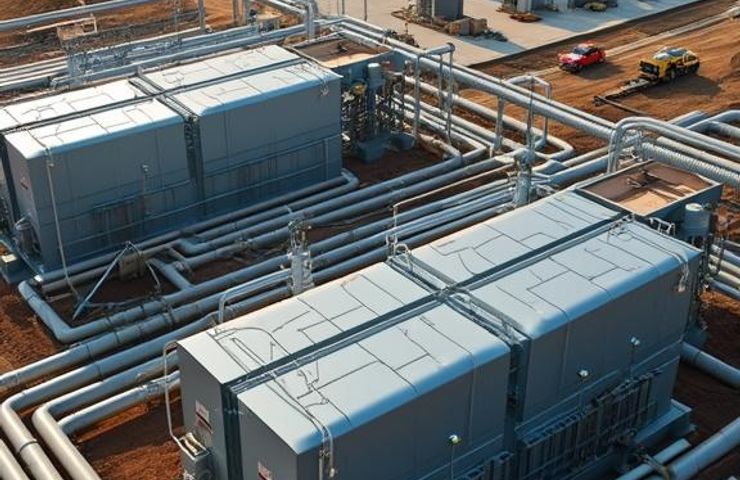
There’s a high-stakes energy play unfolding in Central Ohio, and it’s got “future of AI infrastructure power” written all over it. Chesapeake Utilities Corporation is putting $10 million on the table to build something bold—a new natural gas pipeline designed to help feed a growing hunger: the massive power demands of AI and cloud computing. Working through its local arm, Aspire Energy Express, LLC, and teaming up with utility giant American Electric Power (AEP), Chesapeake is laying the groundwork for a fuel-cell-powered facility that’s set to energize a new, high-performance data center—name still under wraps. The project's slated to go live in early 2027, marking a new era for Chesapeake Utilities Ohio and maybe even the entire Midwest.The Idea: Bring Power to the Source
This project flips the usual energy game on its head. Instead of stressing out traditional electrical grids, Chesapeake and AEP are cutting out the middleman. The plan? Pipe in natural gas straight to where it’s needed—right on-site at the data center. Then, a fuel-cell power system turns that gas into electricity using a cleaner, electrochemical process. No spinning turbines. No smokestacks. Just a faster, more efficient way to generate power where it’s used, slashing transmission losses and seriously boosting reliability—big priorities when you're dealing with power-hungry AI operations that can’t afford a hiccup.The Team Bringing It to Life
At the helm is Chesapeake Utilities Corporation (NYSE: CPK), a longtime player in the energy space that’s making a smart pivot toward future-ready tech solutions. Its Ohio-based subsidiary, Aspire Energy Express, knows the local energy landscape inside and out—and they’re taking the lead on building the new pipeline. Backing them is American Electric Power (AEP). With one of the largest utility footprints in the country, AEP brings scale, staying power, and the kind of operational know-how that makes bold ideas like this workable and real.Why Central Ohio? It Just Makes Sense
You might be wondering—why here? Central Ohio may not be the first place that comes to mind for cutting-edge AI infrastructure power, but it's quickly becoming a high-tech hotspot. The greater Columbus region already offers a solid mix of open land, strong infrastructure, and easy access to cross-country highways. It checks a lot of boxes for companies looking to build big and fast. Throw in Ohio’s deep roots in manufacturing and energy, and you’ve got fertile ground for new-age utility projects like this. Plus, with more and more tech giants moving in, the demand on local grids is exploding. That’s where fuel-cell power steps in—delivering stable, scalable electricity to data centers without wearing out the electric grid.Fuel-Cell Tech, Simplified
So how do fuel cells actually work? In plain English: they turn natural gas into electricity through chemistry—not fire. The natural gas (mainly methane) gets stripped for hydrogen, which then reacts with oxygen from the air. That reaction generates electricity, a bit of water, and some heat—but very few pollutants. It’s not a zero-carbon solution (natural gas is still a fossil fuel, after all), but it’s definitely a cleaner step forward—especially when compared to old-school generators or turbines. And since the energy is made right where it’s needed, you avoid the common pitfall of losing power over long-distance transmission.Economic Wins, Cleaner Spins
Sure, this is an energy project—but it’s also a local economic booster. Construction will bring jobs, and there’s potential for long-term roles once the fuel-cell facility is up and running. More importantly, it’s helping keep Central Ohio competitive as companies hunt for faster, greener AI infrastructure power solutions. Of course, there’s a fine line to walk. Since this setup still leans on natural gas, managing emissions across the supply chain will be critical. But when stacked up against combustion turbines? Fuel cells bring cleaner, steadier energy and offer a path that’s ready for even greener fuels down the road.Redefining Where Utilities Go Next
This pipeline isn't just about moving gas—it's about moving the goalposts. For Chesapeake Utilities Ohio, it’s a sharp step into the evolving energy game. They’re not just serving homes anymore—they’re powering the building blocks of tomorrow’s internet. And for AEP, it’s a leap toward modernizing service in a world where uptime is king and “always-on” is the norm. As energy-hungry sectors like AI and cloud computing keep pushing limits, the model taking shape here—local fuel, on-site generation, and smart planning—might just become the blueprint.The Future’s Already Under Construction
With the agreement signed and shovels expected in the ground soon, this isn’t a “wouldn’t it be cool if” concept. It's happening. And it matters—a lot. As we move deeper into the age of AI, data, and round-the-clock computing, we’re going to need power that’s just as smart and responsive. This project shows that traditional utilities don’t have to sit on the sidelines. They can evolve. They can innovate. And in places like Ohio, they already are.How was this article?
Thanks for the feedback!