News
BPCL and CIAL Launch South India’s First Green Hydrogen Plant at Kochi Airport
BPCL and CIAL launch Kochi's green hydrogen plant—South India's first at an airport—with 200kg/day production. A model for clean mobility in aviation.
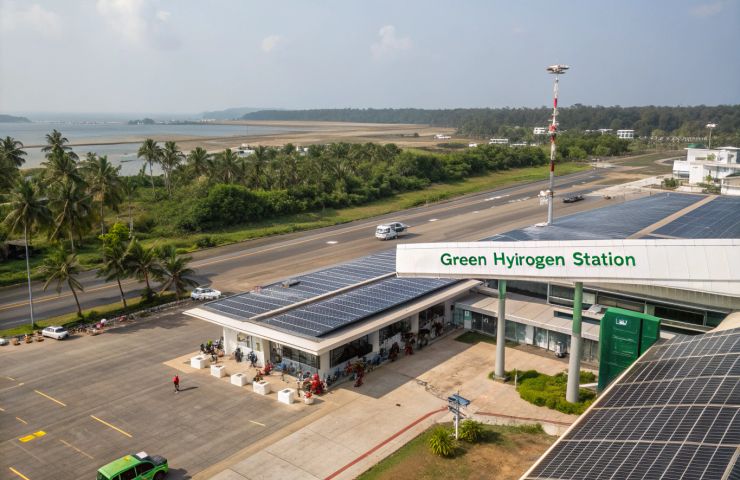
Kochi Sets the Pace for Green Hydrogen in Indian Aviation
Some places just have a knack for leading the charge. Kochi, with its serene backwaters and vibrant port city vibes, is once again stepping into the spotlight—not just for its natural beauty, but for charting bold, green moves. It made headlines in 2015 when Cochin International Airport Ltd (CIAL) became the first airport in the world to run entirely on solar power. Now, it’s back in the game, this time pioneering with green hydrogen. Teaming up with Bharat Petroleum Corporation Limited (BPCL), CIAL is setting up South India’s first-ever green hydrogen plant and refueling station—right at the airport. This isn’t just symbolic. The plant will produce 200 kilograms of green hydrogen a day using a 1,000 kW electrolysis system, enough to power airport vehicles and soon, commercial transport.Why This Project Matters
Here’s the bigger picture: India has set an ambitious goal—5 million tonnes of annual green hydrogen production by 2030 under its National Green Hydrogen Mission. To get there, the country needs more than just policy talk. It needs boots-on-the-ground projects that actually work. What BPCL and CIAL are doing isn’t just a nice-to-have pilot; it’s a practical, scalable model for how hydrogen infrastructure can fit right into everyday transportation systems. What really stands out? CIAL is using its existing solar power legacy and smart location to become something more than just an airport. It’s evolving into an energy ecosystem—a hub where new ideas in sustainable energy can take off.The Tech Behind the Curtain
At the core of this operation are four alkaline water electrolysers, producing 200 normal cubic meters of hydrogen per hour. That’s more than enough to keep a fleet of hydrogen-powered ground vehicles moving, with plans in the pipeline to expand to commercial operations beyond the airport. They’re also rolling out KPIT Technologies’ hydrogen fuel cell system, ranging from 60 to 90 kW, built for buses. These won’t just sit in a lab somewhere—expect to see them on the ground soon at the airport. It all aligns neatly with Kerala’s Hydrogen Valley project, which has a target of deploying 50 hydrogen buses by 2030.The Location Equation
So why Kochi? It’s not just about geography. This city is symbolic. Kerala has a history of being forward-thinking when it comes to sustainability, from grassroots efforts to ambitious state-level goals around carbon neutrality. CIAL, based in Nedumbassery near Kochi, is already one of the greenest airports on the planet. It makes perfect sense to build the next chapter of India’s sustainable energy journey here. Add in the state's push to decarbonize tough sectors like aviation and heavy transport, and Kochi becomes the ideal testing ground. There's even buzz about linking this hydrogen output to ships at the port—so it's not just about planes, but perhaps ferries and cargo too.The Business Layer: Risk Meets Reward
Of course, trailblazing isn't cheap. The project comes with a price tag north of ₹25 crore (around $3 million), mostly funded by BPCL. Still, this is more of a strategic leap than a straight-up business case—for now. It’s about gaining early momentum in green hydrogen transport and building future demand in sectors like airport logistics and heavy mobility. There are still bumps in the road—like public skepticism around hydrogen safety, or the high upfront cost of hydrogen-powered vehicles. But BPCL isn’t calling it a wrap here. Another station is already planned for Thiruvananthapuram by 2026. This is also a job creator, expected to open up more than 500 roles in hydrogen logistics and support services. So it’s not just green—it’s generating growth too.How This Ripples Out
This first station may be small, but the potential impact? Huge. It's estimated to slash CO2 emissions from airport ground operations by up to 85% by 2030. But what really gets the imagination going is this: If Kochi can pull it off, what’s stopping cities like Hyderabad, Delhi—or even Munich and Tokyo—from doing the same? Airports are ideal test beds for this kind of tech. They’re controlled, high-demand environments with predictable transport needs. They need energy, and a lot of it. Swapping that out for green hydrogen makes all kinds of sense. Plus, there’s a poetic touch here—BPCL, a company rooted in oil, is now helping push India forward on the sustainable energy curve. And they’ve chosen CIAL, the airport that went solar before anyone else did, as their partner. One brings the fuel, the other brings the vision—together, they're laying the groundwork for airports to become beacons of decarbonization instead of pollution hotspots.Closing Thought: A Fork in the Runway
Every now and then, a project comes along that doesn’t just follow the roadmap—it redraws it. That’s what’s happening in Kochi. This isn’t just about asking “Can we use hydrogen?” It’s about declaring, “We’ll prove it works—here and now.” If we’re serious about making zero-emission transport and industrial decarbonization a reality, it’s these kinds of bold, practical projects that will light the way. Not pipe dreams. Not press releases. Real tech. Real partners. Real action. Skip the sci-fi for a minute. At Kochi Airport, you're watching the green hydrogen future quietly, confidently roll down the runway.How was this article?
Thanks for the feedback!