Air Liquide's Normand’Hy Project Moves Toward Hydrogen Production Commencement
Air Liquide’s Normand’Hy project is set to begin hydrogen production, leveraging a 200 MW electrolyzer and collaborations with Siemens Energy and TotalEnergies.
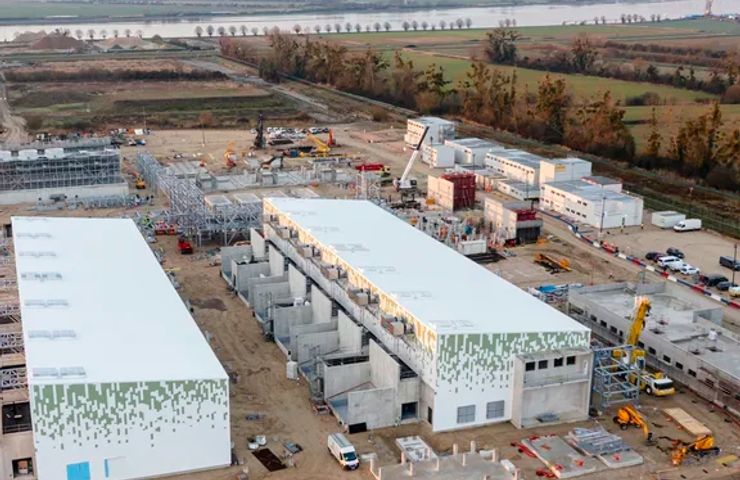
Air Liquide has announced that its Normand’Hy project, featuring a 200 MW proton-exchange-membrane (PEM) electrolyzer in Normandy, is set to begin producing its first hydrogen molecules soon. This news was made public during the company's Q3 2026 earnings call on October 29, 2026. The announcement underscores a crucial developmental milestone as the facility approaches operational readiness after completing the construction phase.
The Normand’Hy plant is strategically located in the Port-Jérôme industrial basin near Saint-Jean-de-Folleville and Port-Jérôme-sur-Seine. It is designed to generate approximately 28,000 tonnes of renewable and low-carbon hydrogen per year, primarily targeting industrial applications, including refining and potentially heavy mobility applications.
Details on Project Collaboration
Air Liquide collaborated with Siemens Energy, which supplies the project with 12 PEM electrolyzers that together provide the specified capacity. These electrolyzers are part of a wider cooperative effort that includes a joint manufacturing gigafactory in Berlin, aimed at enhancing PEM electrolyzer production efficiencies.
Furthermore, TotalEnergies has signed a long-term agreement with Air Liquide, committing to purchase 10,000 tonnes of green hydrogen and up to 5,000 tonnes of low-carbon hydrogen, starting in the second half of 2026. This collaboration exemplifies the emerging market dynamics in Europe, where existing hydrogen demand from industries is being supplemented with cleaner production methods.
Government Support and Regulatory Framework
The project has received significant backing from the French State, securing €190 million in support under the country’s industrial and energy transition programs. This aligns with the broader strategic objectives set forth in France’s hydrogen policy, which aims for substantial electrolyzer capacity expansion by 2030 and 2035.
Additionally, the project operates under the auspices of the European Union's regulatory framework, ensuring that the produced hydrogen meets the requisite sustainability and emissions standards established by the Renewable Energy Directive.
Hydrogen Production Technology
The technology used in the Normand’Hy project relies on PEM electrolysis, which requires electricity to separate water into hydrogen and oxygen. This method is particularly well-suited for integration with renewable energy sources, responding dynamically to fluctuations in energy supply.
The hydrogen produced will be delivered via existing infrastructure, minimizing transportation needs and optimizing its use for nearby industrial consumers. The project will also enhance the regional hydrogen network by connecting it with other hydrogen production facilities and refueling stations.
Challenges and Future Outlook
Despite the promising developments, several challenges remain. The economic viability of electrolytic hydrogen production is contingent upon electricity costs, utilization rates, and the ability to effectively source renewable energy. Reports estimate that up to 250,000 tonnes of CO2 emissions could potentially be avoided annually through the project’s operation, although actual results will depend on operational practices and energy sourcing.
In conclusion, as Air Liquide’s Normand’Hy project gears up for its initial hydrogen production, it represents a significant leap towards decarbonizing industrial hydrogen use in Europe. The project’s success will have pivotal implications for future hydrogen initiatives within the region, setting benchmarks for operational performance, economic feasibility, and sustainability standards.