Xi'an 1908 Delivers 100 kW-Class Integrated Hydrogen Energy System to XJ Group in Shaanxi
Xi'an 1908 New Energy delivered a 100 kW-class integrated hydrogen energy system to XJ Group in Shaanxi, combining an electrolyzer, solid-state storage and a 300 kW fuel cell, multiple outlets report. Key performance metrics remain unverified.
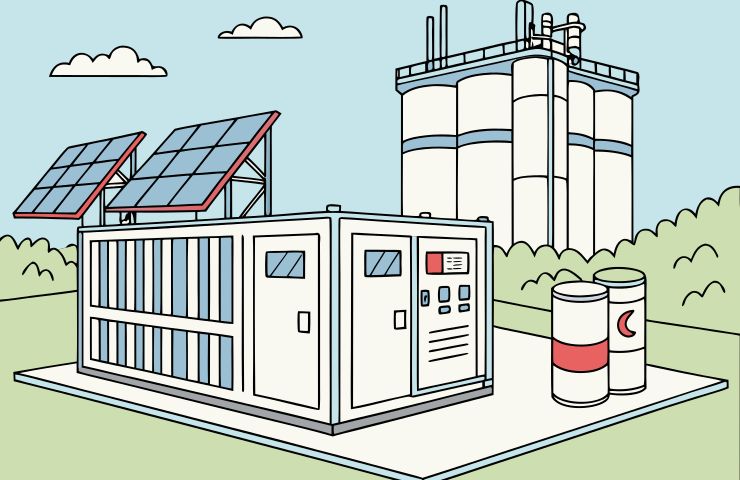
Xi'an 1908 New Energy Technology Co., Ltd. delivered a 100 kW-class integrated wind/solar–hydrogen production, solid-state storage, controlled release and fuel-cell generation system to XJ Group at the Shaanxi Hydrogen Energy Quality Technology Innovation Base, according to multiple Chinese media outlets. The reports state the modular skid-mounted unit combines an electrolyzer, advanced metal-hydride storage and a 300 kW fuel-cell module in a self-contained package.
Here’s the Big Picture
Wind and solar output can swing dramatically. Industrial processes and grid sub-networks, by contrast, often require steady, predictable power, industry analysts note. The delivered system is presented as a way to bridge that mismatch: it absorbs surplus renewable electricity in an electrolyzer, stores the resulting hydrogen in a solid medium, and then releases that hydrogen on demand through a fuel cell. In principle, such an architecture could offer longer-duration energy storage than traditional batteries and reduce reliance on high-pressure gas vessels, according to technical literature and company disclosures.
Why It Matters
National policy in China spotlights green hydrogen as a strategic energy carrier for achieving carbon neutrality, government sources and industry observers report. Conventional fuels and short-duration storage solutions struggle in remote or heavy-industrial settings when the goal is zero carbon. Solid-state storage materials — including metal-hydride and graphene composites developed from university research — are intended to store hydrogen safely at moderate pressures, Xi'an 1908 says. By integrating production, storage and power generation into a single skid-mounted package, the system aims to simplify deployment in zero-carbon parks, factories and long-duration storage projects.
The Tech Under the Hood
According to multiple Chinese media outlets, the system couples under 100 kW of wind and solar input with an electrolyzer that splits water into hydrogen and oxygen. The electrolyzer type and efficiency details are not publicly disclosed. Produced hydrogen flows into a series of solid-state storage modules containing metal-hydride and graphene-composite materials, Xi'an 1908 indicates. Those modules operate at moderate pressures and manage internal heat through integrated thermal controls. To release hydrogen, the system applies controlled heating and pressure modulation, which allows a stable flow to the fuel cell. The hydrogen fuel-cell unit, matched at 300 kW according to company statements, converts the released hydrogen back into electricity and heat and produces water as the main by-product, Chinese outlets report. Detailed metrics for storage capacity, release rate and cycle life have not been independently verified.
How It’s Built
The reported system is fully skid-mounted, according to the announcement. Major components — electrolyzer, storage modules, release reactor and fuel-cell stack — are preassembled on steel frames with integrated piping, electrical controls and safety systems. Skid-mounted construction is intended to speed factory assembly and minimize on-site installation work, Xi'an 1908 says. Automatic feeding and control software coordinate hydrogen flow, temperature management and power output. Skids include integrated hydrogen sensors, pressure relief valves and remote monitoring interfaces. The design aims to meet regional safety regulations and support rapid commissioning under factory acceptance standards, multiple sources state. While modular designs can reduce setup time, observers note that real-world installation still depends on grid connection, water supply, ventilation and local safety approvals.
Who’s Behind It
According to company and university reports, Xi'an 1908 New Energy Technology Co., Ltd. was founded to commercialize original research from Xi'an Jiaotong University under China’s carbon-peaking and carbon-neutrality strategy. University materials state that Professor Cheng led development of metal-hydride and graphene-composite storage materials and that pilot production lines for sodium-calcium and aluminum-sodium composites were commissioned recently. The system was delivered to XJ Group, a subsidiary of China Electrical Equipment Group, and XJ Electric’s corporate profile confirms the affiliation. The Shaanxi Hydrogen Energy Quality Technology Innovation Base, where the delivery took place, is a platform jointly established by provincial market-regulation and state-assets authorities, the Xianyang municipal government and Xi'an Jiaotong University, government sources indicate.
Performance and Next Steps
Details on the system’s operational performance remain scarce. Neither hydrogen production rates nor storage capacity figures were disclosed in public announcements, and independent commissioning reports have not been released, industry analysts say. Key metrics such as round-trip efficiency, hydrogen purity, cycle life and net electrical output of the fuel-cell module are yet to be verified. Safety certification and environmental assessments for the solid-state storage materials and fuel-cell operation have not been made public. Water consumption rates, oxygen venting arrangements and waste heat recovery strategies have not been detailed, observers add. For commercial rollout, third-party testing of thermal management, response time and long-term durability will be essential to validate the design and justify deployment in zero-carbon industrial sites.
Zooming Out
Research on solid-state hydrogen storage dates back decades, with global efforts exploring metal hydrides, chemical hydrides and adsorbent materials, peer-reviewed literature shows. Those materials promise higher volumetric density and lower-pressure operation compared to compressed-gas systems but face challenges in reaction kinetics, heat management, material cost and long-term durability. Xi'an Jiaotong University recently reported commissioning pilot production lines for sodium-calcium and aluminum-sodium composite materials, highlighting progress from lab research to industrial scale. In China, hydrogen policy has evolved from supporting fuel-cell vehicles toward broader applications in industry, power and integrated energy systems, according to policy analysis. A national pilot programme is funding hydrogen demonstration projects in selected city clusters, and the 15th Five-Year Plan emphasizes green fuels, hydrogen metallurgy and industrial microgrids. This delivery represents a technology-transfer milestone but falls short of proving commercial readiness.
The Road Ahead
Moving forward, further tests at the Shaanxi base will be critical for validating the system’s real-world performance, experts say. Data on hydrogen throughput, power output stability and maintenance intervals will inform cost models and scale-up potential. If the skid-mounted design proves reliable under varied conditions, similar units could be deployed in remote parks, factories or microgrids where grid reinforcement is costly. Local regulators and potential offtake partners are monitoring progress, according to policy analysts. The reported delivery underscores China’s push toward integrated green-hydrogen solutions, but wider adoption will hinge on verified efficiency, safety certification and competitive economics.