Hydrogen news
Shipworms may help in the production of Biofuels
Sea creatures give researchers idea on how to create environmentally friendly fuels. Shipworms, which look like worms but are actually clams, are not only odd looking ocean-dwelling creatures that have the unique ability to digest wood, researchers also believe that by harnessing the digestion capabilities of these “termites of the sea”, this could help them enhance the production of biofuels. Bacteria that breaks down the wood is located in the gills of the clam, not its gut. The discovery made by at team of researchers, which included Daniel Distel, research leader and the director of the O…
Sea creatures give researchers idea on how to create environmentally friendly fuels.
Shipworms, which look like worms but are actually clams, are not only odd looking ocean-dwelling creatures that have the unique ability to digest wood, researchers also believe that by harnessing the digestion capabilities of these “termites of the sea”, this could help them enhance the production of biofuels.Bacteria that breaks down the wood is located in the gills of the clam, not its gut.
The discovery made by at team of researchers, which included Daniel Distel, research leader and the director of the Ocean Genome Legacy Center of New England Biolabs at Northeastern University, and researchers from the U.S. Energy Department’s Joint Genome Institute, was recently published in the Proceedings of the National Academy of Sciences. The researchers discovered while studying the shipworms that aside from being one of the only species in the world to eat wood, these clams break down the food they eat using bacteria in their gills and not in their guts, as is the case with most species. More specifically, the enzymes the creatures use to break down wood are created by symbiotic bacteria that is stored within specialized cells located in their gills, which is then transported to their gut. The reason why this may be beneficial for the production of biofuels is that in order to eat wood, shipworms must digest cellulose (plant biomass), which is the toughest known plant material. Cellulose exists in agricultural crop waste (ex. wheat stalks and corn) and although it could be used to create clean energy, presently, it is an untapped power source. Thus, by understanding how the shipworms digest it, researches may be able to copy a similar process to create biofules. Distel explained that "If you understand how to break cellulose down into component sugars, it's then a very easy step to go to ethanol — which is a potential biofuel."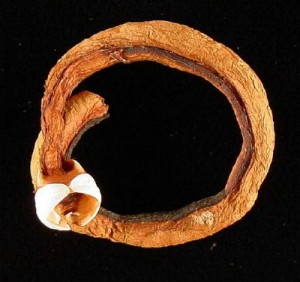
The ideal enzyme for breaking down cellulose could result in the faster and more efficient production of biofuels.
According to Distel, biofuel production is a key area where researching the shipworm could lead to potential commercial benefits. Distel noted that the enzymes are interesting due to the fact that they transform cellulose into sugar, which can be used to create biofuels such as ethanol. By 2022, the American government has mandated 36 billion gallons of cellulosic biofuels to be produced every year. The U.S. Department of Agriculture approximates that cellulosic biomass could meet up to one-third of the transportation fuel demand in the United States. However, Distel said that the primary issues preventing cellulosic ethanol from reaching commercial success is there are not enough enzymes to efficiently and inexpensively convert cellulose to sugar. The researchers hope to learn more about the shipworms digestive enzymes that are carried from its gills to its gut to find the solution to the problem.How was this article?
Thanks for the feedback!