Hydrogen news
Recycling technology sorts plastics at rapid speed
Researchers discover new process that boosts plastic waste recycling efficiency. Identifying and categorizing plastic materials can be a difficult process, but a new recycling technology developed by Ludwig Maximilians Universitat researchers in Munich, Germany, has sped up the plastic sorting process and made it more efficient so that a higher volume of plastic can be recycled and made into new items. A flash of light simplifies the sorting system. The system works using photoexcitation, which exposes plastic items to a brief flash of light. This causes the plastic to emit fluorescent light.…
Researchers discover new process that boosts plastic waste recycling efficiency.
Identifying and categorizing plastic materials can be a difficult process, but a new recycling technology developed by Ludwig Maximilians Universitat researchers in Munich, Germany, has sped up the plastic sorting process and made it more efficient so that a higher volume of plastic can be recycled and made into new items.A flash of light simplifies the sorting system.
The system works using photoexcitation, which exposes plastic items to a brief flash of light. This causes the plastic to emit fluorescent light. Over time, the fluorescence fades. Photoelectric sensors are then used to measure the light intensity and the fluorescence lifetime – in short, it measures how long it takes for the light to fade. There are different types of plastic polymers and each one has a different fluorescent lifetime. Being able to measure the decay of light enables the technology to accurately identify the different plastics, drastically reducing detection errors.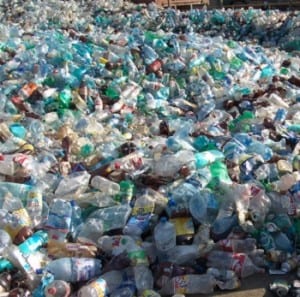 Professor Heinz Langhals, the leader of the research team, said that “With this process, errors in measurement are practically ruled out; for any given material, one will always obtain the same value for the fluorescence half-life, just as in the case of radioactive decay.”
The recycling technology can sort up to 1.5 tons of plastic every hour.
This was discovered during the testing of the technology and is great news because it means that it could be used at an industrial level because it already meets the specification requirements. What makes this new plastic recycling system truly remarkable, however, is that it not only speeds up the recycling process, which is currently very time consuming because the bulk of it is sorted by hand, but it can sort plastic trash with greater accuracy. The more plastics are sorted correctly, the more they can be reused to create new items. Accurate sorting is vital because many items can be made only from pure forms of specific plastics. This recycling technology can help ensure that these certain types are effectively separated so that more items can be created from recycled plastic waste in the future.How was this article?
Thanks for the feedback!