Quantron China JV Unites German and Chinese Expertise for Dual Powertrain Trucks
Quantron China joint venture unites German vehicle integration, Chinese autonomous-driving expertise, and Foxconn manufacturing to develop dual battery-electric and hydrogen fuel-cell trucks and buses.
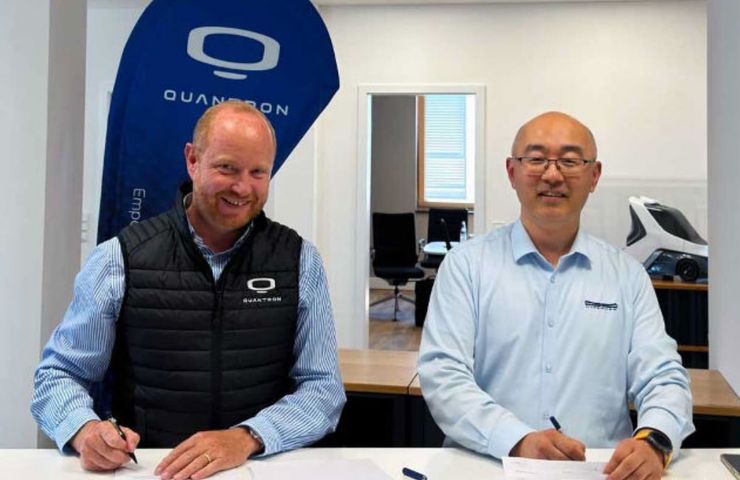
Quantron and HyperView have officially kicked off Quantron China in Shaoxing, Zhejiang Province. This joint venture aims to develop the Gen2 zero-emission commercial-vehicle platform, with Foxconn jumping in as their industrial manufacturing partner. They’re eyeing a 100-unit validation fleet in Europe by the end of 2026, with plans to showcase the first full Gen2 model in early 2027.
This partnership is all about merging European vehicle integration know-how with China’s strengths in autonomous driving and smart vehicle tech. Plus, they’re set to leverage Foxconn’s extensive manufacturing capabilities to make a global splash. As regulations ramp up support for hydrogen infrastructure and electric charging routes, their idea of combining battery-electric and hydrogen fuel cell technologies into one flexible system could provide fleets with the best of both worlds—without complicating the chassis options.
For investors, this venture hints at a fresh, cross-border strategy for greener industrial practices. It represents a blend of contract manufacturing, zero-emissions tech, and smart connectivity—essential ingredients for a sustainable transportation future. Not to mention, it highlights China’s ambition to take the lead in deploying fuel cell vehicles while aligning with Europe’s stringent CO₂ targets and need for robust zero-emission fleets.
Quantron spun off from the Haller Group mobility business in 2019 and faced some challenges, landing in provisional insolvency towards the end of 2024. But things turned around in April 2025 when Andreas Haller Holding acquired its key assets and workforce, rebranding with a renewed focus on creating zero-emission trucks, buses, and vans. On the other hand, HyperView, which goes by Hongjing Zhijia in China, brings its autonomous-driving software and intelligent vehicle framework to the table, though the specifics of its history and financial background remain a bit murky. Together, they form the foundation of Quantron China, with Foxconn joining in as a non-equity manufacturing partner. Their base in Shaoxing allows them to tap into local new-energy initiatives aimed at launching heavy-duty applications.
Defined roles
Under this partnership agreement, Quantron is in charge of vehicle integration, engineering, and European market positioning for zero-emission commercial vehicles. Meanwhile, HyperView will provide the smarts with its intelligent vehicle architecture and automated driving software. As for Foxconn, they’ll adapt their manufacturing expertise to put together the Gen2 chassis and bodywork, although the specific production details are still up in the air. The goal is to streamline supply chains in both China and Europe, helping to bring costs down and speed up market entry. They’re also planning to enhance digital fleet functions and redesign the cab for better aerodynamics.
Platform overview
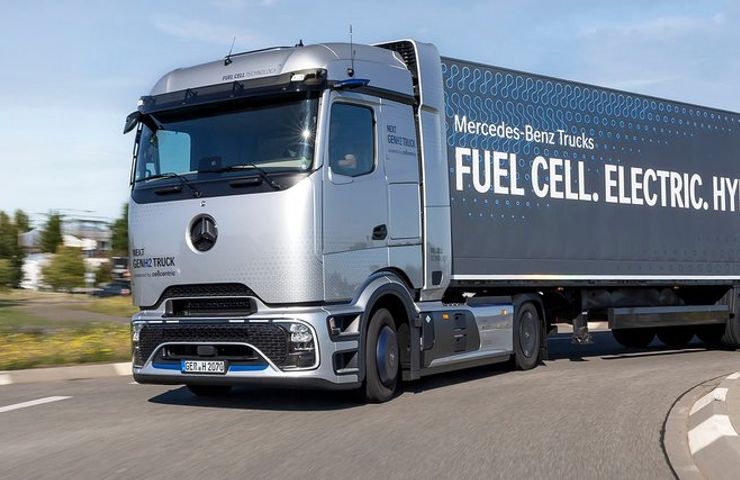
The Gen2 platform is a fresh take, designed from scratch to handle two types of powertrains: robust battery packs for those predictable urban deliveries and hydrogen fuel-cell systems for longer journeys that need faster refueling and higher payload capacity. It will feature a new modular cab, improved aerodynamics, and built-in connectivity for remote fleet management. While the details on battery capacity, hydrogen storage pressure, and fuel cell output aren’t set in stone yet, the idea is to simplify the certification process by sharing core chassis and software across both powertrain variants. The design team has put a lot of thought into making these vehicles scalable for automated driving, which means embedding sensors, computing units, and standard network protocols to keep costs in check as they aim for higher levels of autonomy down the line.
Execution timeline
The team has set an ambitious goal of deploying 100 zero-emission units with European customers by the close of 2026. They’re also gearing up to unveil the first complete Gen2 prototype in the first half of 2027. However, it’s worth noting that these targets are more like aspirations at this point, without any binding purchase agreements or confirmed customers yet. The regulatory approvals and certification journeys are still a bit of a mystery.
Market context
Over in Europe, stricter CO₂ emission standards for heavy-duty vehicles, alongside the Alternative Fuels Infrastructure Regulation, are pushing for charging and hydrogen stations along main transport routes. On the flip side, China is way ahead, hosting nearly 95% of the globe’s fuel-cell commercial vehicle fleet and making significant investments in hydrogen supply chains and refueling networks. Shaoxing’s local policies support pilots for hydrogen-powered trucks while backing new-energy manufacturing, which sets up a solid foundation for scaled production. Suppliers and fleet operators will be closely watching to see if the Gen2 platform can adjust to the different realities of infrastructure development—like having plenty of electric-charging stations in urban settings versus high-pressure hydrogen stations for long hauls. The total cost of ownership is a crucial piece of the puzzle here: battery-electric trucks shine in energy efficiency in stop-and-go city scenarios, but hydrogen fuel cell vehicles could justify their premium upfront costs for long-range, high-payload applications. The International Energy Agency highlights that renewable hydrogen could dramatically cut lifecycle emissions, but it’s all about the production costs and how mature the supply chain is when it comes down to commercial viability.
Strategic angle
By bringing together vehicle integration, automated driving software, and contract manufacturing, Quantron China is taking on the challenges that have held back smaller players. This collaboration could speed up development and ease financial pressures, leveraging Foxconn’s high-volume capabilities alongside HyperView’s software prowess. However, dual powertrain setups can lead to some packaging challenges and complications with certification, and the lack of clear investment or production capacity raises some doubts about execution risks. We still don’t have specifics on financing strategies or governance structures, which makes it tough to gauge how things like IP rights and profit sharing will shake out. All eyes will be on how these factors evolve once the prototypes begin the validation process.
Execution challenges
When it comes to commercial vehicles, rigorous validation, reliable service networks, and solid financing options are non-negotiables. The initial 100-unit pilot won’t really unlock the economy of scale unless they land follow-on orders, and the vague investment levels bring up concerns about working capital. You might not see detailed costs for batteries, fuel cell stacks, or hydrogen storage just yet, and there are no public guarantees for warranty support. Additionally, an absence of regulatory type-approval or homologation plans, coupled with confidentiality around European customer names, could potentially delay their market entry or drive up operating costs if not addressed soon. Without strategies for battery and fuel cell component recycling at the end of their life cycles, reaching those lifecycle emissions targets may become tricky.
Policy and finance
In the European Union, laws mandate hydrogen refueling stations to be available every 200 km along key routes, while also pushing for gradual CO₂ reduction targets through 2030. Similarly, China’s hydrogen initiatives subsidize fuel cell vehicles and their refueling infrastructure, making these technologies more affordable. Strategic investors are likely to want some clarity on whether Quantron China can benefit from public funding, preferred supplier status, or local incentives. Having a clear financing roadmap could prove crucial for scaling beyond the initial validation phase. Details around debt structures and equity stakes still remain under wraps.
Key takeaways
- Cross-border collaboration: combines European integration and Chinese autonomous-driving software with Foxconn’s manufacturing scale.
- Dual powertrain design: aims to serve varied duty cycles but may face packaging and certification trade-offs.
- Target milestones: 100 vehicles in Europe by end of 2026; Gen2 prototype launch in H1 2027.
- Market drivers: EU emissions rules and China’s hydrogen infrastructure growth create complementary demand.
- Main risks: undefined financing, unverified production capacity, certification timelines, and lifecycle recycling strategies.
In a nutshell, Quantron China is taking a bold swing at merging zero-emission technology, smart mobility solutions, and contract manufacturing into a cohesive platform. How they navigate the complexities of financing, certification, and production capacity will be key to transforming their big ambitions into real commercial success in the ever-evolving landscape of hydrogen and battery-electric transportation.