Hydrogen news
Unlocking Green Hydrogen's Potential: The Crucial Role of High-Efficiency Catalysts
Researchers worldwide are making progress to develop catalysts that will improve renewable H2 production. Researchers around the globe are working on developing high-efficiency catalyst options to make it possible to produce green hydrogen more efficiently, cleanly and cost-effectively. Current catalysts come with a number of drawbacks from being expensive to eroding quickly. Recently, researchers have been making substantial progress in the area of developing iridium-based catalysts. They can be used in proton exchange membrane water electrolysis (PEMWE). That process can be used for the pro…
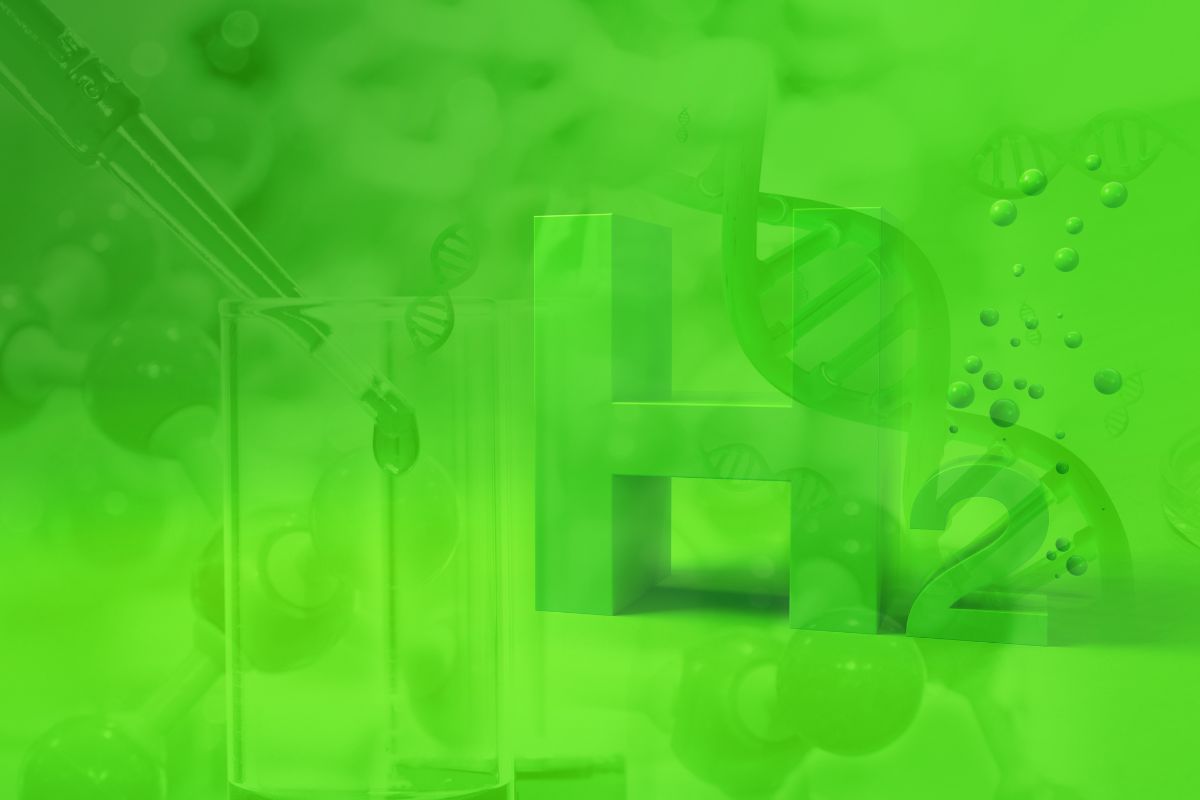
Researchers worldwide are making progress to develop catalysts that will improve renewable H2 production.
Researchers around the globe are working on developing high-efficiency catalyst options to make it possible to produce green hydrogen more efficiently, cleanly and cost-effectively.Current catalysts come with a number of drawbacks from being expensive to eroding quickly.
Recently, researchers have been making substantial progress in the area of developing iridium-based catalysts. They can be used in proton exchange membrane water electrolysis (PEMWE). That process can be used for the production of green hydrogen using renewable energy to power the process. A University of Adelaide team focusing on this area of research has discovered a lattice-water-assisted mechanism that boosts the efficiency of an iridium oxide catalyst by 5 to 12 percent. As a result, the catalyst can be used with a higher energy output and requiring less energy for electrolysis. Another outcome of the scientists’ discovery is that less iridium is required. As iridium is a rare element, cutting down on the amount needed makes the process notably more cost effective. Moreover, it also helps to ensure that the production of this zero-carbon emission energy is cleaner overall.Improving the clean side of green hydrogen is a critical component of its use in battling climate change.
“Currently it is difficult for commercial iridium oxide catalysts to achieve high activity and stability at the same time in proton exchange membrane water electrolysis (PEMWE),” said Associate Professor Yao Zheng, an ARC Future Fellow from the School of Chemical Engineering at the University of Adelaide. “We have found that a lattice-water-assisted mechanism – a way of arranging water molecules in a specific pattern – boosts the efficiency of an iridium oxide catalyst by 5-12 percent resulting in higher energy output while consuming less energy.” [caption id="attachment_59374" align="aligncenter" width="1200"] Credit: Photo by depositphotos.com[/caption]
Zheng went on to point out that “Water splitting using PEMWE is a promising method for generating green hydrogen. However, only iridium-based electrocatalysts can be used as the element can withstand the harsh acidic conditions that occur during the reaction.”
Credit: Photo by depositphotos.com[/caption]
Zheng went on to point out that “Water splitting using PEMWE is a promising method for generating green hydrogen. However, only iridium-based electrocatalysts can be used as the element can withstand the harsh acidic conditions that occur during the reaction.”
Renewable electricity use is among the most appealing ways to power green hydrogen production.
One of the most appealing solutions for powering green hydrogen production – particularly when using electrolysis – is renewable energy through the PEMWE method. Though hardly the only option for carbon emission-free production, this method can produce at scale and rapidly. Among the challenges to using iridium as a catalyst for this process is that it is one of the rarest elements in the world. Commercially, it is mainly obtained through a recovery process as a byproduct of nickel refining. In nature, it is found in river deposit sediments. South Africa is currently iridium’s largest producer. “As the global output of iridium is very limited, it is very important to decrease the amount used in these types of catalysts,” explained Zheng. “With the lattice-water-assisted oxygen exchange mechanism that shows the possibility of both higher efficiency and stability in a proton exchange membrane water electrolyzer the amount of iridium can be reduced and the cost of producing green hydrogen can be efficiently decreased.”A promising study
“Our findings not only verify the viability of a low-loading iridium-based anodic catalyst for PEMWE but also provide new ideas for modifying the oxygen exchange mechanism for high-performance oxygen evolution reaction (OER) catalyst design,” said Zheng. “With cheaper green hydrogen, a carbon-neutral society could be built as soon as possible, and related climate problems could be efficiently decreased.” So far, the green hydrogen high-efficiency catalyst research remains at a fundamental level. That said, it is worthwhile to conduct further research to understand specifically how it can be scaled up. The research team’s findings were published in the Science Advances journal.
FAQs on Science News: Progress in Catalysts for Renewable Hydrogen Production
Q1: What are researchers worldwide working on? Researchers around the globe are focusing on developing efficient catalysts that can boost the production of green hydrogen in a cost-effective and environmentally-friendly manner. Q2: What issues do current catalysts face? Current catalysts are often expensive and erode quickly, which makes them less sustainable and economical for long-term use. Q3: What recent progress has been made in this area? A research team from the University of Adelaide has discovered a lattice-water-assisted mechanism that enhances the efficiency of an iridium oxide catalyst by 5 to 12 percent. This leads to higher energy output and less energy required for electrolysis. Q4: How does the discovery affect the use of iridium? The discovery means that less iridium is needed, making the process more cost-effective. Since iridium is a rare element, reducing the amount used also contributes to cleaner zero-carbon emission energy production. Q5: What's the significance of green hydrogen in the fight against climate change? Green hydrogen is a crucial tool in combating climate change as it provides a clean, renewable energy source. Improved methods of producing green hydrogen therefore contribute to reducing carbon emissions. Q6: What are the benefits of using renewable electricity for green hydrogen production? Using renewable electricity, particularly through the Proton Exchange Membrane Water Electrolysis (PEMWE) method, is one of the most promising ways to power green hydrogen production. This method can produce at scale and rapidly, making it a viable option for carbon emission-free production. Q7: What challenges are associated with using iridium as a catalyst? Iridium is one of the rarest elements in the world, mainly obtained as a byproduct of nickel refining or found in river deposit sediments. Therefore, using it as a catalyst presents challenges in terms of availability and cost. Q8: What are the implications of these research findings? The findings verify the viability of a low-loading iridium-based catalyst for PEMWE and provide new ideas for designing high-performance Oxygen Evolution Reaction (OER) catalysts. They also suggest that with cheaper green hydrogen, a carbon-neutral society could be achieved sooner, helping to mitigate climate problems. Q9: What's next for this research? While the research on green hydrogen high-efficiency catalysts is still at a fundamental level, it's crucial to conduct further studies to understand how it can be scaled up. The findings have been published in the Science Advances journal. Ready to test your knowledge on the most abundant element in the universe? Take our fun and engaging Hydrogen Quiz now! [forminator_quiz id="58712"]How was this article?
Thanks for the feedback!