Moroccan Hydrogen: The Price of Renewable Resources Doesn't Guarantee Competitiveness
Morocco's quest for hydrogen competitiveness faces a significant challenge as recent studies show its hydrogen may be 32% more expensive than German production by 2035 due to financing and infrastructure costs.
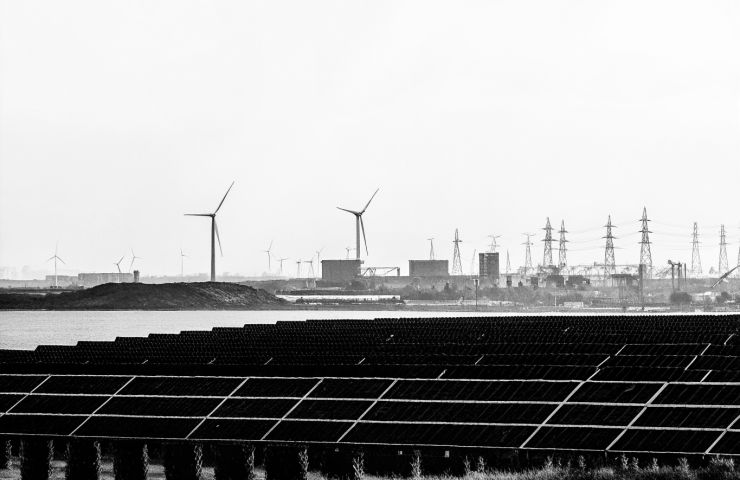
Morocco aims to leverage its strong solar and wind resources for green hydrogen production, yet a recent study reveals that delivering Moroccan hydrogen to Germany could be 32% more expensive than producing it domestically by 2035.
This conclusion stems from a study published in Applied Energy which combines techno-economic and macroeconomic analysis to explore the feasibility of hydrogen exports from Morocco to Germany. The researchers, including Tobias Müller and others from Leibniz University Hannover, emphasize that financing costs play a pivotal role in shaping the economics of green hydrogen.
The Core Findings
The headline figure is simple and stark: Moroccan green hydrogen is modelled to cost 32% more than hydrogen produced in Germany in 2035. That gap does not remain static. By 2050 the study projects the discrepancy will shrink to 12.4%.
What the numbers make clear is that abundant sun and wind do not, on their own, guarantee low delivered costs. Transport, storage and the infrastructure needed to move hydrogen across borders eat into the raw production advantage. The study’s combination of techno-economic and macroeconomic lenses underlines that advantage on paper can be diminished once the full supply chain is considered.
What It Means
The analysis challenges a commonly held assumption: that resource endowments automatically translate into the cheapest supply. Morocco’s renewable resources are valuable. Yet the study shows other variables—especially financing—can swamp that inherent benefit.
Financing conditions, captured in the analysis by the weighted average cost of capital (WACC) and described as technical financing risks, emerge as decisive. In plain terms, the cost of borrowing and perceived investment risk determine much of the ultimate price. Logistics and transport further complicate the picture, so the route from solar and wind farms to a German end-user is neither short nor inexpensive.
The Technical Factors
Green hydrogen production in the study is assumed to be carried out primarily via water electrolysis, the familiar process where renewable electricity splits water into hydrogen and oxygen. The fundamental chemistry is straightforward but the economics are sensitive to several engineering and market variables.
Electrolyser choice matters. The study identifies alkaline and proton-exchange-membrane electrolysers as the leading technologies, noting that each carries its own cost profile. Those differences affect capital expenditure, operational flexibility and, ultimately, the levelised cost of hydrogen.
Beyond technology, the study highlights financing conditions and logistics as critical. Construction of electrolysers, build-out of renewables capacity and the linkages—pipelines, compression, shipping or conversion infrastructure—between Morocco and Germany all require capital. Higher financing costs raise the hurdle rate for projects, reducing the comparative advantage that Morocco’s natural resources might otherwise provide.
Morocco’s reliance on solar and wind also implies variability in power supply. Addressing that variability requires additional infrastructure investment to stabilise generation and align it with electrolysis demand. Those investments were factored into the study’s scenario analysis and help explain why production geography alone is not decisive.
Strategic Implications
Germany’s National Hydrogen Strategy underpins the demand side of the equation. The strategy anticipates substantial hydrogen and derivative demand, projected at 95–130 TWh by 2030. To meet that demand, Germany expects to import up to 70% of its hydrogen needs.
Those figures create a significant market opportunity. Even if Moroccan hydrogen carries a price premium initially, the size of Germany’s projected import requirement means there is room for multiple suppliers. In other words, higher first-mover costs do not automatically rule out market participation.
But participation will not be automatic either. Buyers and policymakers will weigh price against other considerations—supply security, contract terms, political relationships and the pace at which both exporting and importing countries can build supportive infrastructure. The study frames these choices as more complex than a simple north–south calculus of renewables potential.
Outlook: Collaboration vs. Competition
The burgeoning energy partnership between Morocco and Germany holds promise beyond mere economics. The study identifies over 400,000 potential jobs in Morocco linked to hydrogen production, a figure that points to significant local industrial opportunity and the prospect of deeper bilateral cooperation.
Yet the path to scaling production and export is strewn with challenges. The authors note water scarcity and land-use pressures as two significant constraints that could impede project implementation. These are not marginal concerns: they touch on sustainability, local livelihoods and the political acceptability of large export-oriented projects.
Equally important is meeting domestic needs. The study stresses that ensuring local needs are met before exporting resources will be crucial for maintaining sustainability and energy security. That requirement adds a further layer of complexity to project planning and to negotiations between host and buyer countries.
Is the future of hydrogen trade anchored in price competitiveness alone, or will strategic partnerships and infrastructure development shape the landscape? Only time will tell, but Morocco's path to becoming a hydrogen powerhouse will hinge as much on prudent financing and infrastructure as on its natural resources.