Katy Facility Showcases Flexible Hydrogen Production and Infrastructure
Total Hydrogen Solutions is nearing initial energization of its integrated hydrogen production and refueling facility in Katy, Texas, featuring a 1-MW HyperCellX electrolyzer, onsite storage, ERCOT grid participation and a full-capacity offtake agreement with Hyroad Energy.
Katy, Texas Advances Hydrogen Infrastructure
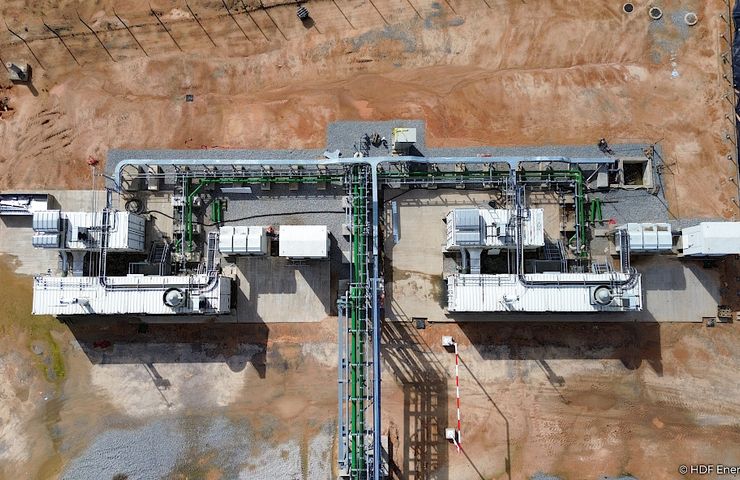
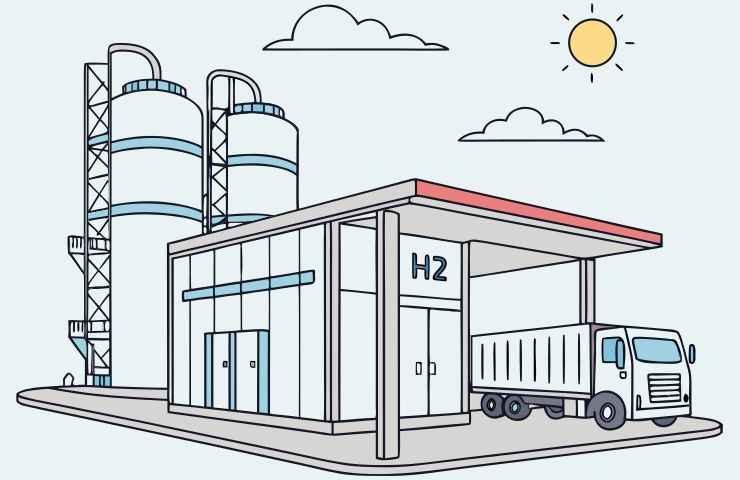
Total Hydrogen Solutions is nearing initial energization of its hydrogen production and refueling facility in Katy, Texas, according to POWER magazine. The plant integrates a 1-MW alkaline electrolyzer supplied by HyperCellX with water treatment, purification, compression, hydrogen storage, controls and dispensing systems within a 5,500-square-foot footprint, as reported by the company nomination in POWER magazine. The installation is compact by design but substantial in capability. It represents a focused effort to pair production and dispensing at a single site and to advance hydrogen production and hydrogen infrastructure for heavy-duty transport.
Built on Six Decades of Engineering Expertise
Total Hydrogen Solutions operates as a division of Pneumatic and Hydraulic Company LLC, which notes more than 60 years of experience in fluid power and high-pressure systems on its website. That legacy of equipment and system work shaped how the project was engineered. Leveraging that background, the team designed and integrated custom H-Drive compression equipment alongside the electrolyzer, according to the parent company materials. The compression system is a bespoke element, not an off-the-shelf add-on, and it is central to the facility’s ability to move and store hydrogen at usable pressures.
Grid-Responsive Hydrogen Production
The facility’s core strategy is to align hydrogen production with favorable electricity prices and grid conditions. Instead of running continuously, the electrolyzer is intended to operate during lower-cost or lower-demand intervals, according to the company nomination reported by POWER magazine. Produced hydrogen is then stored on-site and dispensed when fleets need it, decoupling production from refueling and optimizing hydrogen energy economics. That temporal separation — produce when power is cheap, dispense when vehicles require fuel — is the operational logic driving the design.
Participation in ERCOT’s Peak-Load Programs
The project is designed to participate in the Electric Reliability Council of Texas Four Coincident Peak (4CP) and demand-response programs, according to POWER magazine. ERCOT defines 4CP by the highest 15-minute system demand interval each summer month, and those peak values inform transmission-service charges, according to ERCOT. By modulating its power draw, the electrolyzer may reduce transmission costs while stored hydrogen maintains station uptime. In effect, the site can act as a flexible load resource, shifting consumption away from the moments that drive the highest system charges.
Anchoring Demand with Hyroad Energy
The facility’s commercial viability is supported by an offtake agreement for its planned output, according to a joint announcement from Total Hydrogen Solutions and Hyroad Energy. Austin-based Hyroad Energy provides hydrogen trucking-as-a-service—bundling fuel-cell trucks, fuel supply, maintenance and fleet-management software—and this deal covers the station’s full capacity, as stated in the companies’ public release. Securing a full-capacity customer ahead of commissioning reduces market risk and creates a direct pathway for the hydrogen to enter heavy-duty operations.
Strategic Benefits for Heavy-Duty Transport
According to the company nomination reported by POWER magazine, a nominal 500 kg per day hydrogen capacity could refuel up to eight Class 8 trucks daily or serve around 100 passenger vehicles. Reliable fast-fill dispensing at high pressure is critical for fuel-cell trucks to minimize downtime, according to the parent company materials. In practice that means the station must maintain pressure, throughput and safety systems that support rapid turnarounds for commercial fleets rather than the slower fill cycles typical of smaller passenger-focused sites.
Path to Expansion and Scalability
The nomination indicates plans to expand electrolyzer capacity to 2 MW by late next year and to adopt a modular layout capable of reaching 5 MW, according to POWER magazine. Such scalability could accelerate roll-out of additional hydrogen refueling stations and distributed production sites across ERCOT’s territory, pending customer demand and commissioning experience. The modular approach allows incremental investment tied to demonstrated demand and operational learnings from the initial unit.
Construction Milestones and Challenges
Construction took roughly 12 months and overcame a delay when an incoming high-voltage cable was cut and stolen, which the team remedied by replacing the run and proceeding toward energization, according to POWER magazine. Integrating electrolyzer modules, compressors, storage vessels and dispensing hardware created complex commissioning dependencies, making system integration a primary project challenge. Those interdependencies required sequencing that stretched schedules and demanded close coordination among vendors and contractors.
Commissioning and Data-Driven Validation
As the plant nears initial commissioning, the team is focused on gathering real-world data on electrolyzer utilization, compression energy, storage losses and dispensing throughput to validate energy savings and operating performance, according to POWER magazine. Confirming electricity cost reductions and uptime will be essential to proving the flexible production model. The empirical measurements taken during early operations will inform whether the theoretical economics hold when confronted with variability in grid prices and equipment behavior.
Economic Considerations and Grid Optimization
Electricity costs typically account for over 60 percent of operating expenses in electrolytic hydrogen production, according to the U.S. Department of Energy’s Hydrogen Shot Technology Assessment. By shifting its largest loads to off-peak periods under ERCOT’s pricing and demand-response mechanisms, the Katy facility is intended to lower per-kilogram production costs and strengthen the economics of green hydrogen production in a distributed hydrogen infrastructure model. The financial calculus depends on capturing low-price windows reliably and on the value of avoided transmission charges when 4CP peaks are reduced.
Environmental and Safety Context
Electrolytic hydrogen can achieve low lifecycle emissions when powered by low-carbon electricity, but total impact depends on grid mix, water use and equipment manufacturing, according to the U.S. Department of Energy assessment on water electrolysis. The project’s electricity sourcing and water treatment specifics remain undisclosed, and hydrogen safety requires robust leak detection, ventilation and emergency shutdown systems as outlined in industry standards. Those design and supply-chain variables will influence the net environmental benefit the facility ultimately reports.
Policy Incentives and Regional Momentum
The station aligns with federal incentives such as the Section 45V Clean Hydrogen Production Credit and builds on Texas’s decades-long hydrogen industry, according to the Texas Hydrogen Production Policy Council report. It also supports the broader Gulf Coast Hydrogen Hub initiative for regional electrolyzers, storage and heavy-duty refueling infrastructure, as described by the U.S. Department of Energy. Together, these policy and regional efforts create a backdrop that can accelerate further deployments if early projects demonstrate reliable operations and competitive costs.
Looking Ahead: A Distributed Hydrogen Network
This commissioning-stage facility offers a real-world demonstration of integrated hydrogen production, storage and dispensing at one site. It provides a glimpse into how green hydrogen production could support heavy-duty transport while managing grid peaks. Its outcomes may inform a distributed network of modular hydrogen infrastructure assets and guide future clean hydrogen news on scalable, grid-responsive fueling models, according to a National Renewable Energy Laboratory analysis.