Hydrogen production drives low-carbon steelmaking transformation in Germany
Germany’s major steelmakers are replacing coal-based blast furnaces with hydrogen direct reduction and electric furnaces in projects backed by billions in public funds. Success hinges on green hydrogen production, renewable power and supportive policy frameworks.
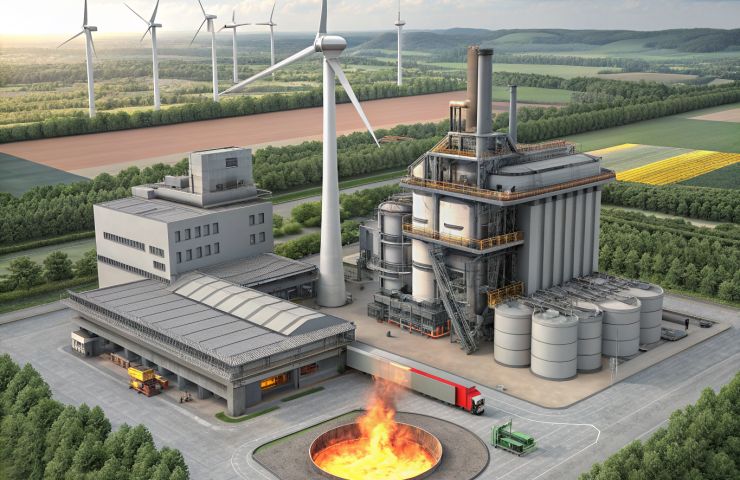
Power4Steel will overhaul steelmaking at the Dillingen and Völklingen works in Saarland, replacing coal-fired blast furnaces with a hydrogen-based direct-reduction route and electric arc furnaces, according to Stahl-Holding-Saar. The group says the initiative represents roughly EUR 4.6 billion in total investment, with EUR 2.6 billion expected to come from federal and state support. It is presented as a move to secure industrial capacity while cutting carbon dioxide emissions in the region.
From coke to hydrogen
Primary steelmaking today depends on coke and coal in a blast furnace for both heat and chemical reduction, according to the International Energy Agency. In that conventional route, carbon monoxide from coke strips oxygen from iron ore and produces CO2. The alternative hydrogen-DRI route substitutes hydrogen as the reducing agent in a shaft furnace, where hydrogen reacts with iron oxide to yield direct-reduced iron and water vapour, according to the IEA and company sources. After reduction, the solid iron is melted in an electric arc furnace that runs on low-carbon electricity.
Key projects shaping steel’s future
Power4Steel is not alone. Salzgitter AG is progressing its SALCOS programme, which aims to phase out conventional blast furnaces in favour of hydrogen-capable direct-reduction units coupled with electric melting. Salzgitter indicates emissions could fall by roughly 60–95 percent compared to the conventional route, depending on how much hydrogen is used, according to the company. The plan envisions staged deployment — starting with natural gas and hydrogen blends before moving toward full hydrogen operation.
In the Ruhr, thyssenkrupp Steel Europe is advancing a separate effort, known as tkH2Steel. The company describes a scheme built around a shaft furnace with an annual capacity near 2.5 million metric tons of direct-reduced iron, two electric melting units, and roughly EUR 2 billion in combined federal and state funding, according to the company and the German Federal Ministry for Economic Affairs and Climate Action. When run on hydrogen, tkH2Steel is projected to cut as much as 3.5 million metric tons of CO2 a year, according to official sources.
Infrastructure and energy requirements
Shifting to hydrogen-based steelmaking will require substantial new infrastructure — electrolytic hydrogen plants, high-pressure storage, pipelines and reinforced grid connections. The IEA notes that early commercial hydrogen-DRI electric-arc furnace plants may cost 50–140 percent more than conventional blast-furnace/basic-oxygen-furnace plants, depending on the region. A technical study for North Rhine-Westphalia estimated full regional conversion might demand up to 52.5 TWh of additional renewable electricity annually, according to regional analysis.
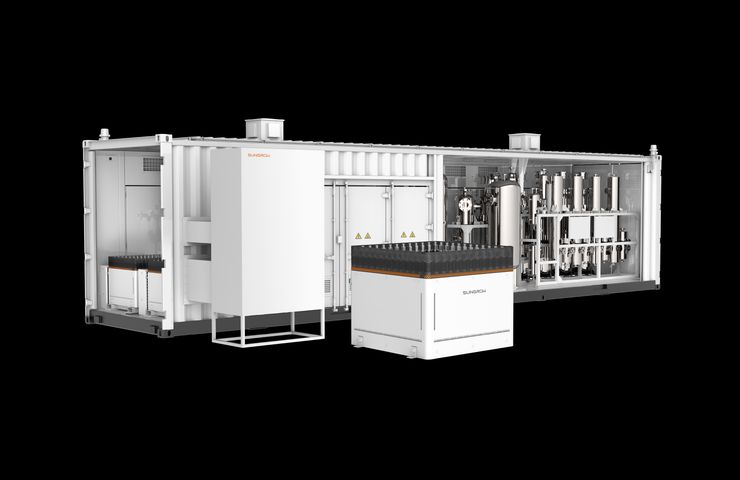
Water electrolysis is the typical route to produce the hydrogen for these chains, using technologies such as alkaline or proton-exchange membrane electrolyzers, says the IEA. Lifecycle emissions for the hydrogen pathway vary with the electricity source, water consumption, equipment manufacture and transport of raw materials. Project disclosures show that integrated systems may operate direct-reduction furnaces initially with hydrogen-natural gas blends, then ramp hydrogen shares over time.
Financial and policy framework
Public and private finance is being marshalled to underwrite the transition. Funding packages mix state-aid arrangements with targeted climate programmes, and the steel action framework from the German Federal Ministry for Economic Affairs and Climate Action links support to hydrogen infrastructure build-out and renewable grid integration, according to ministry publications. Germany’s National Hydrogen Strategy sets out targets for scaling electrolyzer capacity, while federal climate programmes such as the Industrial Transformation Funding scheme offer grants for first-of-a-kind installations, according to ministry guidance. State governments have supplemented federal money with local funding to speed project approvals and grid connections.
At the EU level, state-aid rules and the Carbon Border Adjustment Mechanism are intended to encourage low-carbon steel production while limiting distortions from imports, according to EU policy documents. Still, the economics are acutely sensitive to energy prices. Reuters reported that ArcelorMittal halted planned direct-reduction and electric-arc projects in Bremen and Eisenhüttenstadt and declined about EUR 1.3 billion in conditional public support, citing high German energy costs, weak market demand and uncertainty about green hydrogen viability.
Market dynamics and competitiveness
Steel is an essential input across sectors from automotive and construction to machinery, defence and renewable-energy equipment, according to the IEA. For producers, locking in green hydrogen offtake agreements and long-term power purchase agreements for renewable electricity is widely seen as crucial to stabilise costs, according to policy analysts. Certification schemes for green hydrogen and low-carbon metals are also under development to verify emission reductions and to help qualify products for public procurement rules.
Competing against conventional steel and imports will be a central challenge. Lower-carbon steel will have to match price and quality, or receive buyer premiums and regulatory incentives to offset higher operating costs if energy prices remain elevated, according to industry analysts.
Balancing employment and decarbonization
Project developers are attempting to thread a difficult needle: cut emissions while preserving local jobs. By installing new direct-reduction and electric melting units at existing sites, they aim to keep skilled workers employed and maintain regional economic activity, according to Stahl-Holding-Saar. The transition is framed as one that replaces coal-based processes without shifting production overseas. At the state level, workforce training and new-skill development programmes are under discussion to support workers through the change, according to stakeholder interviews.
Outlook for low-carbon steel
Technically, hydrogen-based routes have been demonstrated at pilot scale and in detailed engineering designs. Commercial success, however, depends on scaling green hydrogen production, securing low-cost renewable electricity and building hydrogen logistics at industrial scale. Industry roadmaps point to initial hydrogen production at scale in the late 2020s, with full hydrogen operation targeted around 2030 for the most advanced projects, according to company roadmaps. That timeline is vulnerable; it could slip if electrolyzer deployment faces supply-chain constraints or if grid upgrades lag behind rising power demand.
In the short term, public subsidies are intended to close the cost gap while hydrogen and power markets mature. Along with EU measures like the Carbon Border Adjustment Mechanism, such support may help establish a market for steel with substantially lower carbon intensity than conventionally produced alternatives. Germany’s effort to decarbonize its steel sector will test whether coordinated policy, infrastructure investment and market acceptance can deliver deep emissions reductions without eroding domestic industrial capacity.