Sungrow Hydrogen and DOT Engineering Reportedly to Supply 21 MW PEM Electrolyzer in Poland
Sungrow Hydrogen and DOT Engineering were reported to supply a 21 MW PEM electrolyzer for an RFNBO hydrogen project in Lower Silesia, Poland, though key project details and certifications remain unverified.
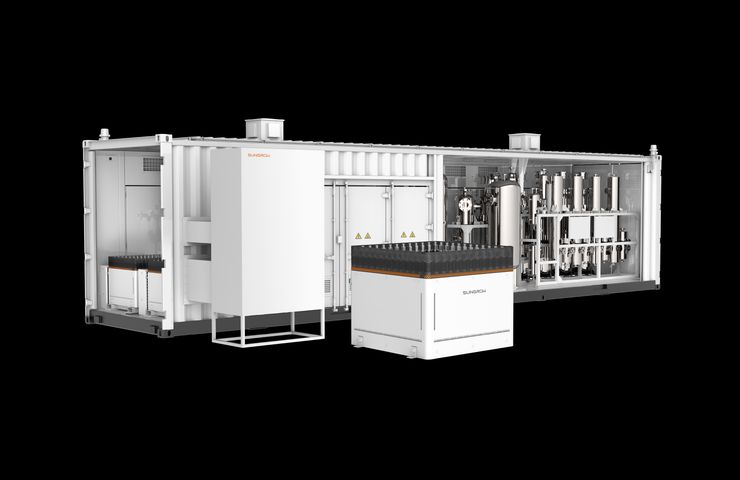
Sungrow Hydrogen and DOT Engineering reportedly signed a supply agreement as suppliers for a proposed proton-exchange-membrane electrolyzer project in Lower Silesia, Poland, on or around September 22, 2026. The system is intended to produce renewable fuels of non-biological origin (RFNBO) hydrogen in line with EU certification rules, although detailed verification is still pending. Industry reports have floated names of project partners and potential performance targets, but these still need to be verified.
Sungrow Hydrogen is a branch of the Chinese renewable-energy powerhouse Sungrow, focused specifically on water-electrolysis systems. Its official materials list a range of offerings that span proton-exchange-membrane (PEM) and alkaline electrolyzers, power supply units, gas-liquid separation modules, hydrogen purification gear, and smart hydrogen management systems. The company’s hydrogen webpage mentions research and testing facilities across China and Germany, and describes designs that are compatible with variable wind and solar electricity.
DOT Engineering, based in Poland, is an engineering services firm that handles feasibility studies, procurement, permitting, environmental assessments, construction management, and project development for hydrogen and green energy projects. The sources describe DOT as a distributor of Sungrow Hydrogen in Poland. Further details about DOT’s specific role in the electrolyzer project have not been disclosed in official announcements.
Project Overview and Reported Specifications
Industry chatter has placed the facility in the village of Gaj Oławski, near Oława. It identifies Promet-Plast as the project developer and ELQ S.A. as the general contractor. Reported specifications have circulated in trade and sector reporting. They include the following items:
- Hybrid renewable power: wind turbines and solar panels, totalling reported installed capacity
- Electrolyzer capacity: reported as PEM electrolysis
- Annual hydrogen output: planned production of RFNBO-compliant hydrogen
- Emissions avoidance: claimed to save CO₂ annually
Those numbers have been repeated across multiple hydrogen news outlets. Still, they have not been independently verified through permitting paperwork or RFNBO certification documents.
PEM Electrolysis and Renewable Integration
A proton-exchange-membrane (PEM) electrolyzer splits purified water into hydrogen and oxygen by using a proton-conducting polymer membrane and catalyst-coated electrodes under a direct-current voltage. This class of electrolyzer carries several operational advantages. It can respond quickly, allowing ramping that the sources say aligns closely with variable renewable generation. It also operates across a wide range, from low loads up to its nominal capacity. And it is capable of cold-starts, initiating operation in varying temperatures.
Compared with alkaline electrolyzers, PEM units commonly provide features well suited to pairing with wind and solar generation. They do, however, tend to incur higher equipment costs because of the membrane and catalyst materials. Sungrow promotes these strengths for its PEM portfolio, yet project-specific performance metrics—stack efficiency, water consumption and similar indicators—have not been released for this proposal.
Regulatory and Policy Context
The European Union’s RFNBO framework sets a strict compliance bar for what counts as green hydrogen. Core requirements listed under that framework include:
- Additionality: new renewable energy must be added to power the electrolyzer
- Temporal correlation: the timing of electricity supply has to match the hydrogen production
- Geographical correlation: renewable sources should be close to the electrolyzer or linked through guarantees-of-origin schemes
To date, documentation for RFNBO certification in this case has not been produced publicly, leaving the compliance process unresolved. Poland’s National Hydrogen Strategy until 2030 nevertheless targets installed low-carbon hydrogen capacity by the end of the decade and aims to support hydrogen valleys, infrastructure development, regulatory stability and government aid.
Business Implications and Market Positioning
If the project proceeds on the lines reported, the PEM electrolyzer would increase Sungrow Hydrogen’s presence in the European electrolyzer market and strengthen DOT Engineering’s role in local hydrogen infrastructure delivery. Promet-Plast and ELQ S.A. could gain a foothold in building RFNBO hydrogen hubs in the region.
At the same time, the suppliers’ reported selection should be read as commercial intent rather than a completed transaction. A raft of conditions remains before the facility becomes operational. Securing project financing, clearing permitting, achieving grid-connection approvals, obtaining RFNBO certification and finalizing hydrogen offtake contracts are all necessary steps. Without binding financing or offtake agreements, the project’s economic viability will depend on multiple variables.
Across Europe, PEM electrolyzer orders continue to be announced as demand for modular green hydrogen production rises. Secondary reports have described this project as a notable commitment in Poland to date, though no clear market-comparison data is available in the public record.
Challenges and Next Milestones
- Financing: there’s no public record confirming financing, leaving questions about investor syndication and risk allocation
- Permitting: approvals for renewable energy generation, grid interconnection, and water use need to be secured from local authorities
- RFNBO Compliance: additionality evidence and temporal correlation documentation require EU audit validation
- Offtake Agreements: no firm hydrogen supply contracts have been made public for transport, industrial use, or gas-grid blending applications
- Performance Data: metrics regarding efficiency, availability, and degradation will play a significant role in determining the economics.
Outlook
Observers will be watching for official statements from Promet-Plast or ELQ S.A., filings for permits in Lower Silesia, and any disclosures about public funding or EU grants. RFNBO certification would mark a key turning point. Until confirmed financing, permitting and offtake contracts appear, the venture remains a planned endeavor rather than an operational facility.
Although the reported selection of Sungrow Hydrogen and DOT Engineering signals movement toward Poland’s green hydrogen goals, realizing those plans will require coordinated action across finance, regulation and market development. Only time will tell if this PEM electrolyzer order progresses into a functioning RFNBO hydrogen plant that contributes to Poland's decarbonization and hydrogen infrastructure aims.