Hydrogen news
Hyundai Mobis expects unloading its hydrogen fuel cell business on Hyundai Motor will boost profits
The car parts company has transferred all its operations related to hydrogen vehicles to Hyundai Motor Company. The reason for the transfer is that significant investments Hyundai Mobis has made in its hydrogen fuel cell business have failed to yield clear results due to the slow growth of the H2 vehicle market. Via this new move with Hyundai Motor, Hyundai Mobis expects it will enhance profitability in its electrification division. Hyundai Motor to focus on fuel cells and Hyundai Mobis on electrification. Initially, the asset transfer agreement was inked back in February and totaled 217.8 bi…
The car parts company has transferred all its operations related to hydrogen vehicles to Hyundai Motor Company.
The reason for the transfer is that significant investments Hyundai Mobis has made in its hydrogen fuel cell business have failed to yield clear results due to the slow growth of the H2 vehicle market. Via this new move with Hyundai Motor, Hyundai Mobis expects it will enhance profitability in its electrification division.Hyundai Motor to focus on fuel cells and Hyundai Mobis on electrification.
Initially, the asset transfer agreement was inked back in February and totaled 217.8 billion won (approximately $157.88 million). The Chosun Daily reported that according to industry sources, Hyundai Motor officially completed the purchase of the assets, domestic facilities and employees of Hyundai Mobis’ hydrogen fuel cell business yesterday (June 3rd). When the transfer agreement was first made in February, Hyundai stated that their decision was to “consolidate dispersed fuel cell business capabilities within the group while Hyundai Mobis focuses on the electrification market.” Having transferred all operations related to hydrogen cars and now focusing solely on electric vehicles, the concerns Hyundai Mobis has had regarding profitability should ease. Two of the primary reasons for this being that hydrogen vehicles require more complex technology than electric vehicles, which naturally makes the components for fuel cell vehicles more expensive. The other being the lack of hydrogen refueling stations compared to EV charging stations.Hyundai Mobis’ hydrogen fuel cell business manufactured fuel cell power packs and stacks.
When it was running the South Korean’s automaker’s H2 vehicle-related business, Hyundai Mobis manufactured fuel cell power packs. These power packs are a single cohesive unit that combine hydrogen fuel cell systems, hydrogen storage systems, and power conversion devices. Additionally, the company manufactured hydrogen fuel cell component stacks for Hyundai Nexo and other hydrogen vehicles. The stacks are one of the main parts of a hydrogen vehicle. It converts hydrogen into electric energy and makes up about half the price of an H2 car.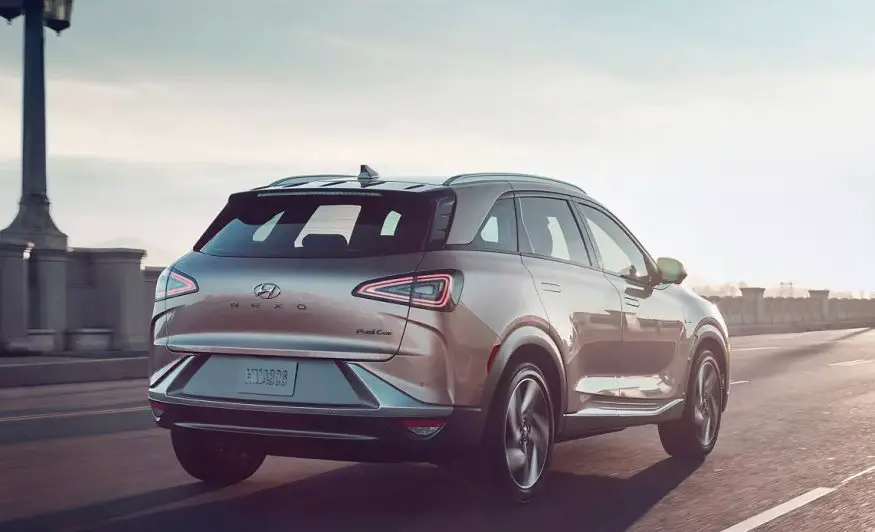 Previously, Hyundai Mobis produced the parts at its Chungju facility before delivering them to Hyundai Motor’s Ulsan and Jeonju facilities.
Could other companies dump hydrogen vehicle manufacturing operations in favor of EVs?
Possibly. Current trends show that there’s an overall slump in H2 vehicle sales. During the first quarter of 2024 (January – March), global sales of hydrogen vehicles only reached 2,382, a decrease of 36.4% from Q1 2023 (3,743 vehicles sold). What’s more, the Chosun Daily reports that less than half of Hyundai Nexo’s 2017 sales volume (11,079 cars) were sold overseas and the market share of H2 vehicles in South Korea dropped from 54.8% to 34.7%.How was this article?
Thanks for the feedback!