Hydrogen Storage Innovation: EWE GASSPEICHER and Bilfinger Leading the Charge in Hydrogen Infrastructure
EWE GASSPEICHER has commissioned Bilfinger to deliver its H2Dry hydrogen-drying system at the Huntorf salt-cavern storage site, converting one cavern to provide 16 million Nm³ of working gas capacity. This first commercial deployment of absorption-based hydrogen treatment is set to connect to Germany’s hydrogen core network by 2028.
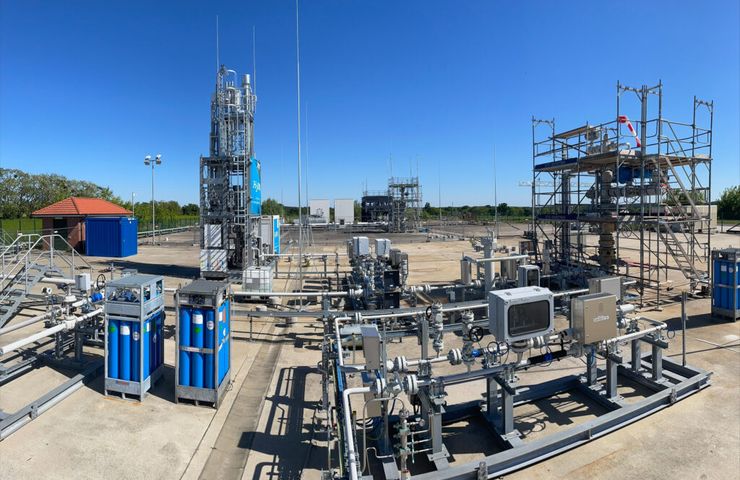
EWE GASSPEICHER GmbH recently inked a deal with Bilfinger SE to engineer, install, and commission a hydrogen-treatment facility at the established Huntorf underground-storage site in Lower Saxony, Germany. This collaboration represents a major leap for hydrogen infrastructure in the region. They’re repurposing one of the site's seven salt caverns to store a massive 16 million Nm³ of renewable hydrogen. With plans gearing up for a connection to Germany’s national hydrogen pipeline network by 2028, this project is set to enhance flexibility and support decarbonization across various sectors—from industry to mobility to power generation.
Groundbreaking Hydrogen Storage in Lower Saxony
Nestled in the Wesermarsch district between Bremen and the North Sea coast, the Huntorf site has been a hub for underground storage for over fifty years. Notably, it’s home to one of the world’s first utility-scale energy-storage plants. EWE GASSPEICHER oversees around two billion cubic meters of working-gas capacity in its cavern network throughout north-west Germany and Brandenburg. By converting one of its caverns for hydrogen storage, they’re creating a critical node that can not only hold 16 million Nm³ but also manage fluctuations in renewable energy output—delivering consistent hydrogen to nearby industrial users.
Bilfinger’s H2Dry Technology: A First for Commercial Use
The Huntorf facility will see the first commercial deployment of Bilfinger’s H2Dry system, a cutting-edge absorption-based drying technology. This process uses a unique scrubbing liquid called triethylene glycol to capture water vapor from hydrogen, which helps lower its dew point. This is crucial for protecting compressors, valves, and pipelines from moisture-induced corrosion. While earlier test installations at Rüdersdorf and Krummhörn validated the technology, using it at Huntorf kicks things up a notch—it’s a chance to really test its durability, ensure purity, and optimize operational efficiency in an industrial setting.
Collaboration Fuels Technical Innovation
Today’s progress is built on years of joint research. For instance, at a test site in Rüdersdorf, EWE AG and the German Aerospace Center (DLR) successfully proved safe hydrogen injection and withdrawal with minimal changes in purity. Plus, the Institute of Thermodynamics at Leibniz University Hannover laid down essential groundwork on hydrogen drying for underground storage, while pilot integration efforts at Krummhörn with Uniper and Bilfinger fine-tuned the system controls. This combination of academic research and industrial expertise ensures the Huntorf facility is starting off on solid technical ground.
Part of the Clean Hydrogen Coastline Network
The upgrade at Huntorf is a key component of EWE’s Clean Hydrogen Coastline initiative. This strategic plan is all about connecting renewable hydrogen production with underground storage, pipeline transport, and various end users across north-west Germany. With backing from the European Important Project of Common European Interest (IPCEI) framework, the program aims to seamlessly combine electrolyzer installations, salt caverns, and industrial off-takers. By weaving these elements into a well-coordinated supply chain, the goal is to ramp up green hydrogen production, reduce costs, and establish a strong supply route along the North Sea coast.
A Broader Hydrogen Infrastructure Ecosystem
Germany's envisioned hydrogen core network will stretch over 9,000 kilometers, with about 60% of it repurposed from existing natural gas infrastructure. Once the Huntorf site is fully integrated, it’ll act as a crucial player in this network, allowing for the storage of excess hydrogen during those windy or sunny days and withdrawing it when demand peaks. This flexibility boosts grid stability, supports industrial decarbonization, and showcases how underground storage can be a vital element of a larger continental hydrogen infrastructure.
Regulatory and Community Engagement
Creating hydrogen storage in salt caverns relies heavily on solid regulatory frameworks and meaningful community engagement. Following Germany’s Federal Mining Act and specific state regulations, EWE GASSPEICHER has conducted thorough well-integrity testing, environmental assessments, and local consultations in Wesermarsch. Collaborating with district authorities and environmental agencies has centered on issues like brine management, noise reduction, and subsidence monitoring. These early conversations with stakeholders aim to foster trust, streamline the permitting process, and set a template for similar projects in the future.
Environmental and Economic Upsides
By repurposing an existing cavern, the project minimizes land disruption and lowers the carbon footprint compared to new excavation. The Huntorf initiative is designed to bolster supply security for the chemicals, mobility, and energy sectors, enabling them to transition from traditional fossil fuels to green hydrogen. While the final tariffs and usage rates will depend on market dynamics, this conversion is also likely to create local job opportunities in engineering, construction, and maintenance. Of course, rigorous monitoring for well integrity, hydrogen embrittlement, and potential leaks will ensure environmental protections are prioritized.
Scaling Up and Global Significance
As one of the pioneering full-scale conversions of its kind, the Huntorf facility offers a valuable blueprint for operators worldwide. By utilizing existing salt cavern sites, project developers can dodge the high capital costs and lengthy timelines typically associated with starting from scratch. If H2Dry proves reliable over the long haul, it might spark a new market for specialized hydrogen-conditioning systems, helping to standardize equipment across Europe and beyond. This effort dovetails perfectly with broader aspirations to construct the European Hydrogen Backbone and build a resilient, continent-wide network.
Embracing Future Potential: A Glimpse Ahead
This partnership is about much more than just a plant-equipment order; it’s a true game-changer that integrates hydrogen treatment, storage, and transport into a seamless operation. With Bilfinger SE and EWE GASSPEICHER GmbH at the helm, the Huntorf facility is setting new standards for operational excellence and safety. As commissioning approaches next year, all eyes will be on performance metrics, monitoring purity control, and evaluating how it interacts with the network. Should this project succeed, it could very well ignite a wave of underground hydrogen storage initiatives, transforming the energy landscape for years to come.