Hydrogen news
The Hydrogen Revolution in Rail: Barriers Constraining the Global Hydrogen Economy
Germany's Strategic Pause: Addressing Supply and Cost in Hydrogen Locomotive Rollout The day after The Hydrogen Revolution in Rail: A Global Transformation in Motion was published, the German government announced a decision to delay the full deployment of its hydrogen locomotive initiative. Upon investigating, this is not a reversal but a strategic delay rooted in concerns about the hydrogen supply chain. Specifically, Germany is facing two critical challenges: ensuring sufficient hydrogen availability and reducing the current high cost of sourcing hydrogen for widespread use in locomotives.…
Germany's Strategic Pause: Addressing Supply and Cost in Hydrogen Locomotive Rollout
The day after The Hydrogen Revolution in Rail: A Global Transformation in Motion was published, the German government announced a decision to delay the full deployment of its hydrogen locomotive initiative. Upon investigating, this is not a reversal but a strategic delay rooted in concerns about the hydrogen supply chain. Specifically, Germany is facing two critical challenges: ensuring sufficient hydrogen availability and reducing the current high cost of sourcing hydrogen for widespread use in locomotives. The German government has identified three fundamental barriers that constrain the global hydrogen economy: 1) inadequate hydrogen availability; 2) prohibitively high cost per kilogram delivered; and 3) inefficient infrastructure to transport hydrogen in liquid or gaseous form reliably. Without a dependable and economically viable hydrogen supply, delaying the deployment of the hydrogen locomotive initiative is the prudent course of action—and that is precisely what Germany has opted to do. But where do these constraints originate, and how can countries like Germany, eager to transition to clean hydrogen, overcome these barriers? The key lies in developing an efficient transport system for hydrogen. When hydrogen is produced in regions that are rich in renewable energy—such as Scotland, Northeastern Canada, Spain, Portugal, Morocco, Saudi Arabia, and other MENA countries—the current cost of production is as low as €3.5 per kilogram and projected to fall below €2 per kilogram by 2035 as a consequence of technology innovation and economies of scale. The challenge, however, is not in production (which, as discussed below, has received the lion’s share of investment to date) but in finding a reliable, cost-effective way to deliver this hydrogen to countries like Germany.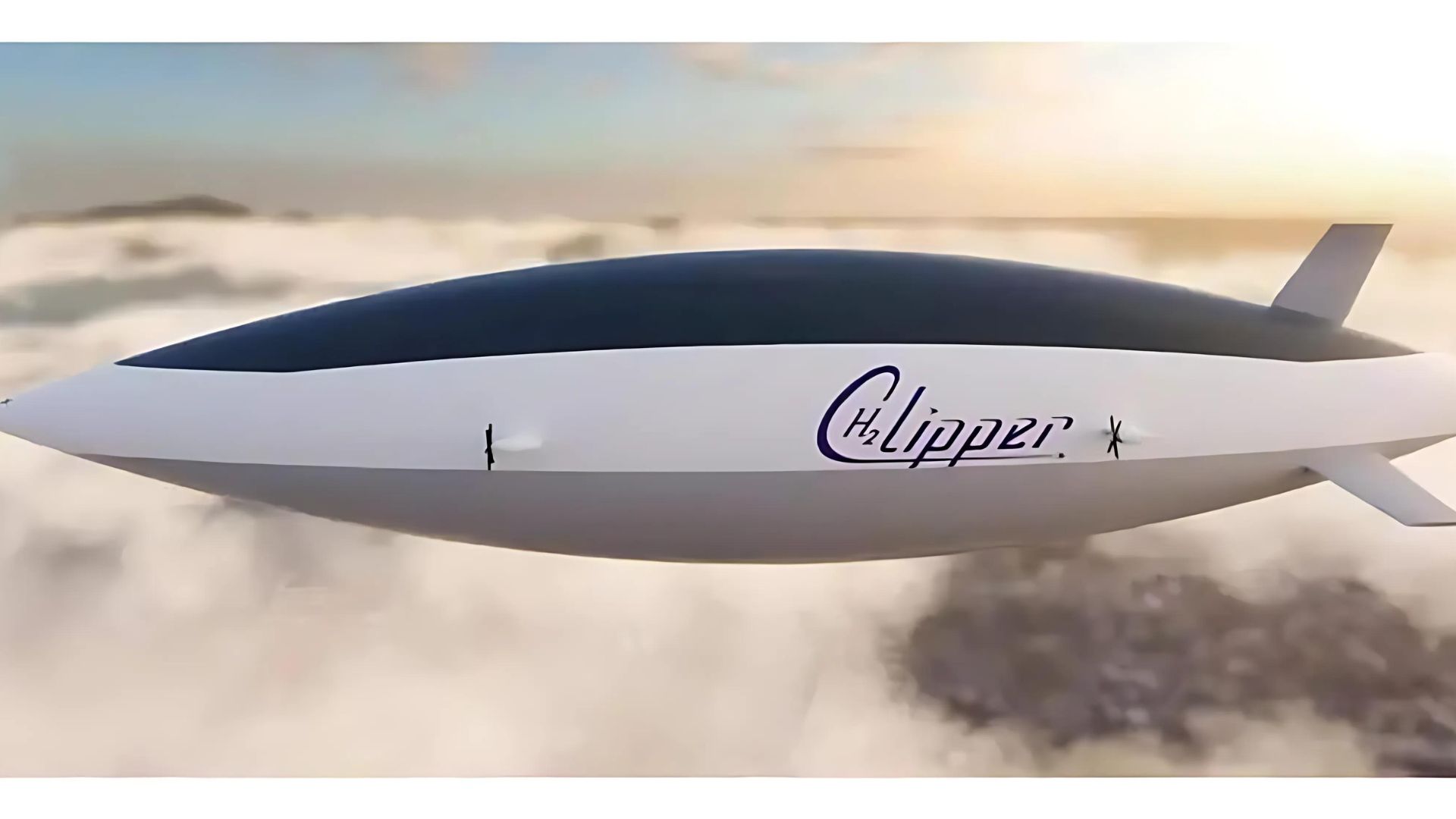
Bridging the Hydrogen Gap: The H2 Clipper and Germany's Import Infrastructure Needs
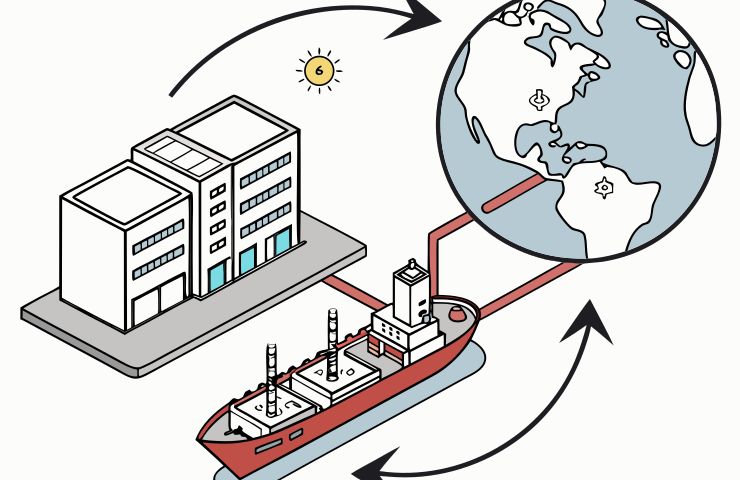
Since 2011, the World Business Academy has been working on this very issue, including by incubating the H2 Clipper, a 21st-century airship specifically designed to transport hydrogen from regions of abundant, inexpensive renewable energy directly to regional distribution hubs. This innovative solution would bridge the gap until sufficient supply and demand commitments justify developing a pipeline between these markets. Germany’s hydrogen import needs are significant, with government sources estimating that at least 65% of the country’s hydrogen demand will come from imports. Transporting that hydrogen economically and reliably, while allowing production and off-take markets to grow organically, is essential for the success of the hydrogen economy. A robust “mid-stream” connection between hydrogen production sources (“up-stream”) and long-term consumption (“downstream”) is critical. McKinsey & Company’s September 2024 Hydrogen Market Insights Report highlights a massive gap in infrastructure investment (see figure below).Announced and required direct investment into hydrogen through 2030, USD billion
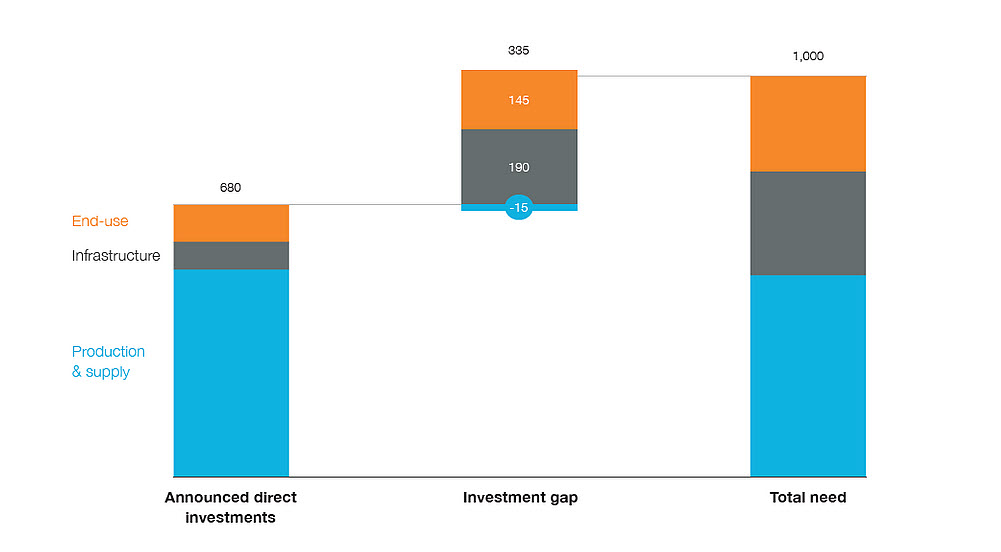 Source: McKinsey & Company, Hydrogen Insights Report, September 2024, page 15.
Strategic Refueling: Unlocking Hydrogen Locomotives' Potential in the Global Energy Market
Hydrogen locomotives provide an ideal off-take market because refueling stations can be co-located with strategically placed regional hydrogen depots, and the trains’ fuel requirements at each location can be calculated with precision. Private and quasi-public development interests in countries like those mentioned earlier are eager to conclude long-term off-take agreements that will justify the capital investment needed to transform their vast renewable energy resources into exportable hydrogen supplies. Closing the infrastructure gap to transport enough affordable hydrogen is the missing link. The sooner this challenge is addressed, the sooner hydrogen can become a globally traded commodity, and hydrogen trains can begin rolling across Germany and beyond.How was this article?
Thanks for the feedback!