
Hydrogen regulation advances as New Zealand frames white and orange hydrogen under new environmental framework
Cabinet has agreed in principle to regulate white and orange hydrogen under the Natural Environment Act framework, using a geothermal-style model where the Crown manages access and amends the Crown Minerals Act to clarify hydrogen’s status.
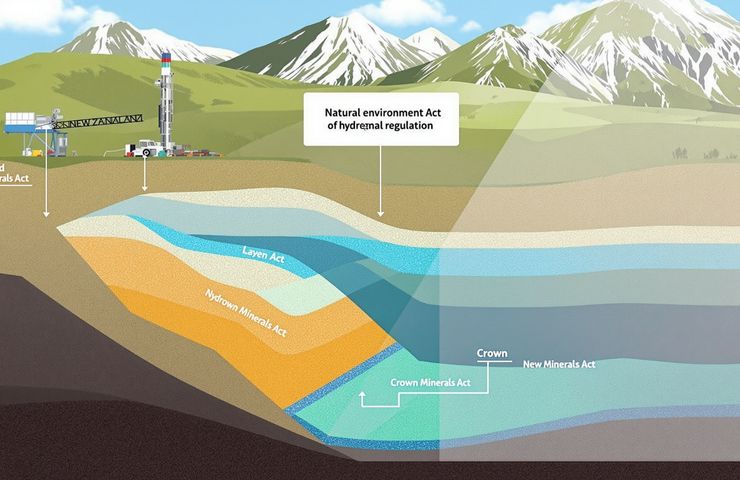
New Zealand’s Cabinet has officially agreed, in principle, to regulate naturally occurring white hydrogen and engineered orange hydrogen through the Natural Environment Act framework. This move sets up a model similar to how geothermal resources are managed, ensuring that the Crown oversees access without actually claiming ownership of the hydrogen itself.
Geothermal Analogy and Crown Management
The government has drawn a direct line between this new framework and the existing geothermal regime. Instead of categorizing hydrogen as a typical mineral, developers will need to go through the environmental planning system to seek the necessary authorizations. This way, they can secure exclusive permits, which should help minimize overlaps and conflicts in the field. On top of that, there will be some tweaking to the Crown Minerals Act to clarify that hydrogen doesn’t fall under the definition of a “mineral” and to outline how this Act relates when it comes to orange hydrogen operations alongside regulated minerals.
From Consultation to Policy Direction
This adjustment builds on the November 2024 Hydrogen Action Plan, crafted after extensive consultations led by the Ministry of Business, Innovation and Employment (MBIE). Back in mid-2025, MBIE laid out two possible paths: either bringing hydrogen under the Crown Minerals Act or treating it as a non-mineral resource under environment law. Cabinet has decided to go the latter route, aligning hydrogen with a fresh resource-environment framework that takes the place of the outdated Resource Management Act.
Why Clarity Matters
Exploring for subsurface hydrogen can be a pricey endeavor. Costs for drilling, well design, gas sampling, and reservoir monitoring can pile up quickly before any of the hydrogen even sees the light of day. Investors have had their doubts without clear guidelines on exploration rights, timeframes, and environmental safeguards. Now, with exclusive authorizations in place, there’s hope that investor confidence will get a boost while the environmental planning process will require proposals to tackle potential impacts right from the get-go.
Inside White Hydrogen Production
White hydrogen, often referred to as natural or geologic hydrogen, forms underground through natural processes like serpentinization, which occurs when water mixes with iron-rich rock. In practical terms, exploration teams will rely on seismic data, geochemical surveys, and test drilling to locate hydrogen-bearing formations. If they hit a promising reservoir, they’ll drill wells to bring the gas to the surface, and then use separation and compression systems to convert it into usable energy.
Unlocking Orange Hydrogen
On the flip side, orange hydrogen is produced by injecting water—typically enriched with carbon dioxide—into reactive iron- or magnesium-containing rocks. The reaction between the water and rock generates hydrogen, which is later extracted via production wells. Some conceptual studies hint at the possibility of some CO₂ mineralizing underground, but the permanence and net emissions benefits of this process are still being explored. Careful environmental oversight will be crucial to manage induced pressure, leakage risks, and water usage in this process.
Environmental and Treaty Considerations
Even with this new regulatory framework in place, there are still many details to hammer out. Treaty partners have emphasized the importance of having a meaningful role in allocation, decision-making, and benefit-sharing. Environmental advocates are concerned that lax safeguards could endanger groundwater supplies, trigger earthquakes, or allow hydrogen leaks that contribute to greenhouse gas emissions. The Crown has announced that it will refine rules regarding royalties, Māori participation, and community engagement before they kick off the permit rounds.
When we look at the bigger picture, both white and orange hydrogen are still in their infancy as technologies. There aren’t any commercial production sites or reserve estimates confirmed in New Zealand yet. However, getting clarity on these regulatory boundaries could unlock funding for exploration and drive forward advancements in drilling, gas separation, and subsurface monitoring technologies.
Looking ahead, all eyes are on crafting the 2027 amendment bill. This legislation will nail down criteria for allocation, the duration of authorizations, environmental standards, royalty rates, and processes related to the Treaty. Until that’s done, this announcement stands as a key—though still incomplete—step in New Zealand’s journey toward a low-emissions future.
By synchronizing hydrogen with the Natural Environment Act framework, Wellington aims to lessen uncertainty and draw in investment. But turning this potential for geologic hydrogen into a thriving industry will require solid scientific studies, thorough environmental management, and real engagement with iwi and local communities. The ultimate test won’t just be in the headlines; it’s about how these rules play out in reality when exploratory rigs start rolling out across the landscape.