Hydrogen News: Shipping’s Green Hydrogen Shift Could Unlock $284 Billion in Annual Health Benefits
A Nature Communications study shows a global shift to green hydrogen in shipping could avert 129,458 premature deaths and deliver US$284 billion in yearly health benefits by cutting PM2.5 and ozone emissions.

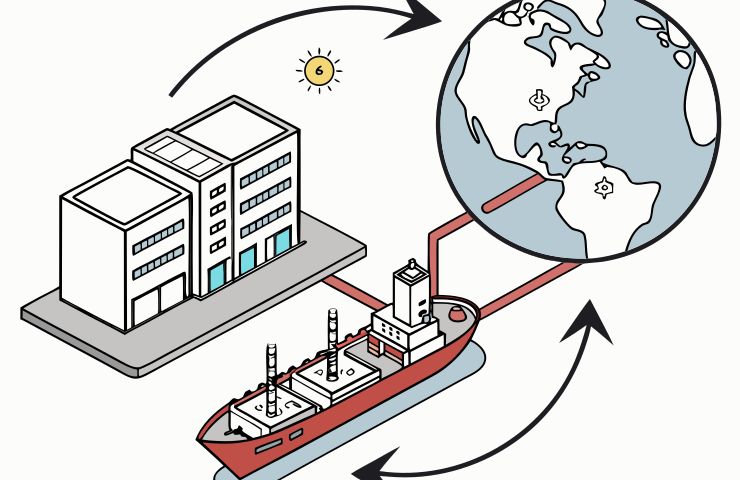
Global shipping has often flown under the radar when people talk about public health, but some eye-opening research is changing that perspective. A recent study, which has been peer-reviewed, found that switching from heavy fuel oil to green hydrogen could save over 129,000 lives each year, generating an impressive $284 billion in health benefits globally. This isn’t just a climate issue; it’s a pressing public health matter that demands our attention.
Led by Professor Steve Hung-Lam Yim from the Asian School of the Environment at Nanyang Technological University, this study was published in Nature Communications. The researchers created three different scenarios around emissions: a baseline scenario reflecting fuel use in 2022, a “complete transition” where hydrogen fulfills 100% of marine energy demands, and a “partial transition” covering 50%. They based the hydrogen volumes and their locations on upcoming low- and zero-emission production projects expected by mid-century, allocating 30% and 15% of that capacity to shipping for the full and partial scenarios, respectively.
Diving into the Details
The study's core relied on the Community Earth System Model version 2.2 (CESM2.2), which models changes in air quality—specifically, shifts in pollutant levels like PM2.5 and maximum daily ozone levels—when shipping emissions transition to hydrogen. They compiled emissions data involving SO2, NOx, CO, NMVOCs, and primary particulate matter from both ships and new hydrogen facilities. Then, they overlaid these simulated pollutants on population density data to assess the health impact more accurately.
Using the Global Exposure Mortality Model for PM2.5 and a log-linear model for ozone risk, the researchers found that switching entirely to hydrogen could prevent around 129,458 premature deaths annually, while a 50% transition could save about 52,574 lives. Interestingly, about 75% of these benefits come from reduced ozone levels, with the remaining 25% attributed to lower PM2.5. China and India, in particular, reaped significant benefits, with Eastern and Southeastern Asia leading in PM2.5 gains and Southern Asia in ozone reductions.
Strategic Takeaways
Aside from the lives potentially saved, these avoided deaths translate into some hefty financial benefits. By applying country-specific values of a statistical life, adjusted for purchasing power, the researchers calculated about $284 billion in annual health benefits for a complete switch and $114 billion for a partial one. While shipping companies might not see these numbers on their financial statements, policymakers tend to factor in similar valuations when they set fuel standards or carbon taxes.
This added layer of “hidden” health benefits helps build a stronger case for more ambitious greenhouse gas targets under the IMO’s decarbonization plans. If governments can highlight the public health returns, it could justify higher carbon prices or more support for hydrogen infrastructure and bunkering facilities. For investors and ports, getting ahead of tighter regulations by planning hydrogen-ready terminals now could provide a competitive edge.
Environmental Impact and Infrastructure Needs
The study also stresses that the choices made upstream in hydrogen production are crucial. In some areas, like parts of the U.S. Gulf Coast, Northern Chile, and Western Europe, relying on fossil fuels or poorly placed electrolysers could actually lead to localized increases in PM2.5. They even considered a worst-case scenario where hydrogen leaks at a 10% rate, but surprisingly, the benefits in terms of ozone improvements still held strong. However, there’s caution in the literature suggesting that hydrogen leakage might mess with atmospheric chemistry, which could complicate the overall warming picture.
When we look back at past measures, like the IMO 2020 sulfur cap—which cut shipping-related premature mortality by about a third—the move to hydrogen promises even bigger reductions in both air pollutants and CO2 emissions. It's not just about making small tweaks but completely transforming the energy landscape.
Of course, there are still hurdles to jump—higher costs for hydrogen fuel cells and modified combustion engines, bunkering logistics, and crew training. But the health benefits provide a compelling reason for tackling these challenges head-on. Ports located in densely populated areas of Asia, Europe, and North America stand to gain the most from this transition. Those who act early may also set the standards and secure deals that yield both environmental and economic benefits.
In conclusion, this study reinforces the idea that hydrogen's potential in shipping goes way beyond just reducing carbon emissions. It reminds us that the investments we make in sustainable energy can have powerful co-benefits for our society. As the global shipping sector moves toward zero-emission technologies, it’s vital for stakeholders to integrate public health considerations into their planning. After all, the real costs of marine fuels extend far beyond what we pay at the pump.