Hydrogen Infrastructure: How Nouvelle-Aquitaine Is Cementing Its Role as a European Hub
Nouvelle-Aquitaine is building a pan-European hydrogen hub through the H2Med and HySoW corridors, a PEM fuel cell gigafactory, cross-border PHYRENE cooperation and the H2Charente mobility project.
When we talk about hydrogen infrastructure, the Nouvelle-Aquitaine region in France is really stepping up its game in Europe's energy transition. They’re turning visions into reality by planning a subsea corridor, aligning it with a regional pipeline, and incorporating local production and transportation initiatives. It’s all about transforming policies into real things like pipelines, gigafactories, and refueling stations. Let’s dive into the four main pillars that are helping this area become a crucial player in Europe’s hydrogen scene.
Bridging Iberian Renewable Supply with European Demand
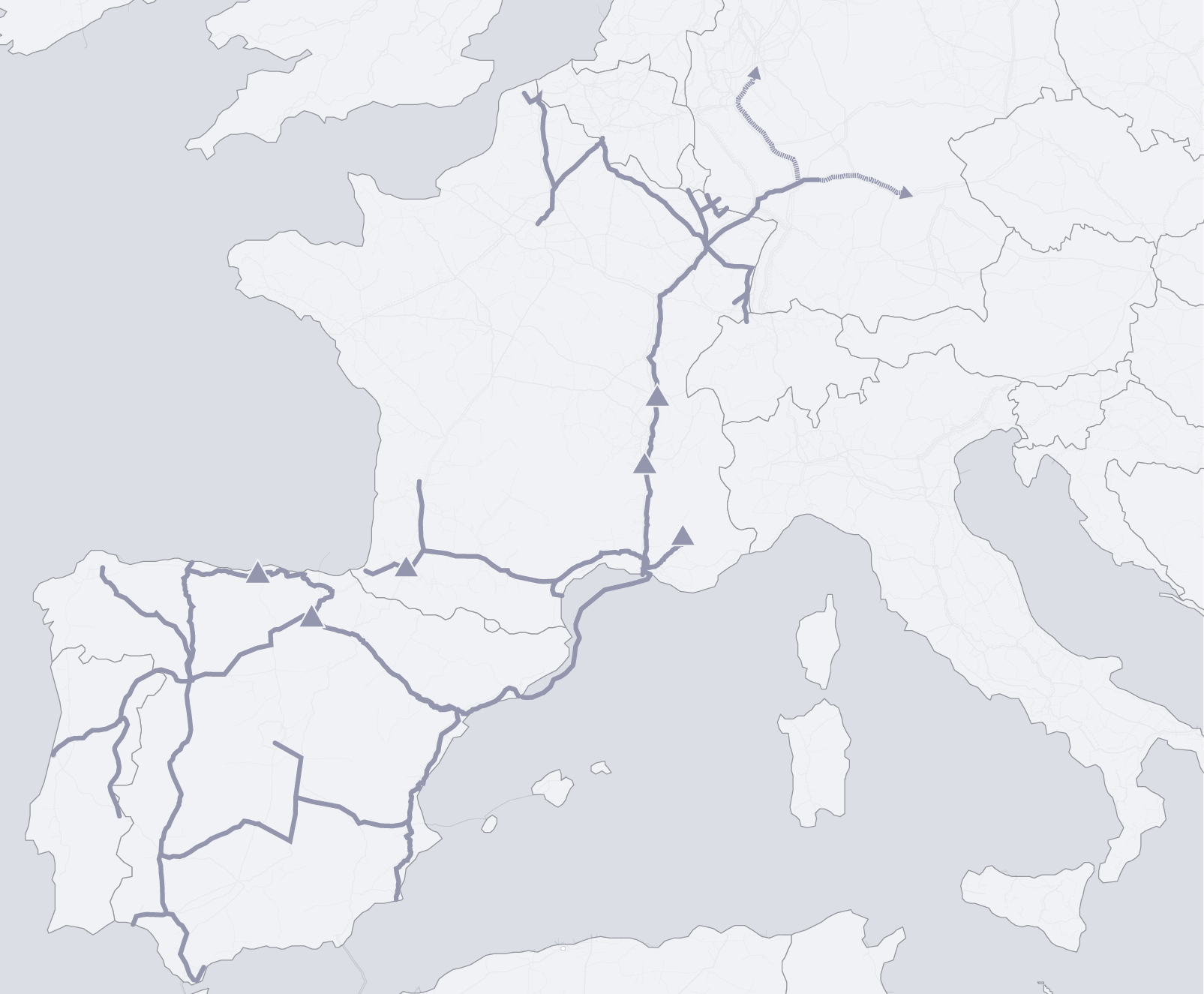
On a bigger scale, we can’t ignore H2Med, which is making headlines as Europe’s very first green hydrogen corridor. They’re planning to set up a subsea pipeline—nicknamed BarMar—that will transport renewable hydrogen from Spain's extensive fields of solar and wind energy to Fos-sur-Mer. But there’s more; on land, Teréga, the regional transmission system operator, is rolling out HySoW—a 600-kilometer network that repurposes gas lines and adds new sections throughout Occitanie and Nouvelle-Aquitaine. Both of these projects are recognized as EU Projects of Common Interest, which is a big deal because it streamlines permitting processes and unlocks funding. They’re addressing issues like hydrogen embrittlement in steel and keeping the flow steady with compressor stations. Plus, seasonal flexibility comes into play with salt cavern storage in the Aquitaine basin. All of this will support industrial hubs in Bordeaux, Lacq, and Toulouse, while also connecting to Atlantic ports for future exports, creating a robust piece of the European hydrogen infrastructure.
Revamping Industry with a PEM Fuel Cell Gigafactory
The recent closure of Ford’s gearbox plant in Blanquefort left a notable gap in local heavy manufacturing. Stepping in to fill that void, HDF Energy has kicked off the world’s first gigafactory dedicated to multi-megawatt PEM fuel cells. It’s set up right on the old Ford site near Bordeaux and is currently producing about 100 MW of power stacks each year, with ambitious plans to ramp that up to 1 GW annually by the decade’s end. Each of these powerhouse units ranges from 1.5 MW to 10 MW, making them ideal for maritime propulsion, rail traction, and grid backups—where you need endurance and quick refueling rather than the limits of batteries. This factory isn’t just about keeping the local supply chain vibrant with catalysts, membranes, and power electronics; it’s a big win for the entire region’s industrial landscape while firmly establishing its footprint in the hydrogen fuel cell sector.
Cultivating a Trans-Pyrenean Hydrogen Valley
Over at the Franco-Spanish border, the PHYRENE project, spearheaded by the Communauté de Travail des Pyrénées, is all about fostering a cross-border hydrogen ecosystem. They’ve created an online geoportal that catalogs about 280 hydrogen initiatives—22 of which are in Nouvelle-Aquitaine—bringing together over 800 stakeholders from seven different areas. They’re conducting studies on truck corridors that handle over 10,000 crossings every day, exploring potential natural hydrogen sources tucked away in mountain formations, and working on shared storage solutions. By uniting research institutes, industry players, and local governments, PHYRENE is on a mission to develop a true hydrogen valley, complete with refueling stations for heavy-duty vehicles and logistical hubs that connect production, transport, and end-use.
Decarbonizing Transport with H2Charente
Zooming in on local initiatives, the H2Charente project is a great example of how hydrogen can help tackle transport emissions. Supported by Grand Angoulême, Grand Cognac, and some private developers, this initiative will see a 5 MW electrolyser installed in La Couronne, powered through a grid PPA, alongside a solar park. They plan to set up three refueling stations along national routes for around 44 heavy trucks, buses, and waste collection vehicles, producing an estimated 430 tonnes of green hydrogen per year. Thanks to the backing of the national innovation program, H2Charente is on track to cut down several thousand tonnes of CO₂ each year, showcasing how green hydrogen production can transform semi-rural logistics and deliver immediate environmental benefits.
What’s Next?
By interlinking the H2Med subsea corridor, Teréga’s HySoW network, the PEM fuel cell gigafactory, cross-border initiatives like PHYRENE, and local projects such as H2Charente, Nouvelle-Aquitaine is carving out a comprehensive hydrogen hub. Now the challenge is figuring out how to match up supply with demand: Will industries, ports, and transportation fleets ramp up quickly enough to utilize these resources? If all goes well, this could mean thousands of new jobs, billions in revenue, and a lasting impact on Europe’s roadmap towards decarbonization. With the EU aiming for 20 million tonnes of annual hydrogen consumption by 2030, the experiments and progress in Nouvelle-Aquitaine will serve as a crucial test for the real potential of a fully integrated hydrogen infrastructure.