Hamburg Refinery to Tap HH-WIN Hydrogen Network for Green Diesel Production
HOLBORN Europa Raffinerie and Hamburger Energienetze have agreed to plan a hydrogen pipeline connection for Green Diesel and SAF production at the Hamburg-Harburg refinery from 2028, providing HH-WIN with a key anchor offtake amid Hamburg’s hydrogen infrastructure build-out.
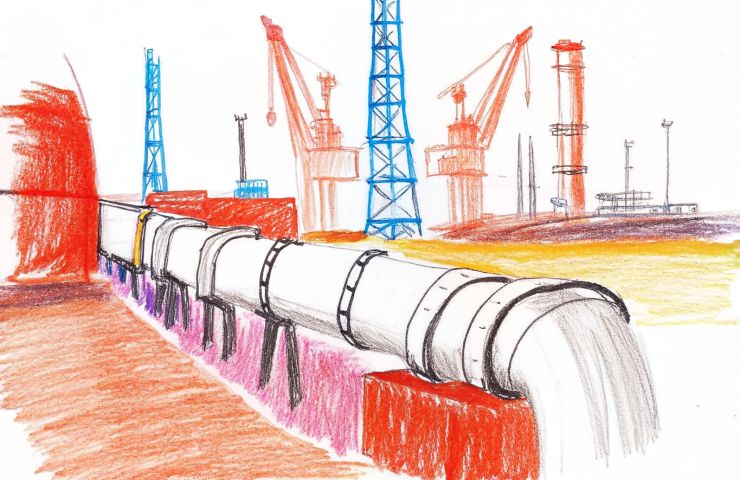
HOLBORN Europa Raffinerie and Hamburger Energienetze this month agreed to plan a pipeline connection between HOLBORN’s Hamburg-Harburg refinery and the municipal HH-WIN hydrogen industrial network, aiming for initial hydrogen supply from 2028, according to Hamburger Energienetze. The announcement was made at the Hydrogen Technology World Expo in Hamburg Messe. The organizer advertises the expo as hosting over 1,000 exhibitors and more than 20,000 attendees, though final figures remain unverified.
Trans-Global Events organized the expo. It ran alongside the co-located Carbon Capture Technology World Expo and offered sessions on hydrogen production, infrastructure, storage, fuel cells, mobility, fuels and safety. The event provided a forum for vendors, engineering firms and industrial buyers to explore decarbonization solutions.
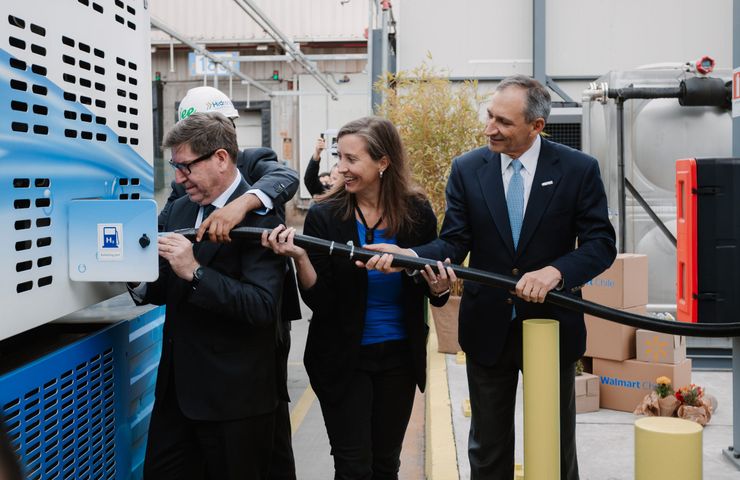
The signing was witnessed by Hamburg’s First Mayor as part of the Free and Hanseatic City of Hamburg’s support for regional hydrogen infrastructure, the municipal government indicates. Public ownership of the local network, combined with planning approvals and climate-policy integration, ties this project to Hamburg’s stated goal of climate neutrality by 2040.
Under the agreement, the planned branch line will supply low-carbon hydrogen to HOLBORN’s Green Diesel Production complex, currently under construction and scheduled to enter operation early next year, according to HOLBORN Europa Raffinerie. That complex is designed to produce approximately 220,000 tonnes per year of HVO renewable diesel and sustainable aviation fuel from used cooking oils and other biogenic waste and residual materials, HOLBORN says. The municipal HH-WIN network itself is expected to enter initial service in late 2027, Hamburger Energienetze reports.
No hydrogen delivery or fuel output has commenced. The deal covers planning and engineering for the connection rather than confirmed delivery volumes. It remains subject to further development steps and network availability before commercial operation.
Technical Specifications and Process Integration
Hamburger Energienetze states the refinery connection will feature a continuous hydrogen-energy capacity of 35.4 megawatts and a peak capability of 62 megawatts. Hydrogen will feed a hydrotreating unit in the Green Diesel complex, where it reacts with fats, oils and other organic feedstocks over catalysts at elevated temperature and pressure. Hydrogen saturates and breaks chemical bonds, removing oxygen to yield hydrocarbon chains suitable for diesel and aviation fuels, HOLBORN explains.
The hydrotreating unit is the point at which lower-carbon hydrogen and the refinery’s feedstocks intersect. In practical terms, that means a continuous supply at the specified energy capacity is required to meet process demand, and the pipeline will need to support that operational profile. HOLBORN’s materials describe the hydrotreating step as the core conversion technology for the Green Diesel output.
As part of Hamburg’s broader hydrogen strategy, Hamburger Energienetze and partners including Luxcara and Hamburger Energiewerke have announced plans for a 100-megawatt electrolyzer at the Moorburg energy site. That installation, still at the planning stage, would supply renewable hydrogen to HH-WIN when operational, though details on commissioning remain provisional.
Strategic Significance for Hamburg’s Hydrogen Economy
The offtake agreement gives HH-WIN an anchor industrial customer and helps to secure investment in pipeline infrastructure and network expansion. For HOLBORN, tapping a municipal network reduces reliance on on-site hydrogen generation and advances its transition from crude-oil processing to renewable and circular feedstocks, Managing Director Lars Bergmann says. The link underscores how regional projects can align industrial demand with emerging clean-hydrogen supply, the network operator notes.
Anchors matter. In hydrogen markets, a guaranteed customer can change finance equations and alter staging plans for pipelines and electrolyzers. That is central to why the partners framed the agreement as a planning milestone rather than a finished supply contract.
Historical and Regional Context
Hydrogen use in refining is not new to Hamburg-Harburg. The refinery site originated in 1928, was acquired and reopened by the HOLBORN group in 1987, and later added desulfurization and hydrogen‐production units in response to tightening fuel standards. The current Green Diesel complex marks the first large-scale integration of renewable hydrogen in refinery‐based sustainable-fuel production in the region, HOLBORN’s project materials indicate.
Hamburger Energienetze has envisioned an industrial network of approximately 60 kilometres of dedicated hydrogen pipelines linking local production, imports and the national hydrogen core network. HH-WIN is designed to serve refineries, steel plants, aviation logistics and port operations, reflecting Hamburg’s ambition to become a northern European hydrogen hub.
Implications and Challenges
While the planning milestone is significant, it also highlights persistent barriers. According to the International Energy Agency, low-carbon hydrogen accounts for only a fraction of global supply, and costs remain substantially higher than for fossil-based alternatives. Sustainable fuels produced via hydrotreating can reduce lifecycle emissions, but actual savings depend on feedstock sourcing, hydrogen origin, electricity consumption and logistics, industry rules and certification, the European Aviation Safety Agency states.
Environmental groups demonstrated outside the expo, NDR reported, raising concerns about resource allocation, potential greenwashing and the role of hydrogen in extending conventional refinery activity. The announced CO₂-saving estimate of up to 800,000 tonnes per year has not been independently verified and hinges on compliance with EU sustainability criteria and ReFuelEU Aviation requirements, HOLBORN and Hamburger Energienetze caution.
The agreement illustrates the infrastructure conundrum facing hydrogen markets: production, pipelines, storage, regulation and demand must evolve in tandem. Securing a clear offtake signal can bolster project finance, yet the final configuration of hydrogen supply—whether from local electrolysis, imports or grid-connected sources—remains to be determined.
Similar planning deals are emerging across Germany’s industrial clusters, from steel regions to chemical parks, underscoring a shift toward using hydrogen as a chemical feedstock rather than solely an energy carrier. The Hamburg connection will test how municipal networks can meet the rigorous demands of continuous, high-pressure industrial hydrogen supply.
By moving from concept to planning, the HOLBORN–Hamburger Energienetze agreement sets a demand anchor for the HH-WIN network and charts a course for refinery conversion projects that rely on lower-carbon hydrogen. The coming build-out of pipelines and the commissioning of the Green Diesel complex will determine whether Hamburg’s vision of linking port, industrial and energy infrastructures can deliver a practical pathway to sustainable fuels.