Hydrogen Infrastructure Advances as BarMar Subsea Pipeline Enters FEED Phase
BarMar has entered its FEED phase, transitioning the 400 km subsea pipeline from Barcelona to Fos-sur-Mer toward detailed design and a late-2026 Final Investment Decision, paving the way to transport 2 Mt/year of green hydrogen under the H2Med corridor.
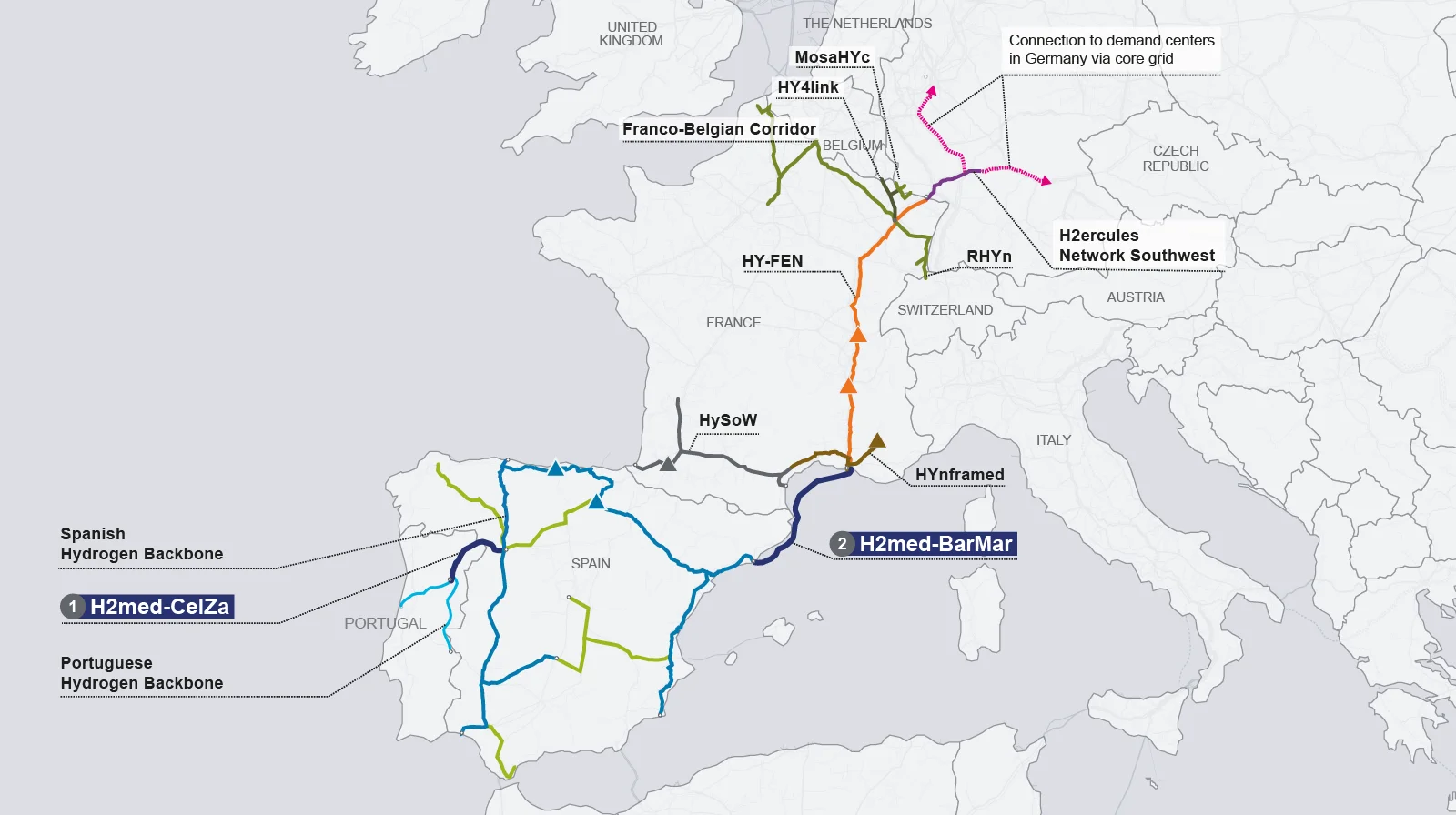
The BarMar subsea hydrogen pipeline officially kicked off its Front-End Engineering Design (FEED) phase on July 16, 2026. This transition is a game-changer, moving the BarMar project from initial studies to detailed engineering, paving the way for Europe’s first pipeline specifically built to transport pure hydrogen.
From Idea to Engineering
This FEED milestone comes after the completion of pre-FEED work and the formal establishment of BarMar S.A.S. in July 2025. This special purpose entity involves a collaboration between Enagás, NaTran (part of the GRTgaz Group), Teréga, REN, and OGE. Over the next 12 to 18 months, engineers will be fine-tuning:
Once this legwork wraps up, the BarMar project is set to move toward a Final Investment Decision (FID), which some members are eyeing for late 2026.
Technical Snapshot
Building a 400 km subsea hydrogen pipeline that dives to depths of up to 2,600 meters comes with its challenges. Adapting conventional gas-pipeline techniques to handle the unique properties of hydrogen is crucial:
Special vessels will handle the intricate tasks of welding, coating, and lowering the pipe segments, all while navigating environmentally sensitive areas.
Strategic and Business Implications
The BarMar pipeline is a cornerstone of the H2Med Consortium, a collaborative effort launched in 2022 to connect green hydrogen production in the Iberian Peninsula with central and northern Europe. As a Project of Common Interest, it benefits from expedited permitting and access to EU grants—€28.3 million has already been awarded for preliminary studies, with potential funding from a €600 million Connecting Europe Facility call.
Transforming core transmission assets from natural gas to pure hydrogen is no small feat. It’s a major overhaul of existing business models. Consortium partners are in the thick of negotiations for offtake agreements with big industrial players, particularly in Germany. Recent political support from France and Germany has made it easier to create cross-border frameworks for building hydrogen infrastructure.
Financing and Offtake Overview
Locking down financing for a budget of about €2.1 billion will require a mix of regulated network tariffs, EU grants, and private investment. The consortium is looking at public-private partnerships and government-backed instruments, possibly tapping into green bonds and infrastructure funds. Talks are underway for multi-year supply contracts with industrial clusters in France and Germany, although final agreements are still up in the air and market conditions will influence pricing models.
The underlying challenge here is balancing risk and reward: investors want reliable revenue streams from regulated tariffs, while industrial buyers are on the hunt for cost-competitive hydrogen compared to fossil fuels. This conversation will ramp up as the FEED phase unfolds, revealing actual cost estimates.
Regional Integration
Spain and Portugal are set to funnel green hydrogen into the Spanish backbone and then offshore through the BarMar pipeline. In Barcelona, Enagás’s regasification facility will host the compression plant, while in Fos-sur-Mer, Teréga’s hydrogen reception station will connect to inland networks and storage initiatives like the Jupiter 1000 caverns, allowing for strategic hydrogen storage and managing demand.
With the capability to deliver up to 2 million tonnes of hydrogen annually—roughly 10 percent of the EU’s 2030 target—BarMar has the potential to reshape European hydrogen production methods and pricing structures, aiding in industrial decarbonization from Marseille to the Ruhr.
Market Impact Potential
Once operational, BarMar could serve as a springboard for a broader European hydrogen market. By bridging production-rich areas in Iberia with high-demand regions, it could:
In the grand scheme, BarMar could help lower costs across the entire supply chain, making green hydrogen more competitive compared to blue hydrogen and fossil fuels.
Historical Context of H2Med
The idea for the corridor started gaining traction during the gas supply challenges of the early 2020s and the EU’s RePowerEU agenda, which aimed for a 20 million tonne hydrogen demand goal by 2030. H2Med was unveiled in 2022, with support from the governments of Portugal, Spain, and France, along with backing from the European Commission, making it a critical part of Europe’s strategy to move away from fossil fuel reliance.
Regulatory and Environmental Hurdles
Of course, building a subsea pipeline isn’t without its environmental concerns. The BarMar project has carried out extensive surveys to assess geophysical and ecological impacts, carefully routing the pipeline to avoid protected areas where feasible. Public consultations in both Spain and France in 2026 will comply with EU regulations that mandate thorough environmental impact assessments for these types of projects.
We'll be keeping an eye on environmental monitoring reports as construction progresses.
Risks and Challenges Ahead
Before the consortium can move toward FID, they’ll need to tackle key challenges, such as:
Addressing these issues will dictate how quickly the consortium can jump into construction, scheduled from 2027 to 2030, aiming for commercial operation in the early 2030s.
Comparative Insights
While BarMar is touted as one of the largest subsea hydrogen pipelines in the works, there are other transportation options like ammonia shipping and repurposed existing pipelines that are vying for attention too. Unlike the marine transport of liquid hydrogen, BarMar avoids the energy-heavy liquefaction process, offering better efficiency at the cost of more complex offshore engineering.
The Hydrogen Vehicle Ecosystem
While BarMar is primarily designed for industrial demand, robust hydrogen infrastructure is crucial for advancing hydrogen-powered mobility. With fuel cell trucks and buses gaining traction—especially on heavy-duty routes—the BarMar corridor will broaden the supply base for future hydrogen vehicles and refueling networks throughout Europe.
Looking Ahead
The FEED phase of BarMar is more than just engineering talk; it sets the stage for cost assessments, route viability, and financing needs. Everyone involved will be keeping an eye on the upcoming contract awards in Q4 2026 and subsequent FID discussions. As Europe races to ramp up hydrogen infrastructure, BarMar is shaping up to be a landmark project for subsea hydrogen transportation—a potential model for future green hydrogen corridors worldwide.