Cell Impact AB Secures SEK 5.3M Flow Plate Order from Northeast US OEM
Cell Impact AB has reportedly secured an order for SEK 5.3 million of precision flow plates from a major Northeastern US PEM fuel cell OEM, reflecting growing transatlantic supply chain collaboration in hydrogen technology.
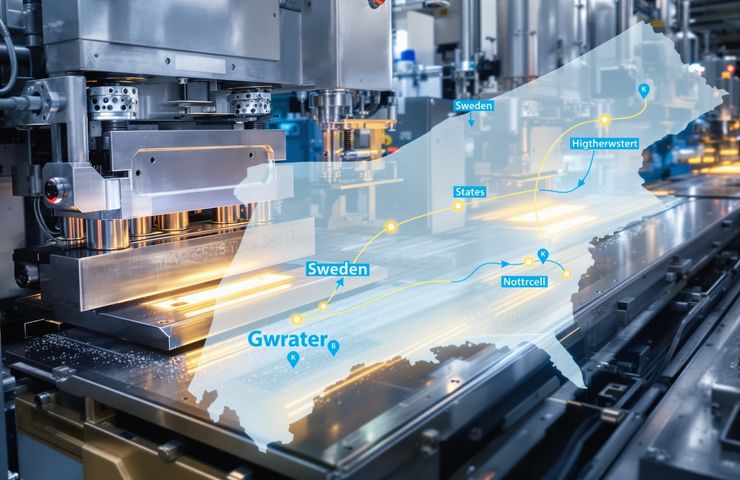
Things are really heating up in the world of hydrogen fuel cell technology, especially with recent news that Cell Impact AB has secured a substantial order valued at about SEK 5.3 million. The deal comes from a prominent but unnamed manufacturer of PEM fuel cell equipment in the northeastern U.S. This multi-year agreement is all about supplying high-precision flow plates—often referred to as bipolar plates—which are essential for the efficiency and longevity of proton exchange membrane (PEM) fuel cell stacks. While we don’t know exactly who the customer is or when the deliveries will roll out, this order signifies a big move for Cell Impact as they look to strengthen their presence in North American markets. Plus, it’s indicative of a growing trend where fuel cell OEMs are increasingly outsourcing specialized components.
So, what exactly do flow plates do? They’ve got a critical job: distributing hydrogen and air through cleverly designed channels, conducting electrons for power, managing heat and moisture, and keeping everything stable under pressure. The need for advanced manufacturing techniques is really highlighted by this latest order, especially as OEMs ramp up their plans to roll out fuel cell systems. We’re talking applications that span heavy-duty transportation, backup power, distributed generation, and even data center resilience.
Precision Forming and Channel Innovation
It’s Cell Impact’s cutting-edge technology behind this order that’s particularly exciting. They use a high-velocity impact forming process which allows them to stamp complex channel patterns into thin metal sheets at impressive speeds. Traditional methods like machining or molding just can’t match this. With impact forming, Cell Impact can create intricate shapes—like serpentine or interdigitated designs—with tight tolerances that can be as precise as a few microns. This precision is golden because it reduces pressure loss, ensures even gas distribution, and optimizes water management. All of that helps boost cell efficiency and longevity.
Now, in typical PEM stacks, flow plates need to endure high humidity and temperatures and resist corrosion without warping. Cell Impact usually starts with corrosion-proof stainless steel or specially coated alloys to create channels that are just the right depth and width. Plus, they can apply surface treatments that enhance durability and lower electrical resistance. What’s more, this process minimizes waste and lowers post-processing costs—an essential factor as OEMs transition from pilot projects to larger-scale production.
Strategic Supply Chain Dynamics
For fuel cell OEMs, teaming up with specialized component suppliers like Cell Impact can significantly cut capital costs and speed up time to market. Instead of pouring resources into developing their own manufacturing capabilities, companies can focus on system integration and stack assembly. This approach mirrors what’s happening in the automotive and electronics sectors, where a layered supply chain allows manufacturers to zero in on what they do best.
The SEK 5.3 million contract paints a picture of Cell Impact making waves among the top names in North America. Their presence on the Nasdaq First North Growth Market highlights their readiness to ramp up production. Observers are already speculating that securing more orders could pave the way for future investments in increased capacity, and who knows—maybe even a local production facility to cater to the U.S. market and cut down on shipping times.
On top of that, U.S. federal initiatives, like the Hydrogen Hubs program, alongside proactive state policies in the Northeast, have set ambitious goals for zero-emission technologies. OEMs aligning their purchasing strategies with these frameworks stand to boost their projects' bankability and access tax breaks, grants, and low-interest loans. Ultimately, this supportive policy landscape is a win for component suppliers like Cell Impact, as it drives consistent demand for PEM stacks.
Depending on the configuration and stack architecture, this order could equate to supply for thousands of fuel cell stacks—though specific numbers haven’t been disclosed. Just to give you an idea, a standard bus-sized fuel cell setup might require a significant number of flow plates, with larger custom setups for heavy-duty trucks needing even more.
North American Regional Context
The Northeastern U.S. is stepping up as a hotbed for hydrogen production and clean energy initiatives. States like New York, Massachusetts, and Pennsylvania are hopping on board cap-and-trade schemes like the Regional Greenhouse Gas Initiative, which channels funds into renewable energy and low-carbon tech. With bustling urban centers, leading research universities, and a burgeoning data center industry, it’s clear that there’s a growing demand for reliable, zero-emission emergency power and microgrid solutions.
Major transportation corridors, especially along the Interstate 95, are perfect launch points for deploying fuel cell buses and heavy-duty trucks, along with last-mile delivery options. OEMs that set up shop in this region can take advantage of their closeness to key markets and burgeoning hydrogen refueling infrastructure. While the specific end uses of these fuel cell technologies are still under wraps, recent implementations of fuel cell backup generators in healthcare facilities—along with collaborative pilots for hydrogen-powered transit buses—suggest a diverse range of applications are on the horizon.
Market Implications and Growth Trajectories
Global insights from organizations like the International Energy Agency illustrate that the demand for hydrogen is on the rise, as fuel cell installations proliferate across Europe, Asia, and North America. Even though the production costs of green hydrogen are still in flux, improvements in electrolyzer technology and increased availability of renewable energy are driving prices down. Coupled with advancements in the manufacturing of catalysts and membranes, these developments are helping to close the total cost of ownership gap between fuel cell systems and traditional diesel or battery alternatives—especially for heavy-duty and stationary applications.
However, challenges still loom. Relying on a small pool of specialized plate suppliers raises concerns about supply chain resilience. There are also potential hiccups in sourcing raw materials and maintaining quality control as production ramps up. Suppliers that can showcase consistent quality, competitive pricing, and logistical flexibility are likely to grab larger slices of the market.
At the same time, OEMs will need to strike a balance between outsourcing components and bolstering their in-house capabilities. They’ll need to ensure that they keep their integration know-how sharp while also tapping into supplier innovations. For Cell Impact, building strong partnerships through collaborative development and process optimization could help solidify its status as a reliable source for bipolar plate solutions.
Looking Ahead
As PEM fuel cell stacks move from the drawing board to real-world applications, the dynamic between OEMs, component specialists, and policymakers will shape how quickly and broadly this technology scales. Future orders and partnerships for flow plates, catalysts, membranes, or balance-of-plant modules will be crucial as the sector evolves. For Cell Impact, transforming this order into a lasting agreement could provide financial stability and support scaled-up production efforts.
Looking ahead, the wider ecosystem must hasten the development of green hydrogen production capacities, refine distribution networks, and establish comprehensive refueling infrastructure. Addressing these upstream and downstream challenges as a unit will be key to realizing the potential of hydrogen fuel cell systems as a source of zero-emission power across transportation, industrial applications, and critical infrastructure.
About Cell Impact AB
Cell Impact AB is a Sweden-based company that specializes in designing and manufacturing flow plates and production technology for PEM fuel cells and electrolyzers. With its high-velocity impact forming processes, the company serves prominent OEMs and system integrators across Europe, North America, and Asia from its home base in Karlskoga. Cell Impact is listed on Nasdaq First North Growth Market.