Bloom Energy’s Solid Oxide Fuel Cells Drive 165% Q2 Revenue Surge
Bloom Energy’s first half surge—130% and 165% revenue growth in Q1 and Q2—reflects booming AI data center demand and expanded Brookfield financing, signaling a shift toward profitable, large-scale SOFC deployments.
Bloom Energy has been making waves lately, showcasing some impressive financial results that have really caught everyone’s attention. The driving force behind this success? A skyrocketing demand for their solid oxide fuel cells (SOFCs) and some savvy partnerships in the booming AI data center space. Just look at their first quarter—revenue shot up by 130% year-over-year—and they didn’t stop there. By the second quarter, they reported about $1.07 billion in revenue, marking a 165% increase compared to last year. Plus, they’ve turned a profit, posting non-GAAP earnings per share of $0.78!
Bloom’s Financial Performance and Future Outlook
The report for the first half of the year highlights a unique trend in the fuel cell industry: rapid revenue growth paired with a clear path to profitability. In the first quarter alone, revenue jumped to $751.1 million, reflecting a 130.4% increase compared to the same period last year. Additionally, non-GAAP EPS climbed from a meager $0.03 to $0.44. Riding that wave, management raised its full-year revenue outlook from an initial $3.1–$3.3 billion to a new range of $3.4–$3.8 billion, signaling around 80% growth at the midpoint for 2025.
Then Q2 rolled around, and once again, Bloom outperformed expectations, racking up revenue of about $1.07 billion and adjusted EPS of $0.78—well above the consensus estimate of $0.40. In response to this stellar performance, the company upped its non-GAAP EPS guidance to between $2.55 and $2.85, a jump from the previous estimate of $1.85–$2.25. This upgrade highlights strong order flows and improving profit margins as higher volumes help spread fixed costs and enhance production efficiencies.
The Demand for AI Data Centers and Smart Financing
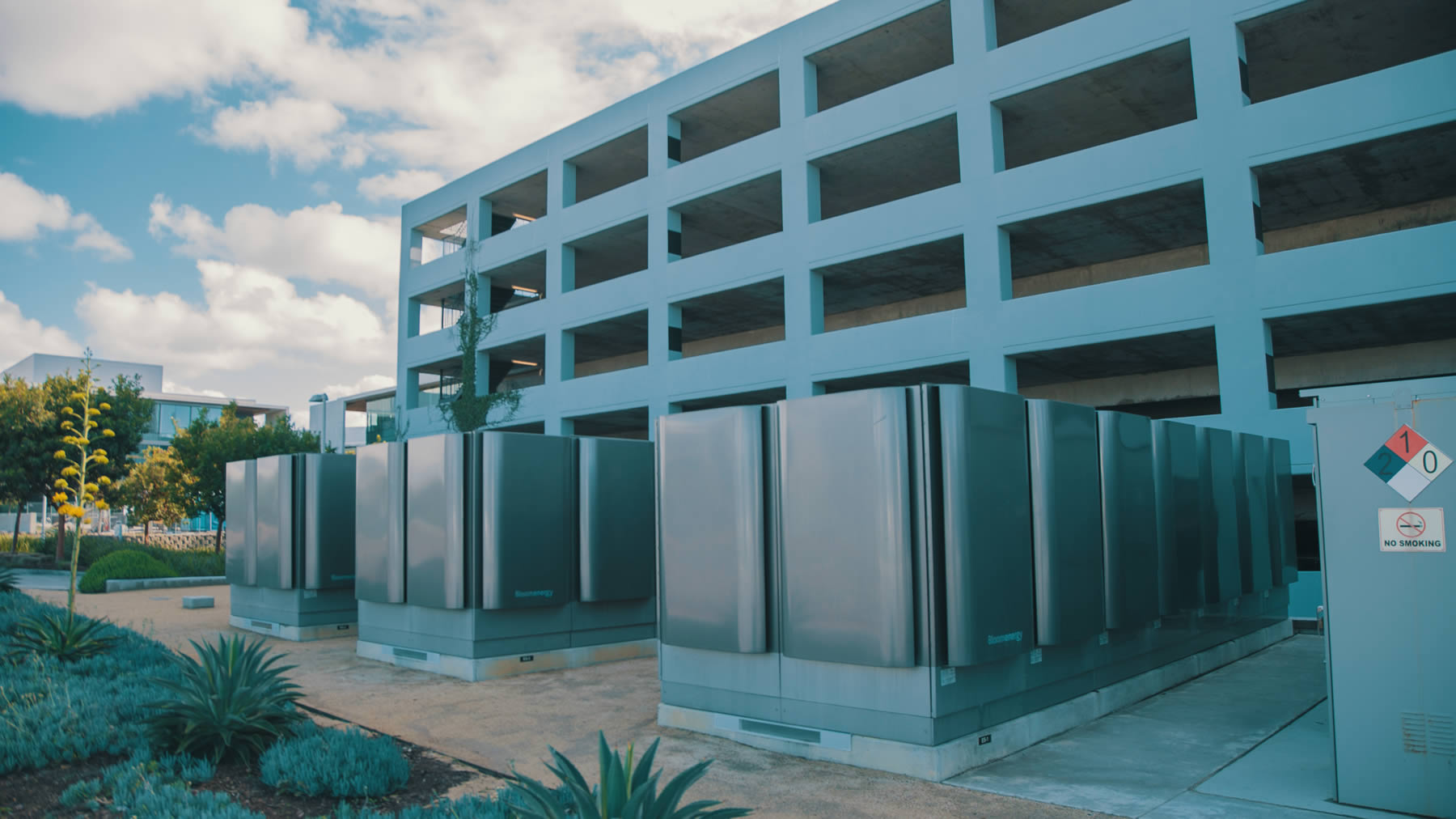
One of the primary drivers behind Bloom’s growth is the surge in demand from AI data centers. Customers are increasingly looking for stable, low-carbon onsite power solutions to keep their computing workloads running smoothly. Instead of relying just on the power grid or traditional backup generators, these hyperscalers and enterprise operators are turning to Bloom’s modular Energy Server systems. These fuel cells can operate on natural gas, biogas, or hydrogen, ensuring a consistent electricity supply through efficient electrochemical reactions.
To support this increasing demand, Bloom expanded its financing partnership with Brookfield, scaling up a previously announced $5 billion capital framework into a massive $25 billion program as part of Brookfield’s broader AI Infrastructure Fund. This sizable capital pool is targeted at behind-the-meter generation projects, allowing customers to invest in fuel cells without hefty upfront costs, which is crucial as the market faces grid limitations and rising sustainability pressures.
Understanding Solid Oxide Fuel Cells
At the core of Bloom’s innovative solution is a high-temperature solid oxide fuel cell. Each cell is made up of a dense ceramic electrolyte sandwiched between specialized anode and cathode inks. Here’s how it works: oxygen ions zigzag through the electrolyte from the cathode—where the air is reduced—to the anode, where they engage in an electrochemical reaction with a fuel source, typically natural gas or biogas. This produces water, carbon dioxide, and electricity without the fuss of combustion.
This direct conversion process cuts out the efficiency losses you’d find in traditional heat engines and eliminates nasty emissions like NOx and SOx that you typically see with diesel generators. Multiple cells are stacked together into modules, which can then form scalable systems that reach multi-megawatt capacities. When fueled with low-carbon hydrogen or renewable biogas, the carbon footprint can shrink to nearly zero, helping companies hit their decarbonization targets.
The Bigger Picture: Business Context
Historically, fuel cell manufacturers have faced challenges with profitability and reliance on incentives, but Bloom’s recent breakthroughs suggest the technology might be crossing an important milestone towards commercial viability. With their upgraded guidance reflecting around $3.6 billion in revenue and up to $2.85 in non-GAAP EPS, Bloom is starting to look more like a growth-focused infrastructure company than just another early-stage clean tech startup.
Policy changes have been beneficial too. The extension of investment tax credits and the emergence of hydrogen support programs have improved the economics behind these projects. Plus, there’s mounting regulatory pressure to minimize local pollutants in sensitive areas, making non-combustion solutions more attractive. Utilities and data center operators are feeling the heat to meet reliability standards, which opens the door for alternative power sources right at the meter.
Competitive Challenges and Considerations
In the competitive arena, Bloom is up against a mix of other fuel cell technologies—like PEM units from competitors like Plug Power—as well as conventional backup solutions such as diesel generators and simple-cycle gas turbines. SOFCs stand out due to their higher efficiency and lower emissions, but their higher upfront costs and complexity mean that tailored financing structures and robust service agreements are essential for sealing large-scale deals.
But it’s not all smooth sailing. There’s always the risk of execution hiccups—think of delivering and integrating gigawatts of SOFC capacity on time, keeping uptime guarantees intact, and managing long-term service commitments, all of which can put a strain on resources. Supply chain issues, particularly related to ceramics and specialty electrodes, alongside potential policy shifts affecting incentive structures, need to be watched closely.
Wider Implications for Hydrogen Infrastructure
The momentum Bloom is gaining has important implications for the future of hydrogen infrastructure and green hydrogen production. As more Energy Servers come equipped for hydrogen, the demand for low-carbon hydrogen pipelines, storage solutions, and supply contracts is likely to rise. This trend aligns nicely with the deployment of electrolyzers and expansions of renewable energy, creating valuable synergies within the decarbonization ecosystem.
For investors, Bloom’s impressive performance thus far underscores the idea that hydrogen-adjacent technologies are not only scalable but can also play a vital role in essential power sectors. For policymakers, it’s a solid example of how focused incentives and innovative financing methods can turn niche clean energy solutions into credible infrastructure assets.
Looking ahead, the challenges will include maintaining execution through a busy order backlog, transitioning fuel supply from natural gas to green hydrogen or biogas at scale, and navigating the competitive landscape. But if Bloom can keep up this pace of growth and margin expansion, it might just redefine what’s possible in the world of distributed generation and set the stage for a transformative era of zero-emission power solutions.