Hydrogen news
How does a hydrogen engine work?
Fuel cell vehicles run by using an electric motor, so how does H2 power them? The hydrogen car is making a growing number of headlines as the world decarbonizes, leading many people to wonder just how does a hydrogen engine work. It’s not uncommon to be surprised by the fact that these vehicles use electric motors, just like battery electric vehicles (BEVs). For this reason, they are technically known as electric, commonly called fuel cell electric vehicles (FCEVs).[aweber listid="6179904" formid="1469020671" formtype="webform"] The central difference between BEVs and FCEVs is that FCEVs make…

Fuel cell vehicles run by using an electric motor, so how does H2 power them?
The hydrogen car is making a growing number of headlines as the world decarbonizes, leading many people to wonder just how does a hydrogen engine work. It’s not uncommon to be surprised by the fact that these vehicles use electric motors, just like battery electric vehicles (BEVs). For this reason, they are technically known as electric, commonly called fuel cell electric vehicles (FCEVs).[aweber listid="6179904" formid="1469020671" formtype="webform"]The central difference between BEVs and FCEVs is that FCEVs make their own electricity.
BEVs have a battery that must be plugged in and charged in order to obtain the electricity that will be used by the electric motor. On the other hand, when it comes to hydrogen engines, the electricity is made within. Refueling adds H2 to pressurized tanks. To understand how this works, let’s take a step back and have a look at the fuel cell, which is essentially a power plant within the vehicle. https://youtu.be/NoPLxldm_ME A fuel cell uses a process called reverse electrolysis. Electrolysis splits a water molecule into oxygen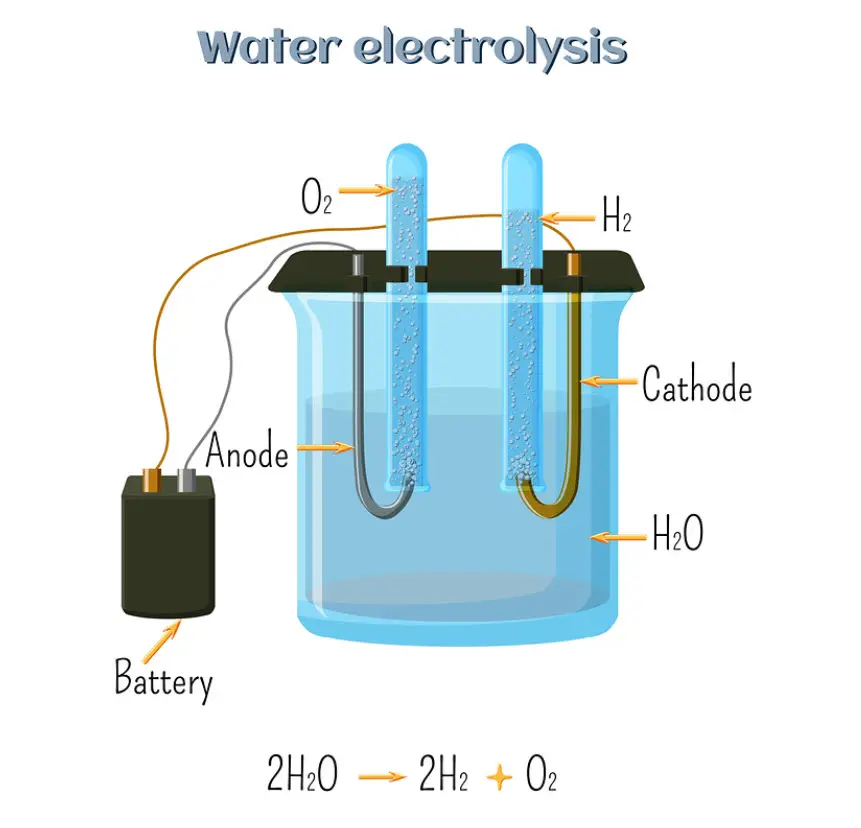 and H2. Reverse electrolysis does the opposite. The fuel cell is fed the Hydrogen fuel from the vehicle’s tanks. Oxygen is then added from the ambient air. The reaction from this combination is water, heat and electrical energy. The water is released as vapor through the FCEV’s exhaust. The electricity is used to charge a battery onboard (a Peak Power Battery) and to power the electrical motor. As a result, these vehicles don’t produce any greenhouse gas emissions – including CO2 – from their operation.
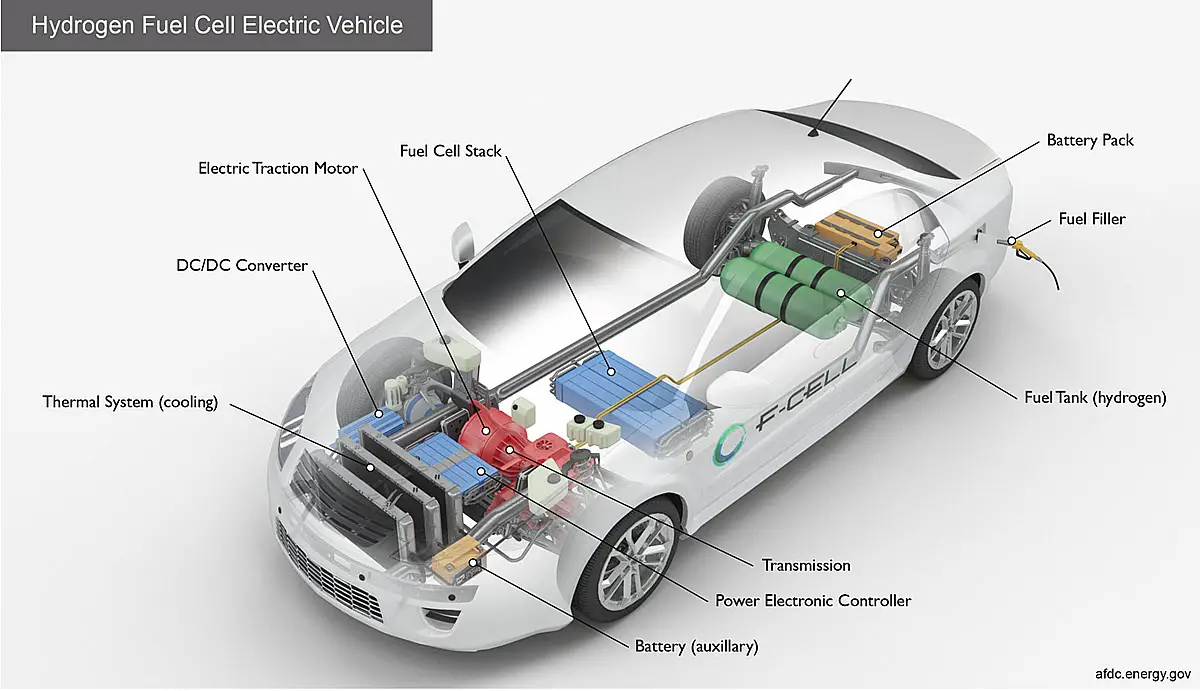
This explains why hydrogen engines are fueled with H2 and don’t require plugging in.
The Peak Power Battery is an important part of the design. While it is a battery, it is considerably smaller and lighter than the type that would be used for powering an electric car. The reason that it doesn’t need to be as large is that it is continually being recharged by the fuel cell. Hydrogen engines, like BEVs, can also recuperate braking energy. This makes it possible for the motor to convert the kinetic energy of the vehicle back into electricity that is used to help keep the Peak Power Battery charged.How was this article?
Thanks for the feedback!